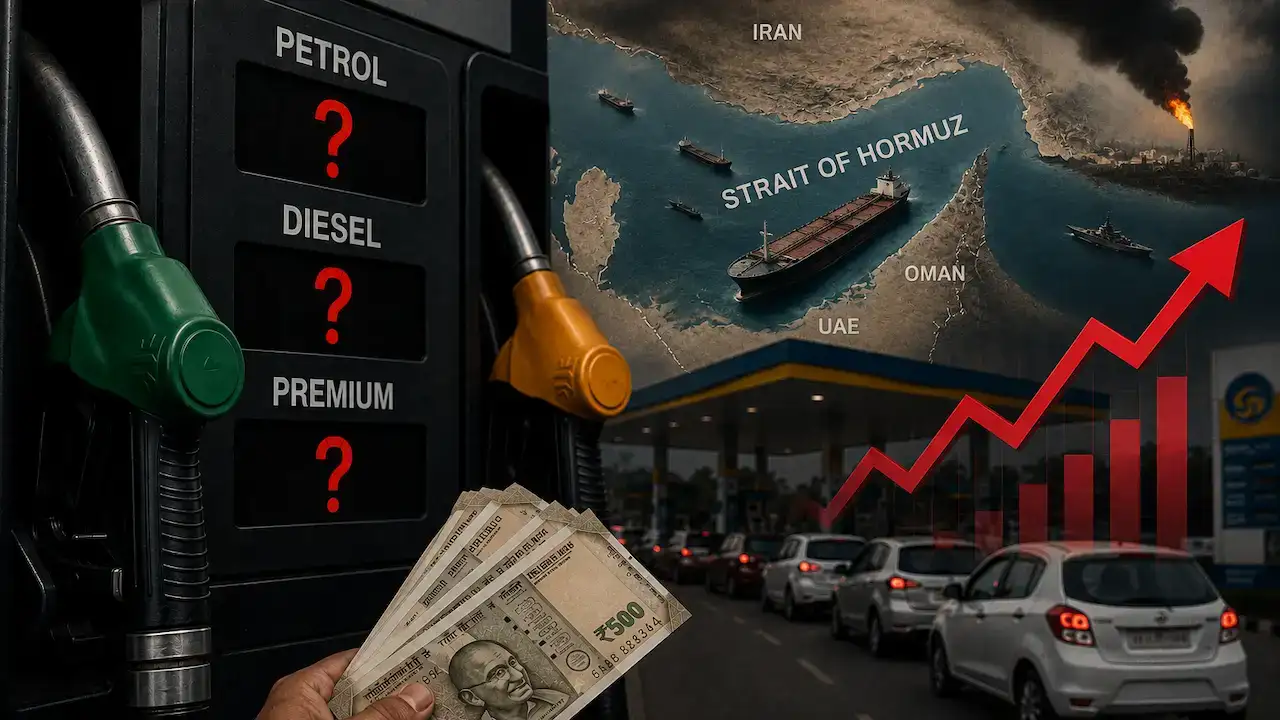
In May 2026, petrol and diesel prices in the country were changed thrice – on May 15, May 19 and May 23. According to government sources, after these three steps, petrol became costlier by Rs 4.74 and diesel by Rs 4.82 per litre. CNG prices were also increased by Re 1 per kg. This is considered to be the first major increase in almost four years. But to understand this increase, it is important to look at its full context.
Government itself bore the burden, did not pass it on to consumers
On February 28, 2026, following the Hormuz crisis, the price of crude oil in the international market reached $126 per barrel. Despite such huge global turmoil, petrol and diesel prices were not increased in India for 76 days. During this period, oil companies were incurring losses of around Rs 1000 crore every day. On March 27, 2026, the Central Government reduced SAED i.e. excise duty on both petrol and diesel by Rs 10 per liter. Central duty on diesel was reduced to zero. The decision resulted in a loss of around Rs 30,000 crore to the government’s revenue this financial year. That is, this burden was not passed directly on the consumers, but was borne by the government itself. Apart from this, the government imposed export duty of Rs 21.50 per liter on diesel and Rs 29.50 per liter on ATF, so that the oil produced in the country does not go abroad and its supply remains in the domestic market. On May 19, the government admitted that even after two rounds of hikes, the daily loss of oil companies has come down from Rs 1,000 crore to Rs 750 crore. Even after the third hike on May 23, it is the oil companies that are bearing the burden.
Now take a look at the global comparison. Following the Hormuz crisis, petrol prices increased by 90% in Myanmar, 56% in Malaysia, 55% in Pakistan, 44% in the US, 40% in the Philippines, 38% in Sri Lanka, 21% in France and 19% in the UK. In India this increase was only 5%. Saudi Arabia did not raise prices because it itself is a big oil producer and provides direct subsidies. Leaving that aside, India is one of the countries in the world where prices have risen the least. This is not the first time that India has tried to provide relief to consumers during a global crisis. During the Russia-Ukraine war, when fuel was becoming expensive all over the world, India reduced the price of petrol by Rs 8 per liter and diesel by Rs 6 per liter in November 2021 and May 2022. Among the G20 countries, India was the only country to reduce petrol and diesel prices during that period.
Now the question is why are prices different in different states?
The central excise duty remains the same across the country, but each state levies its own VAT. This is why prices appear different at the pump. After May 23, 2026, petrol price reached around Rs 117.80 per liter in Andhra Pradesh, Rs 115.70 in Telangana and Rs 112.30 per liter in Kerala, while it remained around Rs 99.50 in Gujarat, Uttar Pradesh and Delhi. VAT in Andhra Pradesh is around 31%, and in addition Road Development Cess is also levied. This brings the effective tax rate to around 35%. The ruling party claims that VAT has been highest in those states which are governed by parties which had demanded cut in excise duty from the Centre. After the excise duty cut on March 27, BJP-ruled states gave complete relief to consumers, while Congress and Bharat Bloc-ruled states did not make the same cut in VAT. Therefore, final prices remained relatively higher in these states. Now discussing the ’71 rupee petrol’ of 2014.
Congress repeatedly says that in 2014 petrol was priced at Rs 71 and now it is priced around Rs 98. But according to the ruling party, oil bonds worth about Rs 1.34 lakh crore were issued between 2005 and 2010 to keep prices low. These were loans taken directly by the government, which had to be repaid by subsequent governments and tax payers.
According to government data:
Rs 10,000 crore in financial year 2021-22,
Rs 31,150 crore in financial year 2023-24,
Rs 52,860 crore in financial year 2024-25,
And in the financial year 2025-26, Rs 36,913 crore was spent on payment of oil bonds. The interest charged on this is in addition to this. The government’s argument is that the cheap petrol of 2014 was actually based on debt, the price of which is now being paid by future generations.
complete accounts for four years
Between 2022 and 2026, petrol in India will become cheaper four times and costlier once. During this period, the central government lost about Rs 30,000 crore in revenue due to excise duty cuts; During the Russia-Ukraine war, oil companies suffered a loss of Rs 24,500 crore and spent Rs 40,000 crore on LPG security. No bonds, no debt, and no burden on future generations.