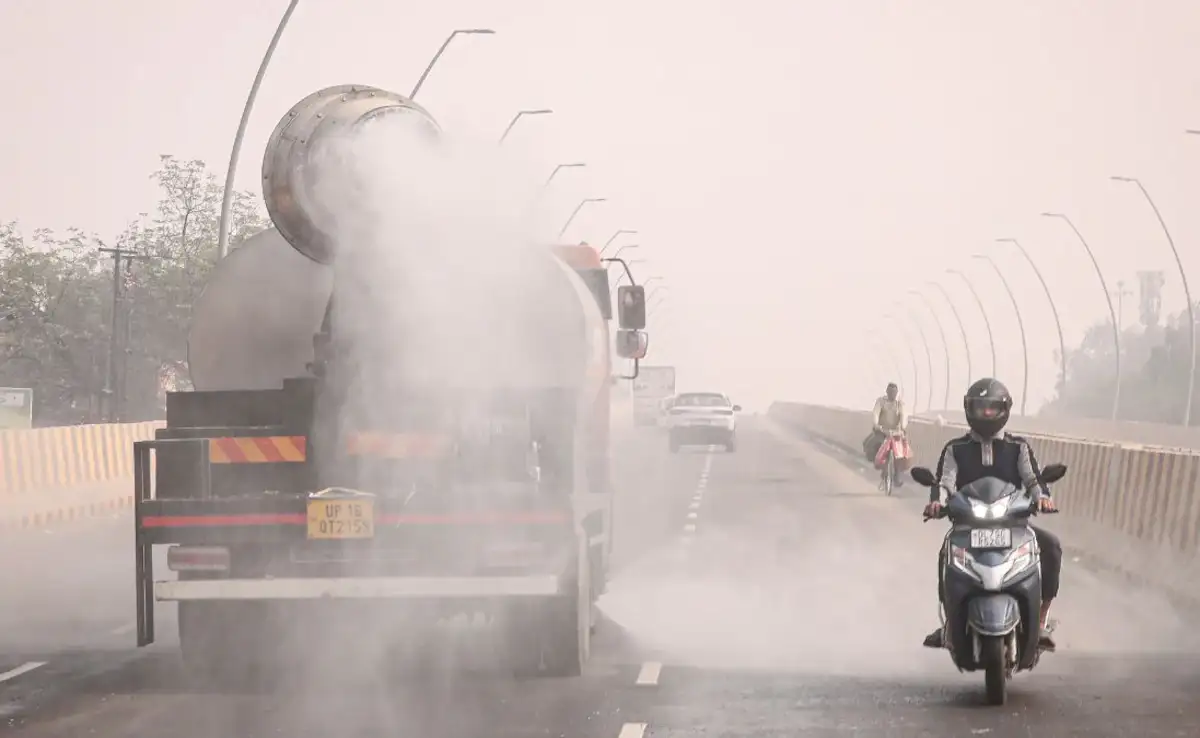
On Tuesday morning (January 20), a thick blanket of smog covered many parts of the national capital Delhi and NCR region. The area around Swaminarayan Akshardham temple in Pandav Nagar was surrounded by fog. Visibility on the roads was low, and people complained of burning eyes and difficulty breathing. The air quality was very bad. According to live data, AQI crossed 700 in many areas, which falls in the ‘hazardous’ category. Both PM10 and PM2.5 particles were recorded at levels many times higher than the normal limit. According to the Central Pollution Control Board, the AQI reached 445 in some areas, which is considered ‘severe’. Pollution was recorded at severe levels at 32 of the 37 air monitoring stations in the capital, and the situation was like a medical emergency at 19 places.
most affected areas
The AQI reached 631 in East Delhi’s Anand Vihar. It was recorded 763 in Ashok Vihar, 701 in Bawana, 613 in Rohini, 483 in Mundka, 743 in Wazirpur and 620 in Chandni Chowk. 469 were recorded in Patparganj and 621 in Sonia Vihar. Even in areas like ITO and RK Puram, the air quality was not breathable. The lowest AQI of 356 was recorded in Aya Nagar, but this is also well above the safe level.
The scariest form of pollution is seen at night
The most dangerous face of pollution appeared at night. At around 1 am, PM2.5 levels in Anand Vihar reached 890 micrograms per cubic metre. This is about 15 times the national standard and about 59 times the World Health Organization’s safe limit. PM2.5 952 micrograms was also recorded in Nehru Nagar on Saturday night, further increasing the seriousness of the situation.
Why did Delhi’s air quality deteriorate?
Experts say that emissions from inside the city and bad weather conditions together are making the situation worse. The air is almost still, so pollution is not spreading and is accumulating near the ground. Because the wind is not strong, pollution persists not just for hours, but for days. Additionally, winter temperature inversions trap this toxic air near the surface, making conditions even more oppressive.
Children and the elderly are at greatest risk
Doctors say that this poisonous air is especially dangerous for children, elderly and people with respiratory and heart diseases. Eye irritation, sore throat, cough and difficulty breathing are common symptoms. Experts are advising people to avoid unnecessary outdoor activities, wear masks and stay indoors. Relief is expected only when the weather changes and wind speed increases. Until then, the capital’s air will continue to take a toll on people’s health, and there is a strong need for effective pollution control measures.