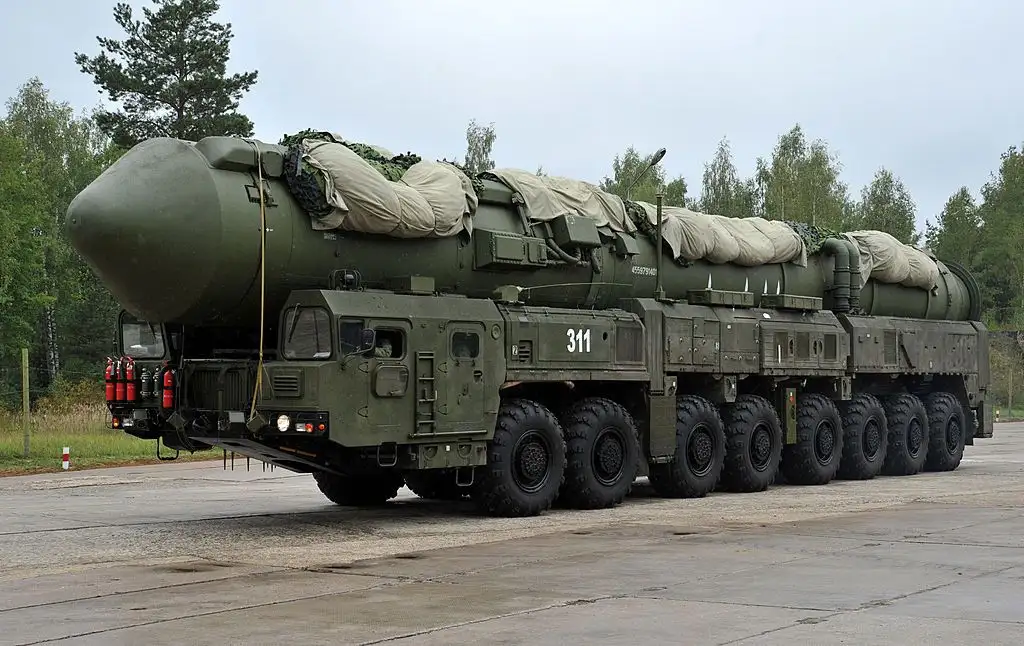
US researchers have discovered through satellite images that Russia is deploying its new nuclear-capable hypersonic ballistic missile, the Oreshnik, at an old airbase in eastern Belarus. This deployment is happening very quickly and hastily, due to which Russia is getting a strategic advantage. This step could further strengthen the reach of Russia’s missiles in Europe.
What is Oreshnik missile?
Oreshnik (meaning “hazel tree” in Russian) is an intermediate-range ballistic missile (IRBM). Its speed is 12,000 km/hour and range is about 5,500 kilometers. It can carry nuclear or conventional warheads. Russia used it for the first time against Ukraine in November 2024. Putin claims that it is impossible to stop it. It can attack multiple targets simultaneously and multiple warheads can be installed in it.
Where is the deployment taking place?
Researchers Jeffrey Lewis and Decker Eveleth studied satellite images from Planet Labs. They are 90% sure that mobile Oreshnik launchers will be deployed at an old airbase near Krichev. This place is 307 km east of Minsk and 478 km south-west of Moscow. Photos show rapid construction, a rail transfer point and a hidden launch pad.
Why is Russia doing this?
Experts say this is a political message. Russia is relying more on nuclear weapons to prevent NATO countries from supplying Ukraine with long-range missiles.
It may also be a response to the US deployment of hypersonic Dark Eagle missiles in Germany.
Belarusian President Alexander Lukashenko said 10 Oreshnik missiles would be deployed, but the site appears large enough for only three launchers.
This is the first time since the Cold War that Russia is deploying nuclear weapons outside its territory.
expert opinion
John Foreman (Chatham House): The deployment to Belarus would increase Russia’s range in Europe.
Pavel Podvig (Geneva): Russia will not benefit much from this, only Belarus will be assured of security.
This news comes before the expiration of the New START treaty, which limits US-Russian nuclear weapons. Russia and Belarus declined to comment. This move may increase tensions between Ukraine and NATO.