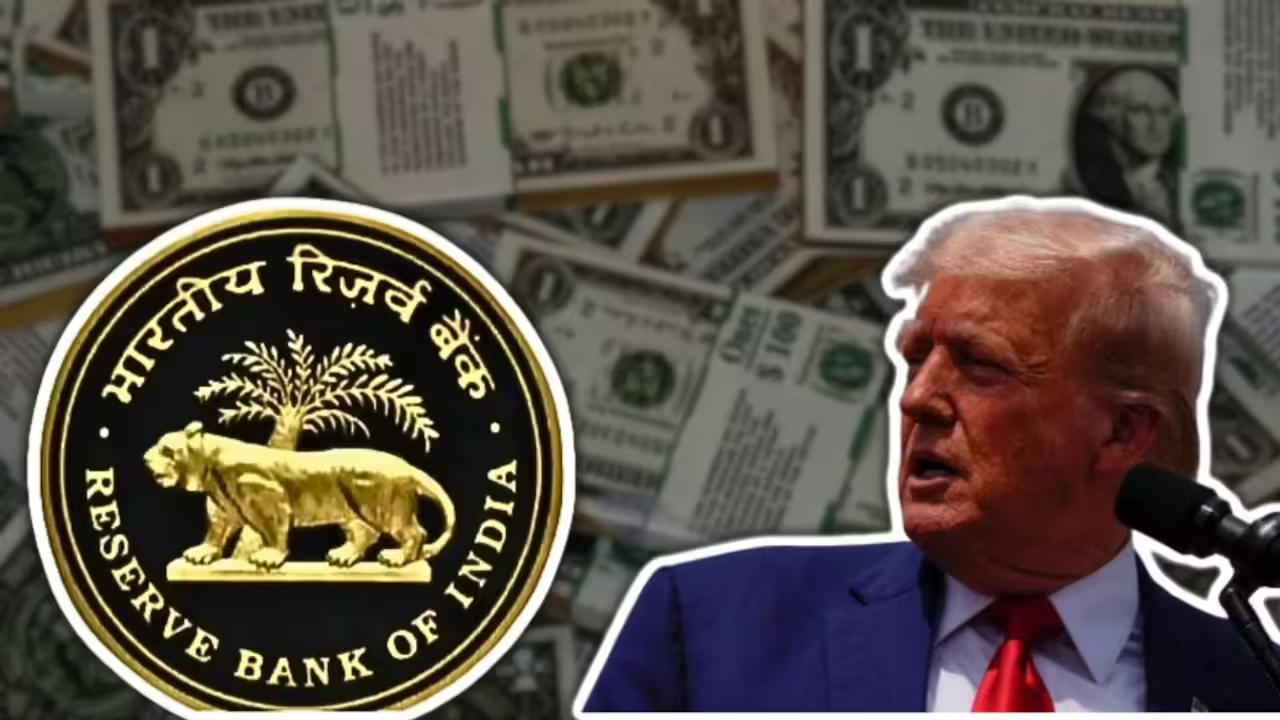
The impact of 50% tariff imposed on India by America is now clearly visible on the Indian economy. The Indian rupee has reached its record low against the US dollar on Thursday. The rupee fell to 88.44 against the dollar, which is also below the record level of 88.36 last Friday. This decline shows how much pressure American tariffs are putting on Asia’s third largest economy like India.
Investors confident
There is a clear indication from this weakness of the rupee that the strict tariff of America has shook the trust of foreign investors from the Indian market. Since the beginning of this year, foreign investors have withdrawn a total of $ 11.7 billion from the Indian stock and bond market. This amount shows the withdrawal of foreign capital on a large scale, which is directly impacting the price of the rupee. The American tariff has negatively impacted India’s economic growth and trade, causing the rupee continuously weakening. This situation is creating an atmosphere of uncertainty not only in the financial markets but also in the business community.
Government and RBI steps
To reduce this pressure, the central government has taken some necessary steps. Recently, GST rates have been cut, aims to increase demand in the domestic market and encourage economic activities. In addition, negotiations are on to overcome trade -related obstacles between India and the US. On the other hand, the Reserve Bank of India (RBI) is continuously intervening to control the rupee fall. Experts associated with the market believe that the central bank is preventing excessive fluctuations in the price of rupee by selling dollars. This strategy is saving the rupee from suddenly big shocks. However, bankers say that RBI is not trying to stop the rupee at a particular level, but its purpose is to control the pace of decline so that companies and investors do not spread nervousness.
Impact on importers and exporters
Weakness of rupee is directly affecting Indian trade. For exporters, there is an atmosphere of uncertainty as they do not have clarity about future orders. However, weak rupee promotes exports theoretically, but this benefit is not available due to American tariff. At the same time, importers have to do more hedging (a risk management strategy), due to which the cost is increasing for them. Increasing demand for hedging and imbalance in supply are increasing the instability in the currency market. This situation is making India’s foreign trade even more complex.
Further path: challenges and possibilities
The frequent decline of rupee creates many challenges for India. This will make imported goods, such as crude oil, electronics and machinery, will become expensive, which can increase inflation in the country. Apart from this, the return of foreign debt will also become more expensive, which will increase financial pressure on the government and companies.
This situation also highlights the complexity of business relations between India and the US. While both countries are strategic partners, strict measures like American tariffs are weakening India’s economy. It is important for India to focus on domestic economic reforms to deal with these challenges and maintain balance in international trade relations.
Overall, this decline of rupee is not just a financial phenomenon, but it is a clear indication of widespread pressure on India’s economy due to American tariffs. Both the government and RBI are trying to control the situation, but the path ahead will not be easy.