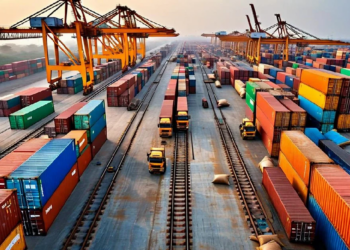
A new problem has emerged amid reports of easing tension in the Gulf region. After the ceasefire, the movement of ships through the Strait of Hormuz has started rapidly, but now there is a severe shortage of ships. As a result, freight fares for large oil tankers bound for India have been set at almost nine times the normal rate – reportedly the highest of the year. Additionally, bookings by South Korean shipping company Sinocor suggest that the Hormuz crisis is far from over; Rather, it has emerged in a new form.
**Booking at record rates**
The large ship, booked to carry crude oil from the Persian Gulf to India, has a capacity of about 2 million (2 million) barrels. According to shipbrokers, the fixed freight fare is almost nine times the standard rate, making it the most expensive booking of the year. This figure itself shows that despite reports of easing tensions, the maritime situation has not yet returned to normal.
**How is freight fare determined?**
Freight fares for oil tankers are not set in straight dollar amounts; Instead, it is determined by a specific system in which there is a standard rate for each route. When a cruise is booked, its fare is quoted as a percentage of this standard rate. Simply put, the company importing the oil is paying nine times the standard cost for a shipment.
**root of stress**
It is important to understand why freight fares remain so high despite tensions having eased. In March 2026, a standoff between the US, Israel and Iran began, causing ship movements through the Strait of Hormuz to drop by 92 percent. This sea route handles 20 percent of the world’s oil supply. During that time, daily freight fares had increased to $423,736, and fear caused insurance companies to stop providing insurance cover for ships.
**Lack of ships after opening of route**
When tensions between the US and Iran eased after the deal in June 2026, oil companies heaved a sigh of relief and tried to resume oil imports from the Gulf; However, this is where the real problem began. Although oil was available, there were not enough ships to transport it. During the months of tension, many ships moved away from the area, and their return has not been rapid. After tensions eased, only 65 empty ships reached the Gulf of Oman in a week, 25 of which belonged to a single company, Sinocor. Because demand for ships was greater than supply, buyers had to pay higher prices.
**India’s Vigilance and Diplomacy**
It is also important to understand India’s reaction to this crisis. The Government of India is fully alert about its energy security and the safety of its maritime workers. The government is actively working with international agencies to protect India’s maritime interests. The good thing is that 94 Indian sailors and three Indian ships – *Desh Vaibhav*, *Desh Vibhor* and *Sanmar Herald* – have successfully passed through this dangerous route carrying a total of 8.6 lakh metric tonnes of crude oil. These ships are arriving at Indian ports between June 24 and July 1, 2026. According to the Ministry of External Affairs, a total of 11 ships coming to India after the US-Iran agreement have passed safely through this route.
**India’s record oil import from Russia**
India had already anticipated this risk and changed its strategy. India is heavily dependent on the Strait of Hormuz route for its energy needs – especially LPG (cooking gas), 90 percent of which comes from this region. As a result, India has set a new record for oil imports from Russia. In June 2026, oil imports from Russia reached an all-time high of 2.6 million barrels per day, and Russia now accounts for about 53.5% of India’s total oil imports. Additionally, Indian companies have also started sourcing oil from regions like North America and Venezuela to avoid excessive dependence on any one source.
What effect will it have on the common man?
The most important question is what effect it has on the life of the common man. Interestingly, while shipping fares have increased ninefold, worldwide crude oil prices are falling; Brent crude prices are currently around $73 per barrel. However, relief for India’s state-run oil companies – which were losing around ₹650 crore every day during the crisis – will not be complete as long as the shortage of ships persists. If ship supplies normalize in the coming weeks, India’s import bill will reduce, the rupee will strengthen and this will help curb rising petrol and diesel prices; However, concerns will remain until then.