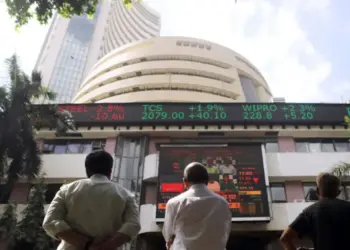
Tuesday was not a good day for stock market investors. There was such an uproar that in the blink of an eye investors lost more than Rs 10 trillion. This decline has been going on for quite some time, and investors’ patience is now wearing thin. The biggest problem is among retail investors. Most of the retail investors who were investing in the market for the last two years have had their hopes dashed. The confidence with which they had entered the stock market is now proving to be a loss-making deal. His portfolio is becoming more red with the market falling every day. Most of the investors who turned to the stock market in the last two years are now regretting it. Their pain is clearly visible: “Where are we stuck?” Forget about earning money, even their hard-earned money is being lost; Their investments are slowly but surely disappearing. SEBI data shows that after the COVID-19 pandemic, retail investors were highly influenced by the market and put in their hard-earned money. But now the market is falling every day, and their money is losing.
What should retail investors do now?
At present, new retail investors are facing many challenges. First of all, they have lost all their profits, and now their capital is gradually decreasing. Every day starts with the hope that everything will go well in the market, but the opposite happens. Financial prudence dictates that selling all stocks during a recession is not a wise move. It is always advised that even a falling market provides an opportunity to buy good stocks. Selling all shares in such an environment will only lead to further losses.
Many investors whose portfolios were showing 20% profit a few months ago are now down 20%, meaning they came into the market to make money, but are now losing their hard-earned money. At present, there is no hope of relief. Retail investors are facing huge losses, mainly because most of them invest in small-cap and mid-cap stocks, and these two segments are under the most selling pressure.
Moreover, getting stuck in penny stocks is a common practice for retail investors. According to the data, large-cap stocks performed well in 2025, but the small-cap index fell 6% last year, and the mid-cap index remained flat. In such a situation, it is certain that the investment of retail investors will backfire. Index 5% away from all-time high
At the index level, Nifty-50 has given returns of around 10% last year. Nifty is just 1000 points below its all-time high. The Sensex is down nearly 4000 points, or about 5%, from its all-time high. This means that there has been no major decline in large-cap companies. However, there is a nervous situation in the mid-cap and small-cap segments.
What do we do now? According to experts, long-term investors should not panic during recession. But the question is, will the harm be reduced by just sitting quietly? In such a situation, retail investors should first review their portfolio. If there are fundamentally strong stocks in their portfolio, they should hold on to them. If stocks are being bought for less than their purchase price, they can average down their costs. This will help them recover quickly from losses when the market recovers.
Things to keep in mind before investing
Moreover, if you have underperforming stocks, you can sell them and buy better performing stocks. However, selling all your shares in panic would be a wrong decision. No one knows how long this market downturn will last, so avoid investing all your money at once or in a single stock. If you are thinking of investing, then invest slowly. Also, diversify your portfolio. Retail investors should invest primarily in large-cap stocks, followed by mid-cap stocks, and then in less risky small-cap stocks. Along with this, invest about 5 percent of your portfolio in gold and silver. This is because global uncertainty remains, and its impact is most visible in the stock market. The results of the third quarter have also been mixed, due to which the pressure on the market is increasing. Therefore, before investing anywhere, definitely take the advice of a financial advisor.