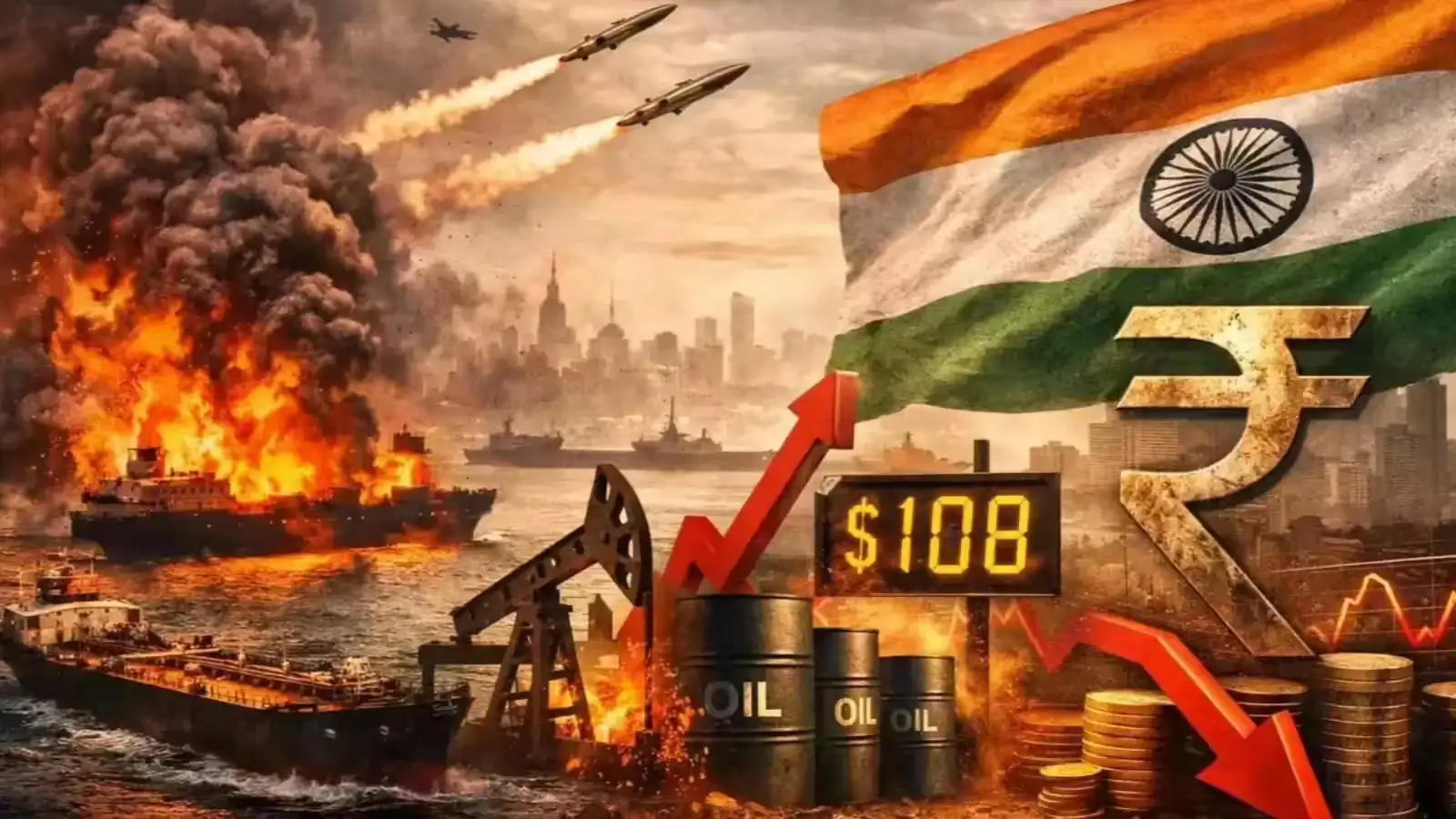
On February 28, 2026, the United States and Israel attacked Iran. The attack triggered a conflict that resulted in the closure of the Strait of Hormuz. As a result, crude oil prices rose to $119 per barrel, the Indian stock market recorded its biggest weekly decline in years, and the rupee fell to its lowest level ever. India is not a party to this war. India has no military alliance with any party involved in this conflict. Nor does India have any interest in the political outcome of this conflict. Moreover, India also does not have the right to decide when and how this fight will end. Despite this, the economic consequences of this conflict are emerging so rapidly that every serious policymaker in India should be deeply concerned. On March 7, the government increased the prices of domestic LPG cylinders by ₹60. The message conveyed by this government notification was very clear: India is now being forced to bear the economic burden of a war it did not start.
India is the second largest LPG importer in the world. It consumes 31.3 million metric tonnes of LPG annually; However, only 41 percent of this is produced domestically, while the remaining 59 percent is imported. Of this imported quantity, 90 percent is transported through the Strait of Hormuz. Tehran has now blocked this 33 kilometer wide sea route, which lies between Iran and Oman. However, the LPG crisis is just a symptom of a much larger economic crisis.
Impact of rising oil prices on the economy
In fiscal year 2025, India will spend $137 billion on crude oil imports. Before the war broke out, the average price of Brent crude was about $66 per barrel. On March 9, this figure increased to $119. After this, it stabilized around $103 level. According to ICRA economists, every $10 increase in the average price of crude oil increases India’s annual import bill by an estimated $14–16 billion. If oil prices remain in the $110–115 per barrel range through FY2027, the oil trade deficit could reach $220 billion, and the current account deficit could exceed 3.1 percent of GDP. This is a sign of a serious external imbalance. Additionally, it requires taking tough decisions regarding monetary policy, fiscal spending and exchange rate management.
The impact of this conflict is not limited to crude oil only. Increased fuel prices immediately increase transportation costs. As a result, prices of food items, cement, medicines and finished goods increase across the country. ICRA estimates that every $10 per barrel increase in crude oil prices increases WPI inflation by 80 to 100 basis points and CPI inflation by 40 to 60 basis points. In January 2026, the CPI was just 2.75 percent—a figure that suggests rare stability. However, that stability is now under serious threat.
Rupee, markets and the lessons of 1991
The impact of this pressure has also been felt sharply in the currency market. After the war began, the rupee fell sharply against the dollar and reached a historic low of 93.32. The reason behind this is simple: rising oil prices increase demand for dollars for imports; This weakens the rupee, and the weaker rupee, in turn, makes oil more expensive. As a result, the import bill keeps increasing. To stabilize the exchange rate, the Reserve Bank of India has intervened by selling dollars from its foreign exchange reserves, which currently stand at $716 billion. These reserves are India’s biggest security—and a sharp contrast to the situation during the 1991 crisis. At that time, after Iraq invaded Kuwait, oil prices rose sharply, remittances declined, and a foreign exchange crisis occurred, leaving India with only two weeks of reserves for imports. Two successive governments of India together were forced to pledge 67 tonnes of gold. Today, India is in a much stronger position; Nevertheless, the pressure is in the same direction, and these reserves are being used up rapidly.
Capital markets are also indicating the same trend. During the first eight trading sessions of March, foreign portfolio investors pulled out more than ₹45,000 crore—the worst monthly performance since January 2025. The Nifty 50 has seen a decline of 6–7 per cent, and the total market capitalization of BSE has declined by about ₹10 lakh crore. This is not a sign of panic, but a rational reassessment of risk by global investors.
90 lakh Indians and $50 billion in Gulf countries
India’s dependence is not limited to energy and financial markets only. About 91 lakh Indians work in six Gulf countries: UAE, Saudi Arabia, Qatar, Kuwait, Oman and Bahrain. Overall, these Indians send approximately $50 billion to India every year. These figures are more than just statistics; They pay school fees in Kerala, finance housing construction in Uttar Pradesh, help repay loans in Tamil Nadu, and strengthen the rural economy. If the economies of the Gulf countries weaken, the flow of dollars coming in the form of remittances from these areas may reduce. According to experts, if there is a shortfall of even $10-15 billion, it will have a direct impact on consumption in rural and semi-urban India.
Will trade with Gulf countries decrease?
In FY 2025, trade between India and Gulf countries stood at $178.56 billion. Of these, the gems and jewelery sector—which accounts for 10-12 per cent of India’s total exports—is most at risk. This sector provides employment to more than 50 lakh people. UAE alone imports goods worth $7.75 billion. If exports to Dubai are disrupted, or demand within the Gulf countries declines, it will directly impact the artisans of Surat and Jaipur. The chemical and petrochemical sector may also face a double blow: exports will fall, while imports will become costlier. The fertilizer sector is even more sensitive; If there is a disruption in supply before the *Kharif* crop season, the inflation of food items may increase rapidly.
What is the challenge before the government?
In India, petrol and diesel prices are, in theory, market determined; However, in practice, they remain subject to political pressure. Even in 2022, state oil companies kept prices stable during the elections and suffered losses. Now, once again a similar situation is happening. If these companies do not pass on their costs to customers, their financial health deteriorates, ultimately leading to government intervention. The Reserve Bank of India is also caught in a dilemma: should it lower interest rates to boost economic growth, or give priority to controlling inflation? Both paths have their own risks.
The weaknesses revealed by this conflict are nothing new; However, ignoring them is now proving costly. The Rs 60 increase in the price of cooking gas is just the beginning of this crisis. The 1991 crisis finally opened the way for economic reforms. Now the question is whether India will learn its lesson in time, or wait for the next big crisis. At present, this decision is in the hands of India only.