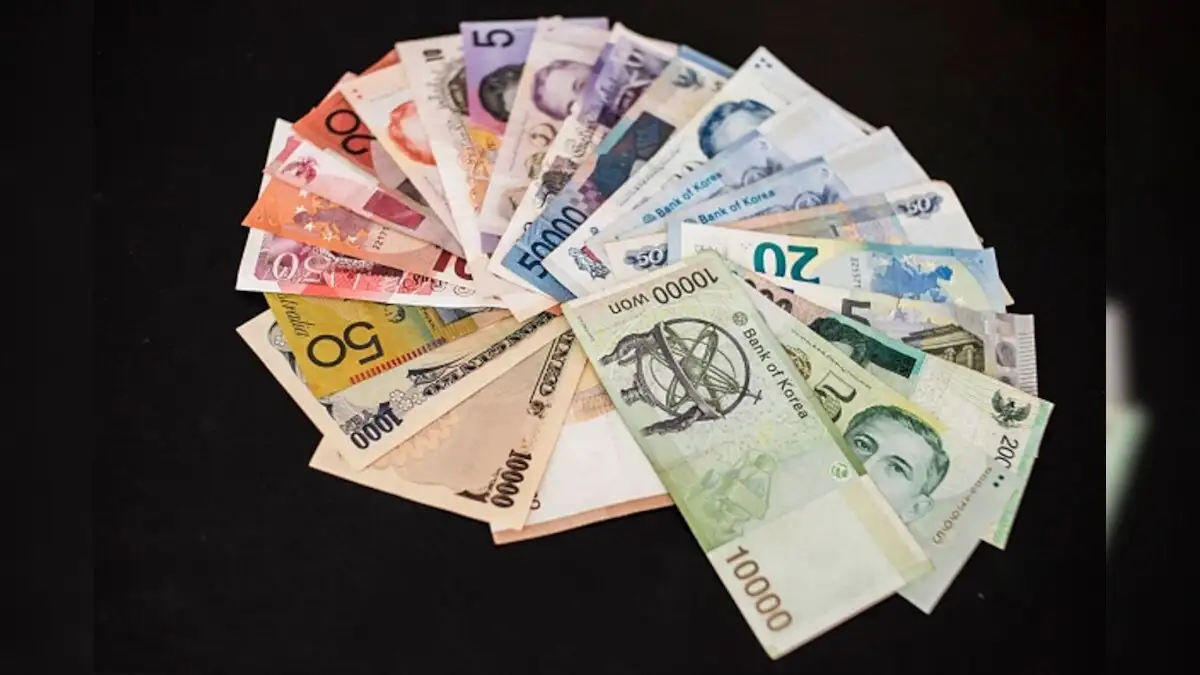
The paper notes that are in our and your pockets now may soon become a thing of the past. The Reserve Bank of India (RBI) is preparing to take a big step to meet the rapidly increasing demand for cash. The central bank is now seriously considering a plan to print plastic (polymer) notes instead of traditional paper notes. According to media reports, this change was discussed in depth during the recent RBI board meetings held in Patna and Mumbai. But is this idea new? no way. Many countries around the world have adopted this technology. Let us see what is so special about plastic notes and which countries are using them now.
Polymer currency circulates two and a half times more
The main reasons behind the gradual withdrawal of paper notes from circulation are their cost and durability. Banking experts believe that plastic notes last about two and a half times more than normal paper notes. Even if they come in contact with water, moisture or dirt, they are not affected much. These notes do not tear easily, which saves the expense of repeated printing. Furthermore, the biggest advantage of plastic notes is that they are almost impossible to copy – or counterfeit – at all. Given these advantages, central banks around the world are increasingly moving towards this option.
These countries have completely changed their currency
Although about 60 countries around the world currently use plastic notes, many major countries have gone a step further and completely removed paper currency from their financial systems.
**Australia:** It was the first country in the world to introduce plastic notes. Polymer notes came into circulation there in early 1988. It is also the only country in the world that produces these notes.
**New Zealand:** In 1999, this country withdrew all of its paper notes from circulation. The lowest value note here is of $5, while the highest value note is of $100. **Brunei:** This rich country in South-East Asia has completely adopted plastic notes to deal with the menace of counterfeit currency.
**Vietnam:** Polymer notes were introduced here in 2003. Today, the Vietnamese dong is made entirely of plastic notes; Its highest price is 500,000 dong, which is equivalent to approximately US$20. Romania: In Europe, Romania is the only country to switch all its banknotes to polymer in early 2005.
Papua New Guinea: Here the Australian dollar used to be the legal currency till 1975, after which a new currency named ‘Kina’ was introduced. At present, only plastic banknotes are in circulation here. Interestingly, Prime Minister Narendra Modi is visiting this country for the first time on May 22 in connection with the G-7 summit.
This new technology is being discussed in 60 countries
Globally, the use of polymer banknotes is increasing rapidly. The journey – which began with the Australian $10 note in 1988 – has now reached Singapore, Indonesia, Malaysia and Thailand. In Europe, Romania initiated the change in 1998, while Canada incorporated it into its currency system in 2011. Conversely, when it comes to the world’s strongest currency – the US dollar – it’s not made entirely of plastic. American currency is made using a special blend of cotton and linen.