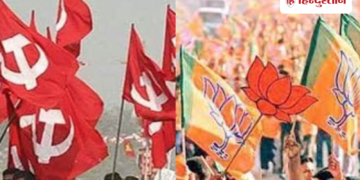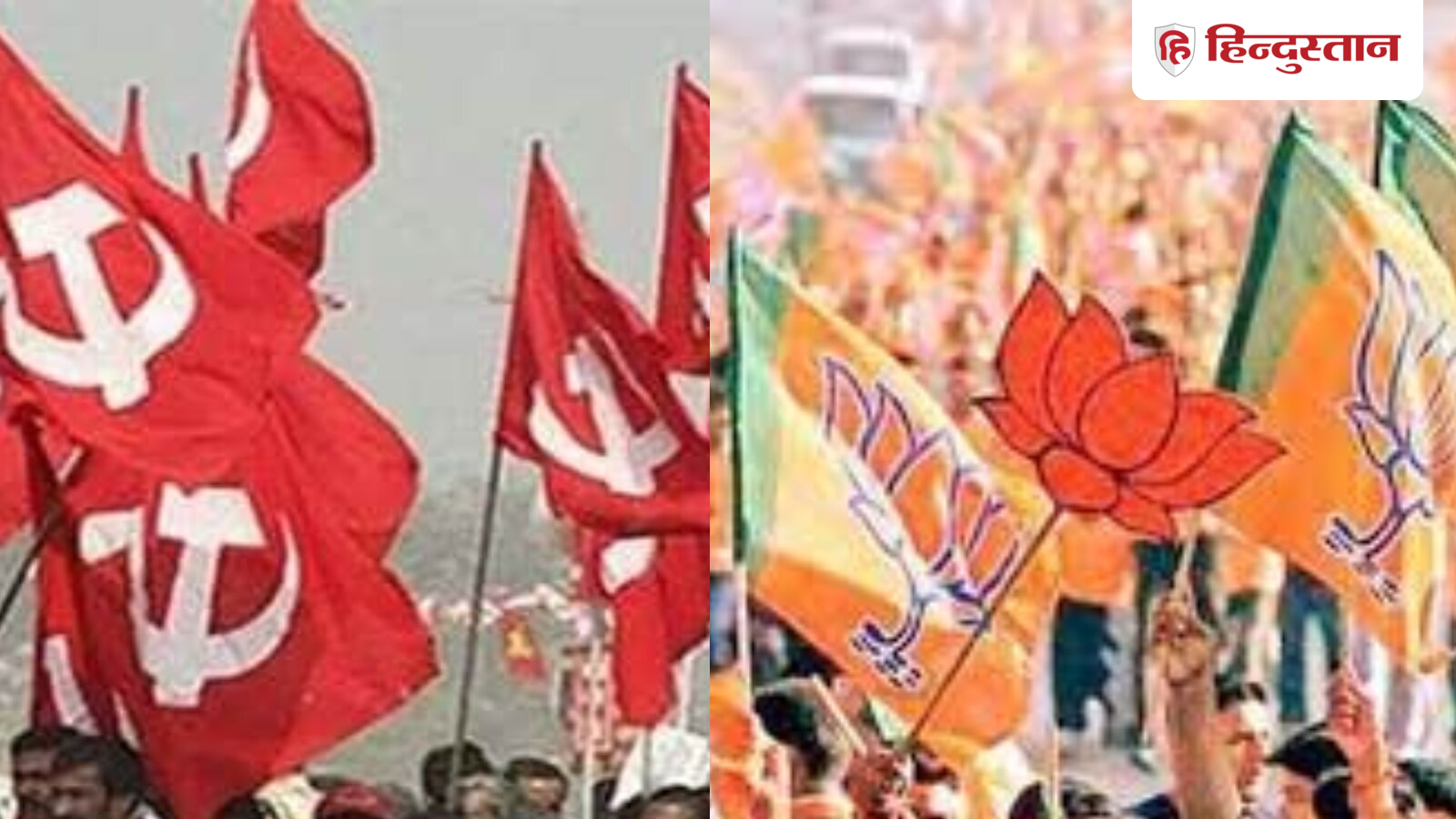
Bengal Chunav Result: BJP’s capture of Matigara-Naxalbari assembly seat is not just an election victory, but symbolizes a major historical change in the political direction of Bengal. Let us know how many votes which party got here…
Matigara-Naxalbari… The place from where the spark of Naxalism erupted in 1967 and the foundation of the leftist movement in the entire West Bengal was laid, has now completely changed its complexion. Where once there was an echo of ‘Lal Salaam’, today saffron is waving. This historical land, which started with the Naxalbari movement, has today been captured by the Bharatiya Janata Party. This is the area from where the Left wave emerged and the Communist Party of India-Marxist (CPM) ruled West Bengal for 34 consecutive years from 1977 to 2011. BJP’s capture of the Matigara-Naxalbari assembly seat is not just an electoral victory, but a symbol of a major historical change in the political direction of Bengal. In a way, it can be said that where at one time the roots of Naxalism and Leftism were deep, today the supremacy of the ideology of BJP-RSS is being established in the same area or rather it has become so.
In fact, in the 2026 West Bengal Assembly elections, BJP candidate Anandamoy Barman gave a crushing defeat to Trinamool Congress. Anandamoy Barman got 1,66,905 votes, while Trinamool Congress’s Shankar Malakar got only 62,640 votes. BJP has captured this seat by a huge margin of 1,04,265 votes. Let us tell you that this time a total of 9 candidates were in the fray for the seat. Among other candidates, including Amitav Sarkar of Congress and Jharen Rai of CPI(M), Jharen Rai of CPI(M) stood third and got only 8,585 votes.
Naxalbari’s political journey
The armed farmers’ movement started under the leadership of Kanu Sanyal in Bengaijot village of Naxalbari in 1967 became the foundation of India’s leftist movement. Leaders like Charu Majumdar took it forward, which led to the formation of CPI (ML) and subsequently Naxalism spread throughout the country. Experts say that due to this movement, CPM held power in West Bengal continuously for 34 years (1977-2011). This was the reason why Matigara-Naxalbari remained a strong stronghold of the Left for a long time.
With changing times, power changed. In 2011, Mamata Banerjee’s Trinamool Congress (TMC) captured power for the first time. In 2011, Congress’s Shankar Malakar was victorious from here, but BJP’s vote share kept increasing. In 2011, BJP got only 4.47 percent votes, which increased to more than 21 percent in 2016. In the 2021 assembly elections, Anandamoy Barman defeated Trinamool’s Rajen Sundaras by about 71 thousand votes. In 2026, he further strengthened his victory by winning by a record margin and gave the message that now this region has been freed from the ‘red flag’ and now only saffron will wave here.
BJP’s increasing dominance in North Bengal
Let us tell you that in the last decade, RSS and BJP did continuous organizational work in North Bengal. He got down to earth and connected himself with the common people. Strengthened the organization as well as the party by focusing on local issues like betterment of tea garden workers, development work, border security and cultural identity. Amidst the changing political equations, the decline of the Left and corruption allegations against the Trinamool Congress, the voters here were looking for an alternative, and the BJP provided that alternative. Today the result is that for the first time BJP government is going to be formed in the state.