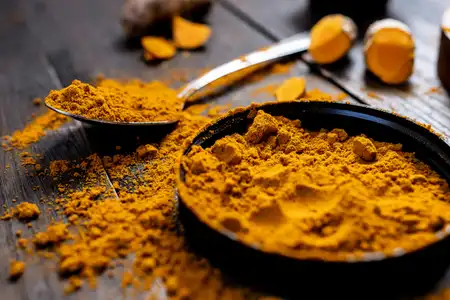
New Delhi, May 2 (IANS). Turmeric is such a part of Indian kitchen that we use it without thinking in our everyday food. But now science has also started seriously understanding the hidden specialties in this simple looking thing. A recent research has raised new hopes regarding curcumin, the main element of turmeric. Especially for people suffering from diabetes.
Curcumin is the same natural element that gives turmeric its yellow color. It has long been known to reduce inflammation and protect the body from harmful substances. This is the reason why it has been discussed in both Ayurveda and modern research. Now a new study has indicated that curcumin can also help in protecting the heart and blood vessels. Especially in those people who have type 1 diabetes.
In type 1 diabetes, the body stops producing insulin itself. This increases the sugar level in the blood and gradually affects many parts of the body. Heart and arteries also do not remain untouched by this. The problem is that many times these blood vessels continue to get damaged even after taking insulin. This is why the risk of heart disease in diabetic patients is higher than that of normal people. In such a situation, scientists are constantly searching for such options, which can protect the heart and arteries.
In this sequence, a study has currently been conducted on rats, which had type 1 diabetes. This study will be presented at the 2026 American Physiology Summit. In the study, some rats were given curcumin, while others were not. When the two groups were compared after a month, the rats that had received curcumin had much healthier blood vessels. The researchers also studied a protein called ‘heat shock protein 70’. This protein protects cells from stress. Its balance also appeared to be improving in research.
Not only this, the main artery (aorta) that carries blood from the heart was also found to be in better condition in the rats taking curcumin. This indicates that this element can help maintain the strength and flexibility of nerves.
However, these results are very promising and extend the possibilities that already exist for curcumin. But, this research has not been done on humans but on animals. Therefore, it would not be right to consider it as a direct treatment. Secondly, it is also important to know whether just eating more turmeric or taking supplements available in the market will give the same benefits, this is also not certain yet. The quantity used in research and the method of delivering it to the body are quite different.
Despite all this, one thing is clear from this study that in the future, research can be done on a larger scale on the curcumin present in turmeric, which can become a possible way for diabetic patients to reduce heart-related problems. In the future, only research on humans will decide how effective this discovery proves to be.
At present, the most important thing is a balanced lifestyle – like proper eating habits, regular checkups and treatment as per doctor’s advice. Therefore, if you are thinking of taking a new supplement, it is important to consult a doctor first. Because every body is different and any step taken without proper information can also cause harm.
–IANS
AS/