Chennai, October 12 (IANS). These days, cases of dengue, typhoid and fever are increasing rapidly in Tamil Nadu. As of early October, more than 16,000 dengue cases have been reported in the state, with eight deaths. This situation has spread in many districts, due to which concern has increased among the people. In view of the increasing impact of the disease, the state government has intensified precautionary measures.
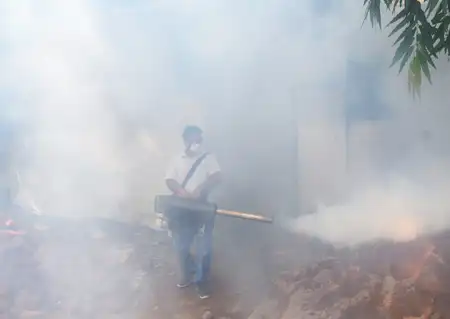
The health department has started door-to-door screening of people across the state. Along with this, awareness campaigns are being run so that people can recognize the symptoms of the disease and get timely treatment. For mosquito control, works like spraying medicines, cleaning drains and places where water accumulates are being done rapidly.
The government fears that if the situation continues like this, the situation may worsen during the upcoming north-east monsoon rains.
According to national data, Tamil Nadu ranks second in dengue cases after Karnataka. So far in 2025, 16,546 cases have been reported here. Last year in 2024, there were 27,378 cases and 13 deaths. Whereas, 9,121 cases and 8 deaths were recorded in 2023. These figures clearly show that dengue cases increase every year after the rains.
Health officials believe that the main reasons for the increase in dengue this time are irregular rains, frequent changes in temperature and waterlogging, especially in urban and rural areas, stagnant water is becoming a breeding ground for mosquitoes. The mosquito called Aedes aegypti, which spreads dengue, thrives in this manner.
Cases of fever have been reported from many districts of the state. Many people have been found suffering from fever in cities like Chennai, Tiruvannamalai, Madurai and Coimbatore. This has further increased the severity of the spread of the infection. The government has started special surveillance in these areas.
Health department teams are now visiting government and private hospitals and continuously monitoring them. People are being screened door-to-door so that fever patients can be identified immediately and they can get timely treatment. Along with this, work of spraying anti-mosquito medicines, cleaning dirty water and eliminating places where water accumulates is also being done.
The government is continuously monitoring high-risk areas and campaigns are being conducted in schools, government offices and residential areas to make people aware. People are being appealed to keep water utensils covered, do not allow water to accumulate behind fridges and pots and wear full-sleeved clothes during the day because dengue mosquitoes bite during the day.
Doctors say that people should not take medicines themselves when they have fever, because taking medicines without doctor’s advice can make the condition worse. The safest way is timely diagnosis and treatment.
All government hospitals and primary health centers in the state have been instructed to make arrangements for adequate medicines, test kits and IV fluids so that there is no interruption in treatment even if the number of patients increases.
Despite the increase in cases of fever and dengue, officials claim that the situation is under control for now. The mortality rate is low and all precautionary measures are being taken rapidly.
–IANS
PK/AS