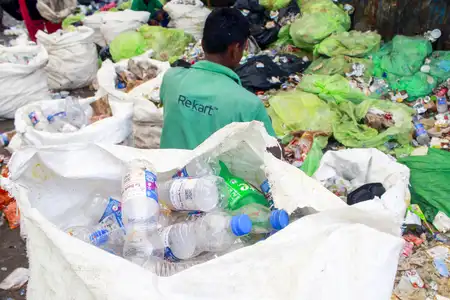
New Delhi, January 27 (IANS). If concrete steps are not taken to change the current practices, plastic pollution will become dangerous on a global scale. At the same time, by the year 2040, plastic can pose double the threat to health.
A research published in The Lancet Planetary Health Journal states that plastic causes health harm at every stage of its entire life cycle. This harm begins with the extraction of fossil fuels, which are the raw material for making more than 90 percent of plastics. After this, toxic elements are released at every stage of production, use and finally its disposal or release into the environment, which are harmful to both humans and the environment.
This study compares the impacts on global human health of several possible future scenarios related to plastic consumption and waste management between 2016 and 2040.
If everything continues like this, the adverse health effects of plastic may double by 2040. In this, greenhouse gas emissions and the resulting global warming will contribute about 40 percent to the harm caused to health.
Air pollution, mostly caused by plastic manufacturing processes, will account for 32 percent. At the same time, the impact of toxic chemicals released into the environment during the entire life cycle of plastic will be 27 percent.
The remaining health risks (less than 1 percent) are related to water loss, effects on the ozone layer, and increased ionizing radiation, researchers said.
Megan Deeney of the London School said that her study found that emissions from plastics throughout their life cycle have a negative impact on human health through global warming, air pollution and toxic substances. This increases the risk of cancer and non-communicable diseases. The biggest harm is caused by manufacturing and open burning of plastic.
The study found that if there are no changes in policy, economic conditions, infrastructure, materials or consumer behavior in the plastic system, the annual health impact could more than double. Its loss was 2.1 million healthy life years in 2016, which may increase to 4.5 million healthy life years by 2040.
Overall, according to the study, between 2016 and 2040, people’s healthy life span could be reduced by 83 million years due to the global plastic system.
The study also noted that simply improving plastic waste collection and recycling will not have a huge impact. However, waste collection and recycling, as well as replacing or reusing materials, have been shown to reduce the health risks of plastic.
The team said that to reduce plastic emissions and their health impacts, policymakers should better control the production of new plastics and significantly reduce non-essential use.
–IANS
SHK/ABM