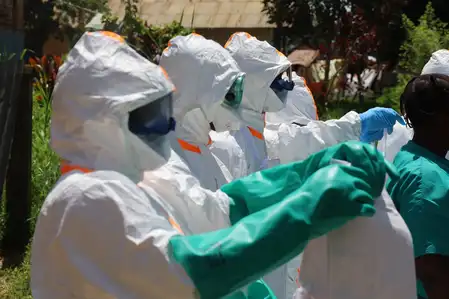
New Delhi, June 21 (IANS). According to a report, the fourth India-Africa Forum Summit was postponed due to the spread of Ebola virus in some countries of Africa. This situation shows that India’s role in meeting the health needs of Africa, especially in the area of vaccine development and production, is continuously increasing.
According to an analysis by IOL, postponing the summit has focused attention on India’s intensified efforts to help Africa deal with the Bandibugyo Ebola virus outbreak (which was seen in the Democratic Republic of Congo and Uganda).
The India-Africa Forum Summit, originally scheduled to be held here between May 28-31, was postponed following talks between India and the African Union amid concerns over the changing public health situation in Africa.
India’s role focuses on efforts by the Serum Institute of India (SII), along with the Coalition for Epidemic Preparedness Innovations (CEPI) and the University of Oxford, to accelerate the development of a vaccine against the Bandibugyo strain of Ebola.
The report said SII is using its proven ChadOx1 vaccine platform, which was used extensively during the COVID-19 pandemic, to rapidly manufacture clinical-grade doses that could be ready for trials in a matter of months.
It said India’s move is a reminder of its role during the Covid-19 crisis, when the country emerged as a major supplier of affordable vaccines to developing countries, including many African countries.
It also highlighted India’s extensive engagement with Africa through humanitarian assistance, including recent food assistance initiatives for countries facing challenges of food insecurity and displacement.
Although African institutions such as the African Union and the Africa Centers for Disease Control and Prevention (Africa CDC) are coordinating the continent’s efforts to respond to the Ebola outbreak, the report also noted that vaccine research and large-scale manufacturing capabilities are still heavily dependent on external partners.
Additionally, the postponed summit highlighted the need for greater investment in Africa’s own biotechnology and vaccine manufacturing ecosystems to strengthen long-term health security across the continent.
–IANS
SCH/DKP