Dhaka, April 25 (IANS). Bangladesh’s health system, which was strengthened over decades, now faces serious challenges. A report says that if corrective steps are not taken in time, the achievements of years may be lost in no time.
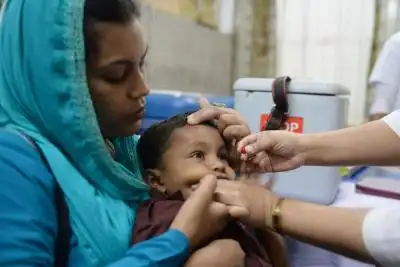
According to the report of Bangladesh’s leading newspaper The Daily Star, the current measles vaccine crisis in the country is not an isolated incident, but it is a sign of institutional weakness. National vaccination coverage is set to decline to around 60 percent in 2025, the lowest level in nearly a decade. This figure was between 85 and 92 percent between 2010 and 2022.
Bangladesh’s Expanded Immunization Program (EPI) has long been considered one of the biggest successes of the public health sector, the report said. Due to government commitment, support from development partners and a strong network of health workers at the grassroots level, the program has ensured high coverage for years and significantly controlled vaccine-preventable diseases.
According to the report, now this model seems to be weakening. Such a huge decline in vaccination coverage is not just a logistical problem but a clear failure of governance.
The report said the vaccination system depends on a coordinated procurement process, stable financing, capable leadership and a dependable workforce. When all these elements are affected simultaneously, the entire system breaks down.
The report calls the termination of the Health, Population and Nutrition Sector Program (HPNSP) in 2025 without concrete alternative arrangements a serious policy failure.
Moreover, about 45 per cent of EPI field posts are lying vacant in 37 districts. These workers operate around 1.5 lakh vaccination centres, which are the backbone of the entire programme. Without them, vaccination coverage is certain to decline.
The report also said that vaccine porters who maintain the cold chain did not receive salaries for months, leading to discontent and a nationwide strike.
The report recommended restoring institutional stability, streamlining the vaccine procurement process, filling vacant positions promptly, investing in research and monitoring systems, and rebuilding public trust through sustained communication.
The report warns that if action is not taken now, the current pressure could turn into a major crisis, with a huge cost both economically and humanitarianly.
–IANS
dsc