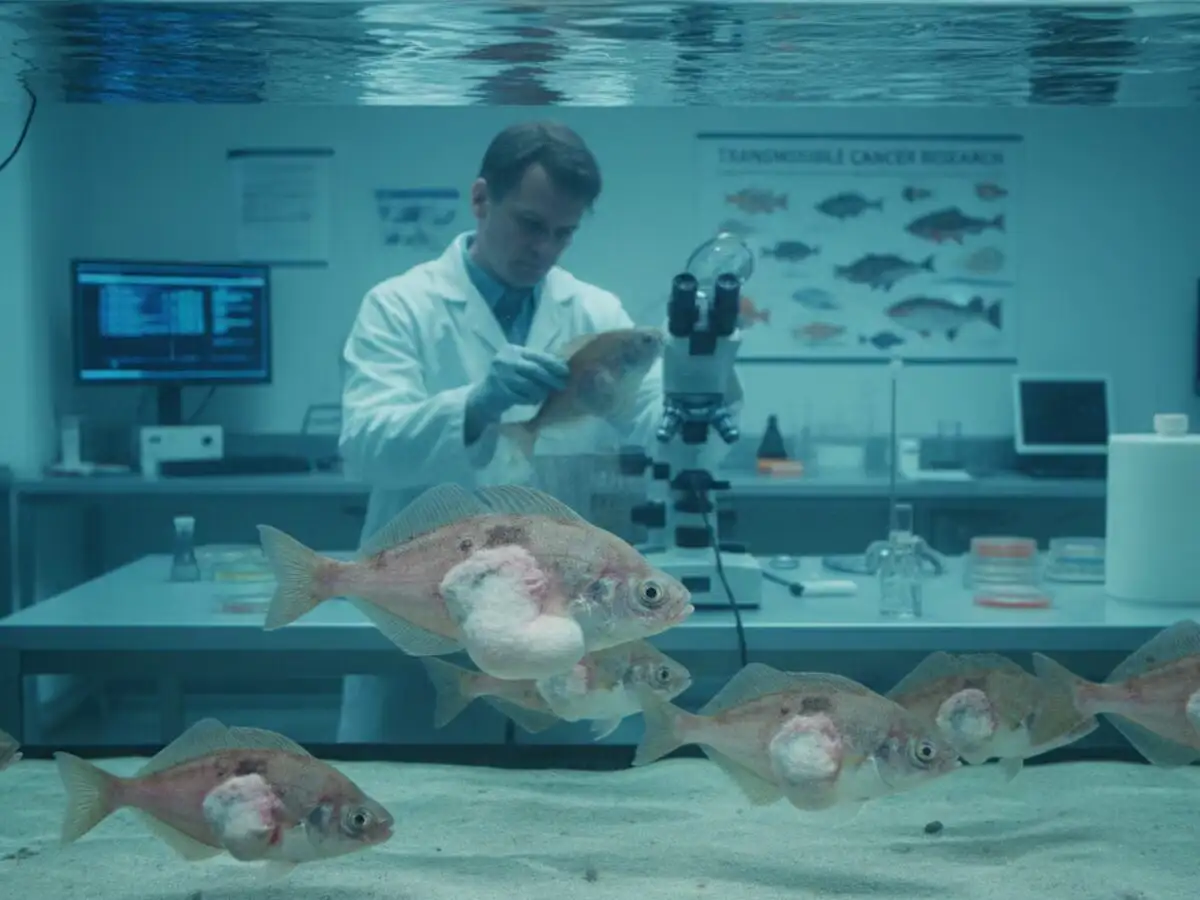
Cancer is generally considered to be a disease occurring in the body of humans or animals; It usually starts when the body’s own cells start growing out of control. However, scientists have discovered a rare form of cancer that is not limited to a single organism’s body, but can spread from one fish to another. A new study published in the journal *Nature* details the identification of this type of cancer in brown bullhead catfish. These fish live in Lake Memphremagog, which is located on the border between Vermont, USA, and Quebec, Canada.
What is special about these fish?
According to scientists, the melanoma found in these fish does not grow differently in the body of every fish. Instead, cancer cells move from one fish to another and spread there. This is believed to be the first known case of cancer spreading in fish. This is the first time this type of cancer has been found in a freshwater ecosystem.
How does cancer usually occur?
Cancer usually occurs when genetic changes occur in healthy cells of humans or animals over time, causing the cells to grow uncontrollably. These cancer cells remain in the body of the host (the organism that has cancer) and can spread to other parts of the body. However, cancer that spreads differs from this process; In this case, surviving cancer cells leave one organism and move to another and start growing there. As a result, the same cancer cells can survive as parasites in the bodies of different organisms.
To confirm this, scientists analyzed the genomes of tumors and healthy tissue from affected fish. The analysis found that tumors taken from different catfish were genetically very similar to each other, but different from the healthy tissue of the fish that contained the tumors. Analysis of the tumors revealed many genetic variants – out of millions of them – that were identical in tumors from different fish but not in healthy cells. This provided scientists with strong evidence that these tumors originated from the same cancer cell line, and did not arise separately in each fish. Scientists say brown bullhead melanoma now joins a rare list of naturally occurring spreading cancers in animals; Similar cancers have also previously been found in dogs, Tasmanian devils, and some marine shellfish species.
How does cancer spread to other fish?
However, it is not yet known how cancer spreads from one fish to another. Scientists have raised several possibilities based on the behavior of the brown bullhead catfish. One possibility is related to the breeding season, when large numbers of fish congregate together and come into close proximity to each other. This gives cancer cells a chance to spread from one fish to another.
Another possibility is related to the water environment. The skin, gills, and mouth of fish are in constant contact with water; If cancer cells are present in the water, they can pass to the body of other fish through these routes. Brown bullheads live in lake bottoms and do not have protective scales on their bodies. Scientists estimate that if cancer cells survive in the sediment of the lake for some time, then fish passing through that area may come in contact with them. However, these are just speculations and the exact mode of spread has not been confirmed in the study.
Can cancer spread to humans?
This discovery raises the question of whether cancer can spread to humans. Current scientific evidence suggests that there is no such risk. This study focused only on brown bullhead catfish and researchers found no risk of infection in humans. The human immune system normally recognizes and destroys foreign cells coming from another person. This is the reason why immunosuppressive drugs are given to patients after organ transplant.