New Delhi, January 9 (IANS). January is considered ‘Cervical Health Awareness Month’, meaning the month to create awareness about this cancer. Cancer due to which one woman dies every eight minutes in India.
Health experts said on Friday that vaccination, screening and early treatment are very important to fight cervical cancer. This cancer occurs in the lower part of the uterus i.e. cervix, and infection with Human Papilloma Virus (HPV) is considered to be its main cause.
Although HPV infection does not necessarily mean cancer, it does require testing or screening to determine whether it has caused any changes in the cervix.
Dr Sujata Pathak, scientist, Preventive Oncology, IRCH, AIIMS Delhi, told IANS: “Cervical cancer and breast cancer are the most common cancers in women. In India, a woman dies of cervical cancer every eight minutes. This shows how huge a burden it is. In many countries, the death toll is low. Cervical cancer can also be completely prevented. If screening is done on time or at the right age.” If vaccination is given, it can be prevented 100 percent.”
Dr. Rahul D. Modi, a gynecological oncologist at a hospital in Delhi, said, “Cervical cancer prevention is one of the most successful examples of cancer control in modern medicine. The disease is primarily caused by persistent infection with high-risk HPV. It is largely preventable with a combination of vaccination, screening and early treatment.”
Experts said that due to lack of awareness, the burden of this disease is increasing significantly in India.
Pathak said the HPV vaccine has been available since 2006, but awareness is very low. Recently, awareness has increased as WHO has declared cervical cancer a major public health problem.
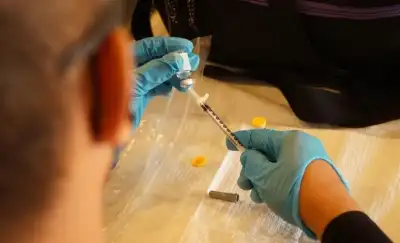
“HPV vaccination is recommended for adolescents before starting sexual activity, which can prevent most cervical cancer cases by protecting against the most oncogenic HPV types. Vaccination programs significantly reduce the incidence of HPV infection, pre-cancerous lesions, and future cancer,” Dr Modi told IANS.
The HPV vaccine is very safe and well tested. Like other vaccines, there may be minor side effects such as pain, redness at the injection site or mild fever for a day. He said that it has no serious side effects.
Girls aged 9 to 14 years should get vaccinated. They require two doses. Above this age, three doses are needed. According to WHO, even one dose can provide protection for 20 years.
Apart from vaccination, it is also important to maintain hygiene during periods and maintain complete immunity.
In about 90 percent of cases, HPV infection clears up on its own within two years.
Screening also plays an equally important role. Tests such as Pap smear and HPV DNA testing help detect precancerous changes in the cervix long before they turn into invasive cancer. AIIMS Delhi has also started one month free screening for cervical cancer.
“Cancer typically takes 15-20 years to occur, which gives us plenty of time for screening and treatment,” Pathak said. He further said that timely screening helps in detecting changes before they develop into cancer. AIIMS Delhi has also started one month free screening for cervical cancer.
Symptoms appear late, but once they appear, the cancer is often already advanced.
Late symptoms may include bleeding after menopause, bleeding between periods, excessive white discharge, abdominal pain or lower back pain.
Pathak told IANS that these symptoms do not always mean cancer, but they should never be ignored.
–IANS
kr/