An old novel tells us that new readers can also be fascinated by old writings again.
A few days ago, a controversy arose in Raipur after famous Hindi writer Vinod Kumar Shukla received a royalty of Rs 30 lakh. While on one hand some Hindi writers are celebrating this surprising incident, on the other hand some writers are questioning the credibility of this royalty.
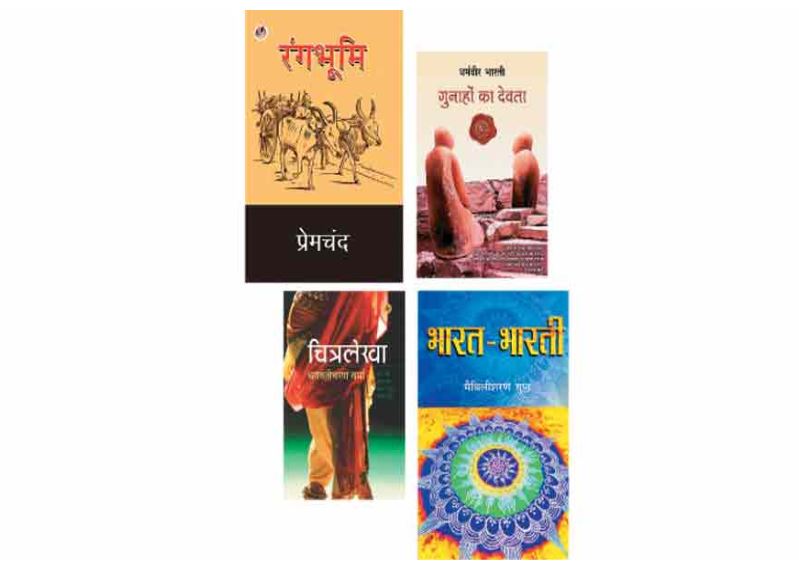
Acharya Shivpujan Sahay has written in one of his memoirs that Premchand had received royalty of Rs 1800 on his novel Rangbhoomi. Rangbhoomi was printed in 1925. That means a hundred years ago. The 1800 rupees of that time must have been at least 1 lakh 80 thousand rupees according to today’s prices. Not all writers had the luxury of such a huge amount in those times. Maithili Sharan Gupta’s Bharat Bharati sold more than Premchand’s Godaan. Pandey Bechan Sharma ‘Ugra”s Chand Haseen Ke Khutut and Dilli Ka Dalal were the best sellers of their time. Bhagwati Charan Varma’s novel Chitralekha, published in 1934, later sold so much that after independence, Bhagwati Babu’s life was spent on its royalties.
But despite this, even at that time, publishers used to collect royalty from writers. Shivrani Devi wrote in Premchand house. If the publishers had given Premchand the right royalty, he would not have had to struggle so much in life. Shivpujan Babu himself has written in his diary that the publisher Ramlochan Sharan, the owner of the book store, and his friend publisher Raja Radhikaraman Prasad Singh did not pay him his full royalty.
Nirala also did not get the full rights of his royalty during his lifetime otherwise he would not have been in this condition. Premchand was aware of this problem and becoming a publisher himself, he started Hans Prakashan and also published his wife’s story collections from this publication.
After independence, perhaps due to not getting royalty from the publishers, Yashpal, Jainendra, Dinkar, Upendranath Ashk, Rajendra Yadav also became publishers by publishing their own books. It is a different matter that he remained a writer instead of a publisher and he did not get enough success in this business.
According to Ravindra Kalia, Dharamveer Bharti used to get royalty of one lakh rupees every year from Jnanpith for Gunah Devta. 169 editions of this novel have been published. But Vinod Kumar Shukla getting royalty of Rs 30 lakh from the sale of his novel within just six months is a historic event in the Hindi world. He has stunned everyone. Recently, this incident was highlighted on social media and there was a lot of uproar regarding the reality of royalty. Hind Yugm owner Shailesh Bharatwasi had said in an interview several months ago that he would give a royalty of thirty lakh rupees to Vinod Kumar Shukla and he did it.
But some people called this royalty the result of publicity mechanism. Some expressed apprehension that this sale may have increased due to government procurement. Virendra Yadav even raised questions on the quality of this novel of Vinod ji and wrote that it does not represent the tribal life of Chhattisgarh, rather Manmohan Pathak’s novel Ghata Gagan Gaharni portrays it. Om Thanvi, former editor of Jansatta, wrote that there are many people in Hindi who are jealous of Vinod ji and they are not able to digest the royalty of Rs 30 lakh. But generally, this sale brings happiness on the faces of Hindi writers and also hope that till date no Hindi writer has received so much royalty, but maybe now the days will change. A Hindi writer does not expect royalty. However, he pays money to get his book printed and remains satisfied and grateful that his book somehow got published. In such a situation, Vinod ji getting so much royalty is a big news not only for the Hindi world but also for the Hindi media. But no newspaper paid any attention to this untoward incident. Is selling more than 80 thousand copies of a book published 28 years ago in 6 months the result of marketing strategy or the result of sudden increased interest of new readers in Vinod ji’s literature? This readership has come from the events of Hindaavi Rekhta Aaj Tak and Lit Fest or from the promotion of the book on social media or from trending on Amazon, because Rajkamal Prakashan could not sell this novel that much. Is this the wonder of new Hindi, which is the slogan of Hind Yugm. After all, what is new Hindi?
The question is that to Vinod Kumar Shukla, to whom two big publishers were able to pay a royalty of Rs 25 thousand annually on all his books, how was a new publisher able to pay a royalty of Rs 30 lakh on one of his novels? Were both the big publishers cheating Vinod ji till now, embezzling his royalties or were their marketing strategies weak and they were really not able to sell his books?
Did the incident of Vinod ji receiving the Jnanpith Award and the PEN Award of Rs 40 lakh create readers for him overnight?
When there was a royalty dispute regarding Nirmal Verma’s books, Nirmal ji’s wife Gagan Gill had told the press that the publisher publishing his books gives a royalty of only one lakh rupees a year. Later Gagan ji took back Nirmal ji’s books and gave them to another publisher. When that second publication was closed, a third publisher started publishing those books from its own place. Finally a deal was made with the publisher who was Nirmal ji’s first publisher, whom Gagan ji had accused of stealing royalties. Now the same publisher has again withdrawn all the books of Nirmal ji at the annual royalty of above Rs 26 lakh.
If we look at it, the world of publishing in Hindi is very mysterious and it works like an underworld. Many of its basements have been built. The art of getting a book published from big publishers is also becoming mysterious. A large group of Hindi writers are operated by the same publishers. This includes leftists and extreme revolutionaries. Publishers who claim to be alternative publishers also do not even give accounts to authors, leave alone paying royalties.
Recently, famous Hindi writer-journalist-translator Anand Swaroop Verma appealed on Facebook to get the outstanding amount of Rs 2 lakh for the translation work from his publisher, because the publisher neither picks up his phone nor responds. He made this touching plea from the hospital bed. A few years ago, Vinod Kumar Shukla himself had made a touching plea that publishers should not print his books because they were earning money by printing books without permission and not paying royalty. After his request, a tremendous debate broke out in Hindi literature on author-publisher relations.
In such a situation, if Vinod Kumar Shukla gets Rs 30 lakh royalty, there will be legitimate pressure on other publishers and there will be hope for improvement in author-publisher relations. This will also break the monopoly of big publishers. There should be a debate on this in the Hindi world but big litterateurs are cleverly maintaining silence. Writers’ organizations have also saved their skins because their officials have cordial relations with these publishers. There is also a question whether books are sold on the basis of winning big awards, getting involved in controversies or social media promotion, marketing techniques and branding or on quality? Or really, in the meantime, a new and young readership has emerged and is taking the books of its choice according to its interests, needs and understanding? But how to crack down on publishers? Hindi society is full of responsibility. Is helpless and helpless. The writer is destitute.
If the author himself becomes a publisher, he is not able to succeed because he does not know the tricks like the publishers. Even today many publishers are publishing books by taking money from authors. These people neither pay royalty nor give account of it. If anyone protests, they blacklist him. People who want to be successful writers don’t speak out against publishers. Remain silent.
Even if Vinod ji has received this amount at the age of 86, how will he be able to use it for himself now? Perhaps the family members may benefit but the Hindi writer remains wandering throughout his life. This is his destiny. If the market takes advantage of it, it should be welcomed. But now young writers themselves have become salesmen of their books and are marketing their books.
(The author is a senior journalist and poet)