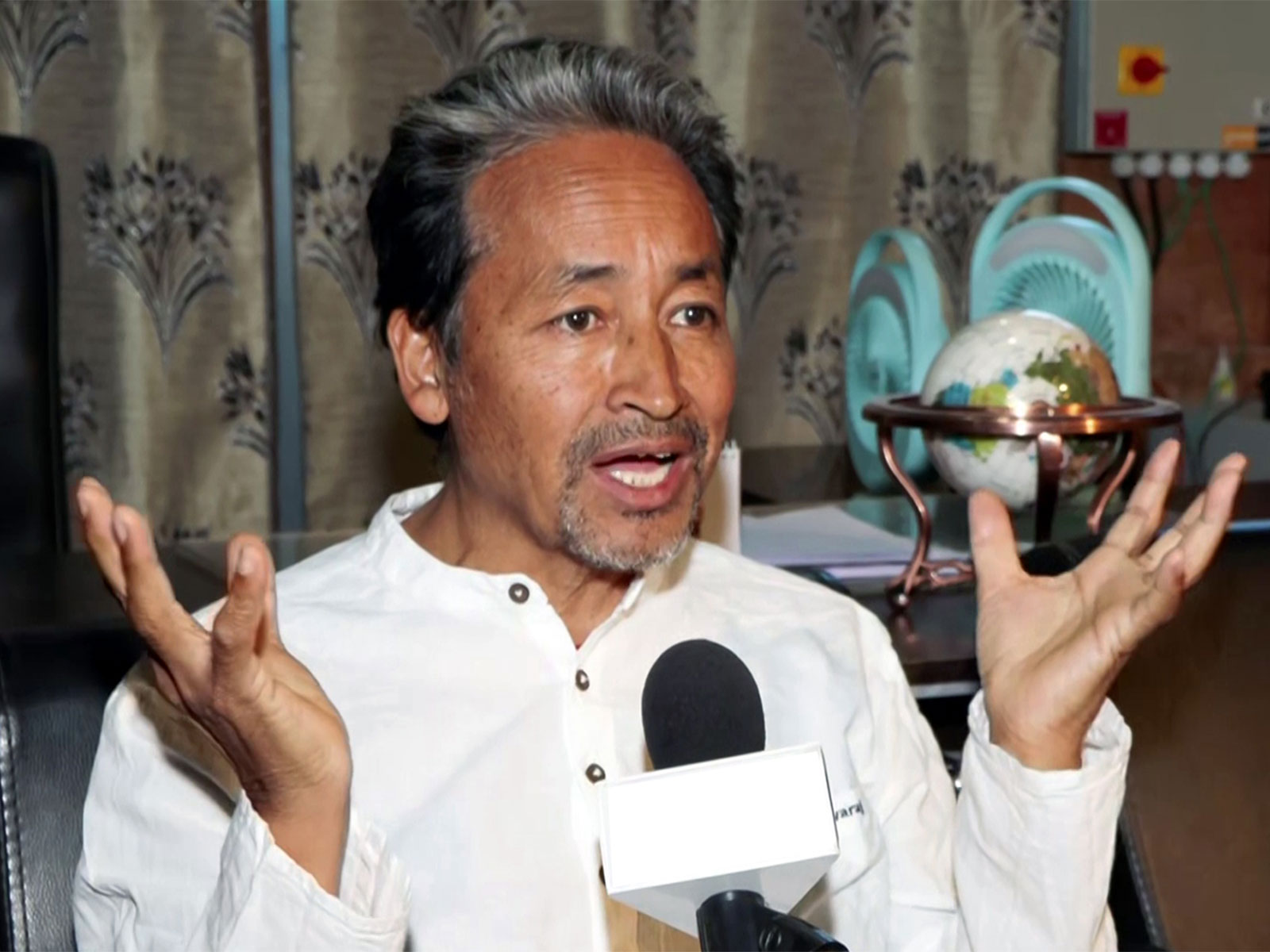
The Home Ministry on Saturday said the government has decided to revoke the custody of Sonam Wangchuk with immediate effect, in exercise of the powers available under the National Security Act (NSA).
The Home Ministry said the government is committed to creating an environment of peace, stability and mutual trust in Ladakh so that constructive and meaningful dialogue can be established with all stakeholders, and the decision to revoke Wangchuk’s detention has been taken in furtherance of this objective and after due deliberations.
It further said that the government is actively interacting with various stakeholders and community leaders in Ladakh to address the aspirations and concerns of the people of the region.
However, the Home Ministry pointed out that the prevailing atmosphere of bandh and protests has been detrimental to the peaceful character of the society and has adversely affected various sections of the community including students, job aspirants, businesses, tour operators, tourists and the overall economy.
The Home Ministry further said, “The government reiterates its commitment to provide all necessary security measures for Ladakh. It hopes that issues related to the region will be resolved through constructive dialogue and dialogue, including through the mechanism of the High Powered Committee as well as through other appropriate forums.”
Wangchuk was detained under the provisions of the National Security Act (NSA) on September 26, 2025, under an order issued by the District Magistrate of Leh for the purpose of maintaining public order, in view of the serious law and order situation that arose in the peace-loving city of Leh on September 24, 2025.
Wangchuk has already served almost half of the period of detention under the said Act.
Earlier, on February 26, the Supreme Court had scheduled the final hearing for March 10 on the plea challenging climate activist Sonam Wangchuk’s detention under the National Security Act.
The court also raised questions about whether his speeches and social media posts could be considered legitimately inflammatory and whether they could be linked to the Leh violence of September 24, 2025.