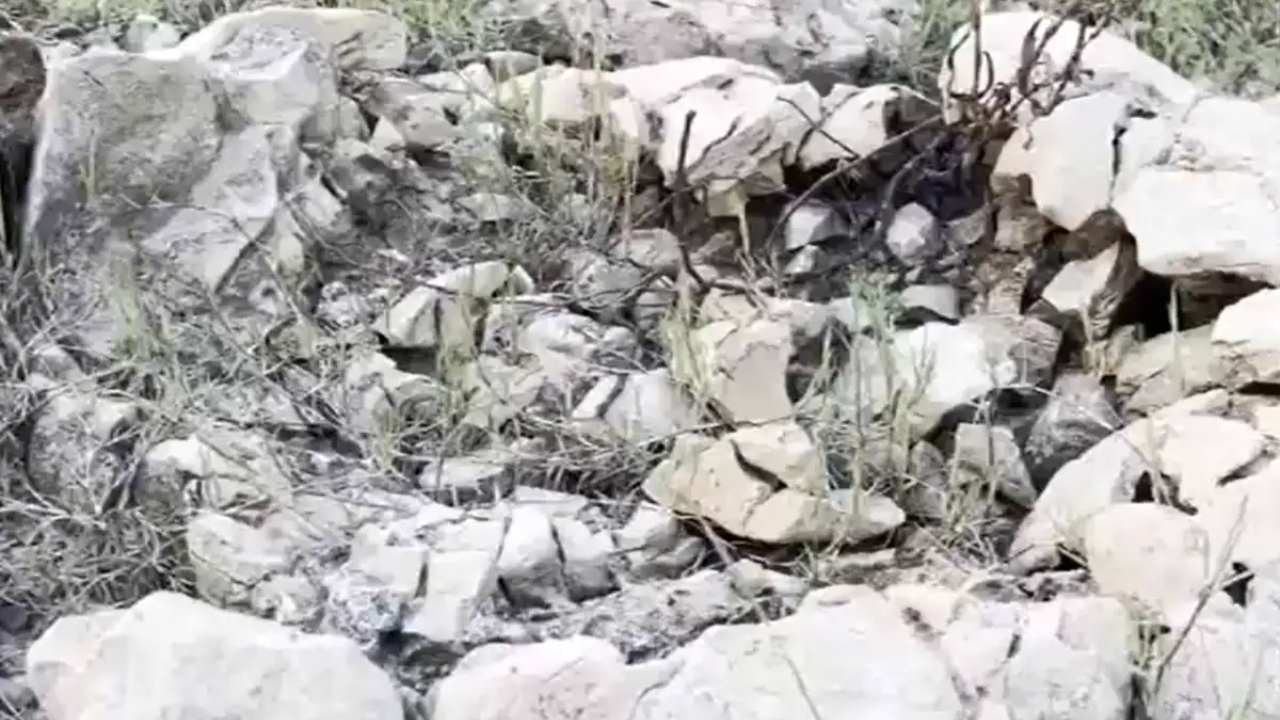
Odisha Fossil Discovery 2026: A unique discovery made in Mayurbhanj district of Odisha has become a matter of surprise for the common people as well as the scientists. Fossils of shark teeth and spinal bones, about 15 million years old, found here during a search, have revealed the mystery that today’s land was once under the sea. This discovery, made during an educational tour, will not only help in understanding the geological history of the area, but can also play a big role in increasing the possibilities of developing it as a geo-heritage and tourist destination in future.
Millions of years old treasure found in students’ field trip
This important discovery was made near Baripada in Mayurbhanj district. The team of PG Department of Remote Sensing and GIS of North Odisha University went on a field visit with the students. The team was led by Assistant Professor Dr. Debabrata Nandi.
During the tour, the team noticed some remains buried in the ground which looked different from normal stones. Initial investigation suggested the possibility of them being fossils. After this, scientists started a detailed survey of the area, in which many important fossils were revealed.
Local people called ‘Asur Hadda’, scientists recognized the history
For years, the local people of Baripada area considered these remains to be the bones of Asur Hadda i.e. demon. When scientists talked to local people, they got more information about these remains. During intensive study, microscopic shark teeth, parts of shark spinal bones and remains of other marine organisms were found. Identification of some fossils is still going on and experts are analyzing their structure.
How do shark teeth prove there was once an ocean here?
According to scientists, shark is completely a marine creature. If fossils of shark teeth and bones are found in an area, it is considered strong evidence that that place was once part of a marine environment.
Today Baripada is located about 60 kilometers from the coast of the Bay of Bengal, but fossils show that millions of years ago the sea extended much further inland than the current coastline. Over time, geological changes, soil deposition, and changes in sea level have caused the sea to retreat and form the current landform.
These fossils may be related to Miocene era
Researchers believe that these fossils belong to the Miocene era. The Miocene period began about 23 million years ago and ended about 53 million years ago. This was a time when major changes were occurring in the Earth’s climate and many species of marine organisms were rapidly evolving. Based on preliminary studies, scientists estimate that these fossils found in Mayurbhanj may be about 15 million years old.
Fossils of sea creatures have been found in India before
Fossils of marine creatures have been found in many parts of India in the past. Remains of marine creatures have also been found in the Kutch region of Gujarat, some areas of Rajasthan and the Himalayan regions. This is evidence that the Earth’s surface has been continuously changing over time.
Experts say that the tectonic activities of the Indian Plate changed the structure of the landmass over millions of years. Due to this process, many areas which were once under the sea, have today become terrestrial areas.
Will help in understanding the ancient ecosystem
Researchers are now collaborating with various paleontologists and geological institutions of the country to identify the remaining fossils. Their objective is to know what the ecosystem of the Mayurbhanj region was like millions of years ago, what creatures lived here and what the climate was like at that time. If further investigation turns up more fossils of marine organisms, this discovery could prove to be extremely important in understanding the ancient environmental history of eastern India.
There is also a possibility of becoming a geo-heritage site
Experts associated with the research believe that this site is very important from scientific study as well as educational and tourism point of view. In future, it can be developed as a geo-heritage site, which will provide an opportunity to students, researchers and tourists to understand the millions of years old history of the earth closely. This discovery in Odisha is an indication that there are many such secrets hidden within the earth even today, which can reveal the secrets related to our past.