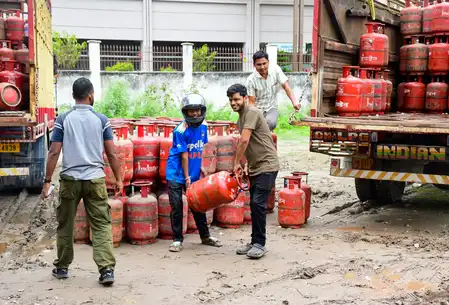
New Delhi, June 7 (IANS). Amid the West Asia crisis, the cost of supply of a 14.2 kg cylinder has increased to more than Rs 1,600. Now each domestic cylinder is facing a loss (under-recovery) of about Rs 700. Also, domestic cooking gas prices were increased by Rs 29 per cylinder. The government gave this information on Sunday.
According to the Petroleum Ministry, its impact is clearly visible on market-priced commercial cylinders. A 19 kg cylinder used in hotels and restaurants sells for Rs 3,113.50 (about Rs 164 per kg) in Delhi, after the price hike five times during the West Asia crisis.
In contrast, for domestic use the price after the price revision is around Rs 66 per kg. Commercial gas has a higher tax rate and margin, so its price is higher than the cost-based price of domestic gas. Nevertheless, the ministry said the import-linked cost of a domestic cylinder comes to more than Rs 1,600.
When the situation in the Strait of Hormuz became difficult due to the conflict, much of the commercial traffic through this route came to a halt. About 54 percent of India’s LPG consumption came through this strait, posing a threat of the disruption having a direct impact on the supply of cooking gas.
India was one of the few countries that continued the movement of its energy cargo. With continued coordination, Indian flagged tankers continued to transit the strait and offload continuous consignments of crude oil and LPG at Indian ports. The ministry said there was no shortage of any petroleum product and bottling and distribution operations continued normally across the network. Despite the interruption, several steps were taken to maintain supplies.
On the supply side, domestic LPG production was increased from about 32 TMT to about 52 TMT, an increase of more than 60 percent, to compensate for the decline in imports.
Due to continuous coordination, ships carrying LPG continued to pass through the Strait of Hormuz. India took out more ships than any other country and did so without paying any toll.
According to a government statement, LPG was sourced from suppliers around the world, including countries whose ships do not transit through the strait (such as the US, Canada and Algeria) and available LPG was directed to households and priority consumers such as hospitals and educational institutions.
From a demand perspective, customers were encouraged to switch to Piped Natural Gas (PNG) wherever convenient, thereby reducing pressure on cylinders.
To safeguard limited domestic supplies, measures to prevent misuse of supplies were strengthened in collaboration with state governments and industry associations: OTP-based delivery verification was increased to approximately 90 percent, preventing misuse of subsidized domestic LPG in the commercial market.
By the end of the last financial year, the total under-recovery on domestic LPG reached Rs 60 thousand crore, which was Rs 41,338 crore the year before. The Union Cabinet has approved giving compensation of Rs 30 thousand crore to marketing companies under this head.
The ministry said the subsidy is in addition to: Ujjwala customers get an additional Rs 300 per cylinder which is deposited directly into their bank accounts. This facility reaches more than 10.58 crore connections.
–IANS
PSK/PM