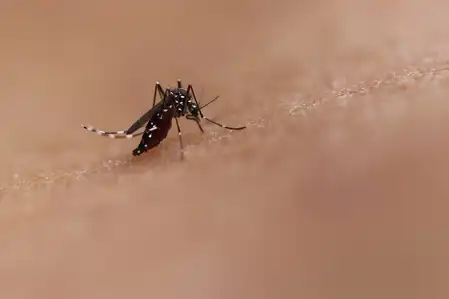
New Delhi, October 22 (IANS). A new hopeful research has emerged in the treatment and prevention of viral diseases like Chikungunya. Researchers from Singapore have made an important discovery, according to which a special protein present in mosquito saliva has a direct effect on the immune system of our body.
Published in Nature Communications, researchers said that a bioactive peptide (protein-like element) named sialokinin present in the saliva of Aedes mosquito attaches itself to certain immune cells of our body. These cells play an important role in the initial fight against infection in our body.
The team from Singapore-based ‘A Star Infectious Disease Laboratory (A Star IDL)’ said that when a mosquito bites, this sialokinin enters our body through its saliva and binds to neurokinin receptors and prevents immune cells called monocytes from activating. Due to this, the process of inflammation in the body slows down for some time.
While stopping the initial inflammation may seem like a relief to the body in general, it can be harmful in the case of a viral infection. When Chikungunya virus infection reaches inside the body, the body’s immune response is very important to stop it. But when this reaction is slowed down, as is the case with sialocinin, the virus becomes more likely to spread through the body. The symptoms may become more serious later on.
Research also showed that patients who had more severe symptoms of chikungunya had more antibodies (antibody proteins) against sialokinin in their blood.
Dr. Siu-Wai Fong, senior scientist of ‘A Star IDL’ and the lead author of this research, said that this study is concrete evidence that apart from the virus, mosquito saliva also affects the immune response of our body. They believe that if in the future a treatment is developed targeting sialokinin or its receptors, better results can be achieved in chikungunya and other mosquito-borne diseases.
Chikungunya is a disease that is spread by the bite of the Aedes mosquito and its symptoms include high fever, swollen joints and long-lasting pain. Many patients suffering from this disease struggle with joint pain for months. In such a situation, if the elements present in mosquito saliva are understood and their effect is reduced, then the severity of the disease can be reduced.
This discovery is also important because due to climate change, the spread of mosquitoes is increasing and such viruses can reach new areas. Scientists believe that identifying the elements hidden in mosquito saliva and blocking them can open a new way to prevent disease in the future.
–IANS
PK/AS