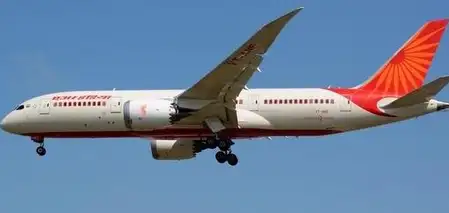
New Delhi, October 12 (IANS). Aviation safety regulator, Directorate General of Civil Aviation (DGCA) has directed Air India to re-inspect the Ram Air Turbine (RAT) system, an emergency power source, in all Boeing 787 aircraft where the Power Conditioning Module (PCM) was recently replaced.
The move follows two recent technical incidents involving Air India’s Boeing 787 Dreamliner aircraft. Also, the DGCA has asked American aircraft manufacturer Boeing to submit a detailed report outlining preventive measures to avoid such incidents in future.
The regulator has also sought information from Boeing on similar RAT deployment cases reported globally on Boeing 787 aircraft, as well as reports of any service difficulties following PCM replacement. This action has been taken after two consecutive incidents earlier this month. On October 4, RAT on Air India’s Amritsar-Birmingham flight (AI-117) was automatically deployed just before landing. Five days later, on 9 October, another Boeing 787 aircraft operating Air India’s Vienna-Delhi flight (AI-154) was diverted to Dubai after a sudden failure of the autopilot system and multiple technical glitches.
The RAT is designed to deploy automatically in the event of complete engine, electrical or hydraulic failure. It uses wind energy to generate emergency electricity to keep critical systems running.
According to a DGCA official, Air India has been asked to re-inspect all aircraft in which the PCM module, an essential electrical component that manages power distribution throughout the aircraft, was recently replaced.
The airline has also been advised to review the work package of ‘D’ check (a major aircraft maintenance check) to ensure that all necessary actions have been taken after PCM replacement. During the October 4 incident, the RAT UNLOCK message appeared about 400 feet before landing, but the pilots reported no abnormalities and the aircraft landed safely.
–IANS
SCH/DKP