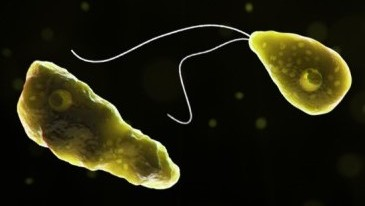
New Delhi, 18 September (IANS). Doctors say that due to exposure to contaminated water, brain-eating amoeba enters the body, then it makes the person infected. In Kerala, 19 people have died, including a three -year -old child, in Kerala. Doctors have appealed to the people to avoid swimming in ponds and reservoirs.
Amibic meningitis is a rare but deadly central nervous system infection that is caused by free-living amoeba, Negarria Foulri, also known as brain-eating amoeba, found in freshwater, ponds and rivers.
Kerala has 61 confirmed cases of this brain infection and 19 deaths, including three -month -old baby to 91 -year -old man.
Dr. TS Anish, Professor and Nodal Officer of Health Center in Kerala, for Nipah Research at Kozhikode Government Medical College, told IANS, “Amibiosis or Amibic meningitis is a rare disease that is very difficult to diagnose. No dedicated diagnostic technology is used in the world. “
However, a dedicated system has developed due to Nipah outbreak that can diagnose more and more AES cases. The expert said that this saw an increase in cases of hemibic meningitis.
He blamed global warming and climate change for the increasing number of infections.
Anish said, “Thermophilic organisms definitely increase when the temperature of the reservoirs or pond rises, and the problem of pollution in our water bodies is also enough.”
The expert also stated that “the death rate from the disease in Kerala is low; it is one of the lowest rates of amibic maningitis recorded worldwide.”
Aneesh said, “The global mortality of amybic meningitis caused by Neglaria Foulri amoeba is about 97 to 98 percent. Any type of Amibic meningitis is high, perhaps 60 to 70 percent, but in Kerala it is about 20 percent. It is probably due to timely detection.”
Dr. Anshu Rohatgi, a neurologist at a major hospital in the city, connected the outbreak of the disease with ‘fast -growing urbanization, chlorinerless and germinated water swimming’.
He said, “This Neglaria Foulri Amoeba enters the nasal pores, nasal airways and goes to the brain and causes amybic meningoinesflitis.”
According to health experts, if it is detected in time, it is fully treated.
Rohatgi further said, “If this meningo encephalitis is not treated, it is 100 percent fatal. But, in Kerala, because the level of doubt is very high, so most cases are being diagnosed early.”
Rohatgi stated that to identify the infection, the most important is the lumbar puncture or CSF (cerebrospinal fluid) probe – a medical process in which the needle is inserted into the spinal cord.
Apart from this, Anish said that “This disease is not so rare, but in most parts of India it is rarely diagnosed.”
He cited a study conducted between 2014 and 2022 at the Postgraduate Medical Education and Research Institute (PGIMER) in Chandigarh, in which the hemibic meningitis was examined in a sample of 156 patients with suspected meningo esingecephilitis.
PCR detected free living amoeba (FLA) in 11 of the 156 patients samples.
Aneesh said that patients who have previously become CSF renoria (in which fluid around the brain are usually seeping from the nose) may be vulnerable to the disease. Those who have done any surgery in the brain or skull, they also threaten them.
Experts said that this infection does not spread from one person to another. It does not happen even by swallowing water containing amoeba. He urged people to avoid swimming in those ponds or rivers who are feared polluted. He also suggested that he should also avoid washing without boiled water.
-IANS
KR/