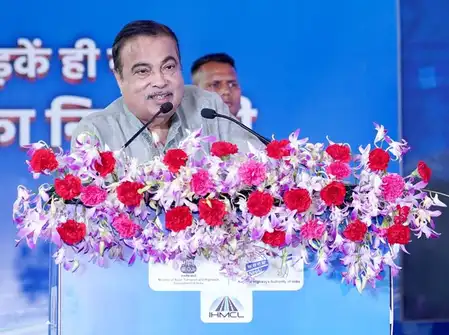
New Delhi, May 11 (IANS). Union Road Transport and Highways Minister Nitin Gadkari on Monday said India is fast moving towards world-class highway infrastructure with the introduction of Multi-Lane Free Flow (MLFF) tolling system. Its objective is to ensure smooth travel across the country, reduce pollution and reduce logistics costs.
The Minister inaugurated the country’s first barrier-free toll plaza at Mundka-Bakkarwala on Urban Extension Road-2 (UER-2) in the National Capital Region.
The MLFF system introduces a contactless and barrier-free toll collection mechanism, which allows vehicles to pass through toll plazas without stopping. It uses Automatic Number Plate Recognition (ANPR) technology integrated with FASTag based electronic toll collection.
Speaking at the launch event, Gadkari said the new system has been developed using advanced international standard technology after extensive discussions with technology providers and private stakeholders.
Gadkari said India is rapidly moving towards world-class highway infrastructure with the introduction of Multi-Lane Free Flow (MLFF) tolling system, which will ensure seamless travel, reduce pollution, reduce logistics costs and improve operational efficiency across the country.
He said the government is committed to upgrading the highway infrastructure through technology-based reforms with the aim of enhancing passenger convenience and ensuring sustainable development.
He said that the MLFF system has been developed using advanced international standard technology and it required extensive consultation with technology providers and private stakeholders.
Gadkari said the government is committed to continuously upgrade highway technology while ensuring sustainable development and passenger convenience.
According to Gadkari, this new system is expected to save about 250 crore liters of fuel per year and reduce carbon emissions by about 81,000 tonnes, which will especially benefit pollution-affected areas like Delhi-NCR.
He said that the hassle-free toll system will significantly reduce the waiting time at toll plazas, which will lead to substantial fuel savings and provide a smooth travel experience to the passengers.
He further said that the operating cost of toll collection, which was earlier around 15 per cent, will come down to around 3-4 per cent under the MLFF system.
He said that cost reduction can lead to savings of about Rs 5,000-6,000 crore annually.
–IANS
ms/