New Delhi, December 29 (IANS). That calm beach of Thumba in Kerala and that old building of ‘St. Mary Magdalene’ Church, today it is no less than a holy temple of Indian space research. It was an amazing sight here in the 1960s. A bishop left his church and home for the scientific dream of the country. There was no state-of-the-art lab there. The scientists converted the priest’s house into an office and carried the rocket parts to the launchpad on the back of a bicycle.
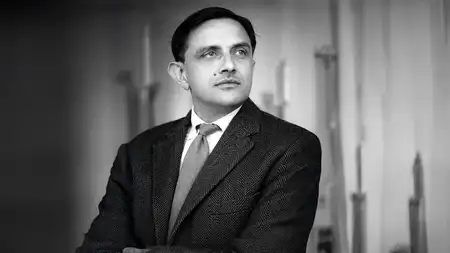
Amidst the crowd, a tall, graceful man was pushing heavy rocket parts along with the scientists themselves. This was Dr. Vikram Ambalal Sarabhai. The man who showed the world that flying high does not require an expensive launchpad, but an unwavering vision.
Vikram Sarabhai was born on 12 August 1919 in Ahmedabad. His father, Ambalal Sarabhai, was an industrialist and owned several mills in Gujarat. Vikram Sarabhai was one of eight children of Ambalal and Sarala Devi. Vikram’s mind was engrossed in the stars and the mysteries of the universe. After completing his education in natural sciences from Cambridge, when he returned to India, he met CV Raman and Homi Jahangir Bhabha. From here his passion for ‘cosmic rays’ laid the foundation of India’s scientific renaissance.
He established the ‘Physical Research Laboratory’ (RPL) at the age of just 28. Today, IIM Ahmedabad is making its mark in the world, it is the vision of Sarabhai. He left his mark in every field, from textile industry Ahmedabad Textile Industry Research Association (ATIRA) to arts (Darpan Academy).
When Sarabhai talked about the space program in the 1960s, the world scoffed at him. Critics said, “Why does poor and hungry India need rockets?” Sarabhai politely replied, “We are not competing with anyone in the race to the moon or the planets, but we want to use technology to solve the problems of the common Indian.”
He gave the principle of ‘Leapfrogging’. This meant that India should directly adopt cutting-edge technology instead of repeating the old steps of Western countries. He planned ‘SITE’ (Satellite Instructional Television Experiment) in collaboration with NASA, which paved the way for providing education and agricultural information through TV to remote villages of India.
Dr. Sarabhai started the project to build and launch an Indian satellite. As a result, the first Indian satellite, Aryabhata, was launched into orbit from a Russian cosmodrome in 1975.
The establishment of the Indian Space Research Organization (ISRO) was one of his greatest achievements. After the launch of the Russian satellite Sputnik he successfully convinced the government about the importance of the space program for a developing country like India.
That night of 30 December 1971 is still like a dark shadow in the history of Indian science. After reviewing the rocket launch at Thumba, he went to rest at ‘Halcyon Castle’ hotel in Kovalam. The next morning, this great son of India was found dead in his bed at the age of just 52. His sudden death shocked everyone.
–IANS
VKU/ABM