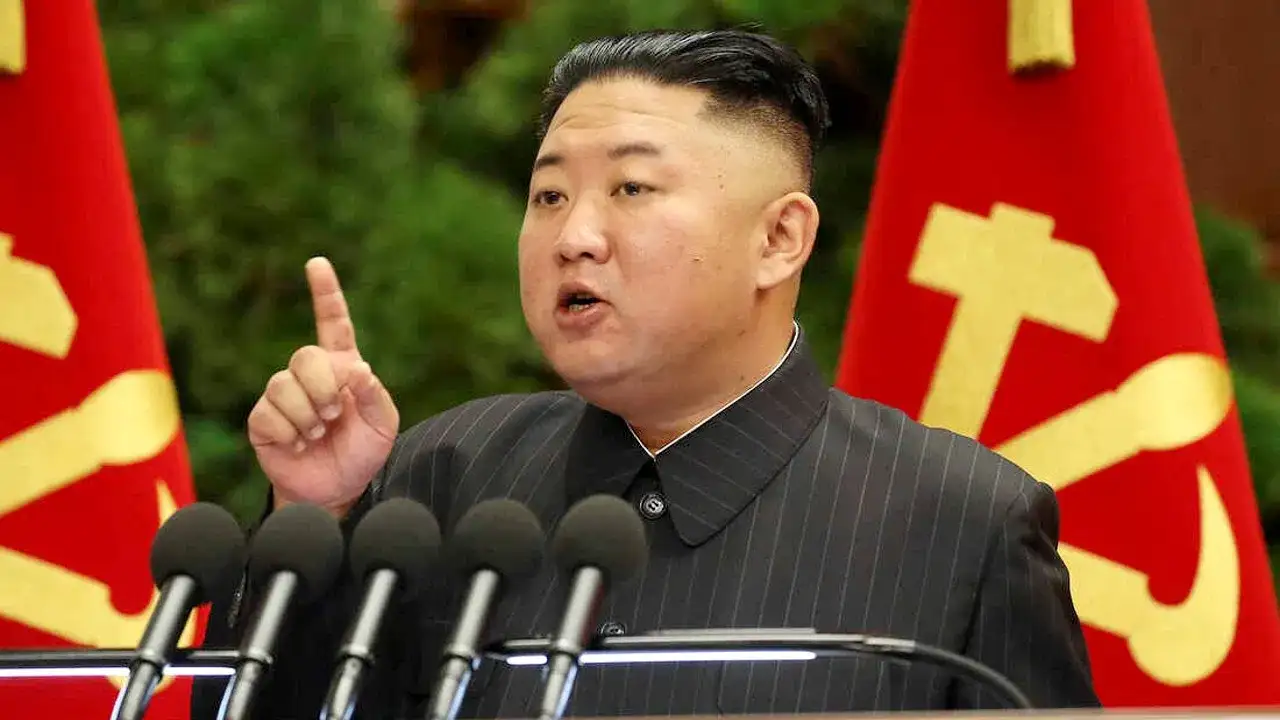
North Korean dictator Kim Jong Un is no less than a mystery to the world. Even his own countrymen do not know much about their ruler. The North Korean government also does not release much information about its ruler. For example, clear public records on subjects such as his date of birth, early life, and education are limited or nonexistent. As a result, mysterious stories, speculations and some journalistic reports constantly revolve around his life.
Today, on January 8, the dictator turns 42, but even this cannot be fixed with certainty. Since the US Treasury Department recorded his date of birth as January 8, 1984 in 2016, it is assumed that this is the ruler’s birthday. Let us take this opportunity to know some interesting, secret things about his mysterious life which you might not know.
Fake names, normal schools and missing teens
The most talked about mystery about Kim Jong Un is his alleged Swiss education. Widespread media reports claim he lived in Switzerland as a teenager and attended a top private school in Bern. His classmates knew him as Pak Un. He was average in studies but was interested in music and basketball. Reports also claimed that he was transferred to another school due to poor grades. There he lived like a common student, without any royal pomp, spoke little and hid his identity.
Several reports also claimed that he used a fake name to hide his real identity. The most interesting aspect of this story is how different the future leader of the world’s most closed country must have been from the open, normal lifestyle of Western Europe. The incident in Switzerland has been repeatedly featured in the media, but it is difficult to independently publicly verify every information due to North Korea’s secrecy and limited documentation. Nevertheless, it is generally believed that he spent some time abroad, and that this experience may have influenced his thinking, especially his interest in technology, urban symbols, and modern conveniences.
supreme commander without military training
Another big claim about Kim Jong Un is that he rose to the center of the country’s supreme military power without extensive military training or field-level command experience in the traditional sense. He assumed power in 2011 after the death of his father Kim Jong Il. In North Korea, the leader is often given titles such as Supreme Commander. But the question is: which is more important: real military training or political succession?
In a system like North Korea’s, military leadership is not just a matter of war but also a game of balance of power. A web of legitimacy based on generals, security agencies, party cadre and family. Since taking power, Kim Jong Un has repeatedly made himself the figurehead of both the military and the country through traditional political propaganda moves such as military parades, monitoring missile tests, and on-the-spot guidance. This means that while his military training may be debatable, his ability to quickly gain traction through military language and leadership is a key tool in building legitimacy in North Korea.
Transfer of power: speed, uncertainty and ruthless strength
After the death of Kim Jong Il, the transfer of power occurred rapidly. At that time the outside world raised questions about whether the young heir would be able to maintain his position. However, in the early years itself, major signs of strengthening of power within the regime were clearly visible. This included changes in appointments, expanding his image in the propaganda system, and strengthening his grip on the security structure. His image was created as a decisive, sharp and ruthless leader.
Several high-profile incidents and reports reinforced this perception of brutality, although independent verification of many details is not always possible due to the system being closed. Nevertheless, it is clear that he firmly established himself at the center of power and made the direction of North Korea’s policy, particularly regarding security and its nuclear program, the hallmark of his leadership. It is also said that he tried to resemble his grandfather Kim Il Sung through plastic surgery, so that he could become a father figure to the country.
A story of mystery, fear and miraculous success
North Korea’s political culture has a tradition of portraying its leaders as extraordinary. Stories related to his life often contain elements of mystery. When was he born, where did he study, how did he receive his training, and what qualities made his leadership a natural fit? In such systems, secrets are not just for personal protection; It also becomes a political weapon. When the public has limited access to independent information, the official story becomes the framework of truth. In the case of Kim Jong Un, his public image appears to be a mix of a tough military leader, an administrator overseeing projects among the people, and a reformer who talks about modernity.
Display of urban projects and technology
Symbolic urban projects, new buildings and modern facilities have also been promoted under Kim Jong Un’s rule. To outside observers, this signals that the leadership seeks to project the image of a modern nation, at least in the capital and selected areas. However, North Korea’s economic challenges, pressure from sanctions, and lack of resources are equally real. Therefore, this image of modernity often appears to be a sham—where some areas shine while the reality of the rest of the country may be quite different. Birthday excuse and political timing
Discussions around his birthday on January 8 often become a news headline in international media, as events, messages or symbolic announcements related to the potential leadership are monitored within North Korea. Although no major steps are taken on this day every year, in a closed system, dates can also become signals, especially when they are highlighted in propaganda.
The story of Kim Jong Un is a mixture of facts, secrecy and widely discussed claims. Be it reports of him studying in Switzerland under an alias or the debate over who became Supreme Commander without traditional military training, one thing remains central: North Korea’s power system places the individual above institution and makes secrecy an integral part of politics. His rule seems to be woven by three threads: security-focused policy, symbolic modernity and tight control. Dates like their birthdays are not mere calendar entries to the outside world, but small opportunities to understand the mysterious regime where every sign is interpreted.