
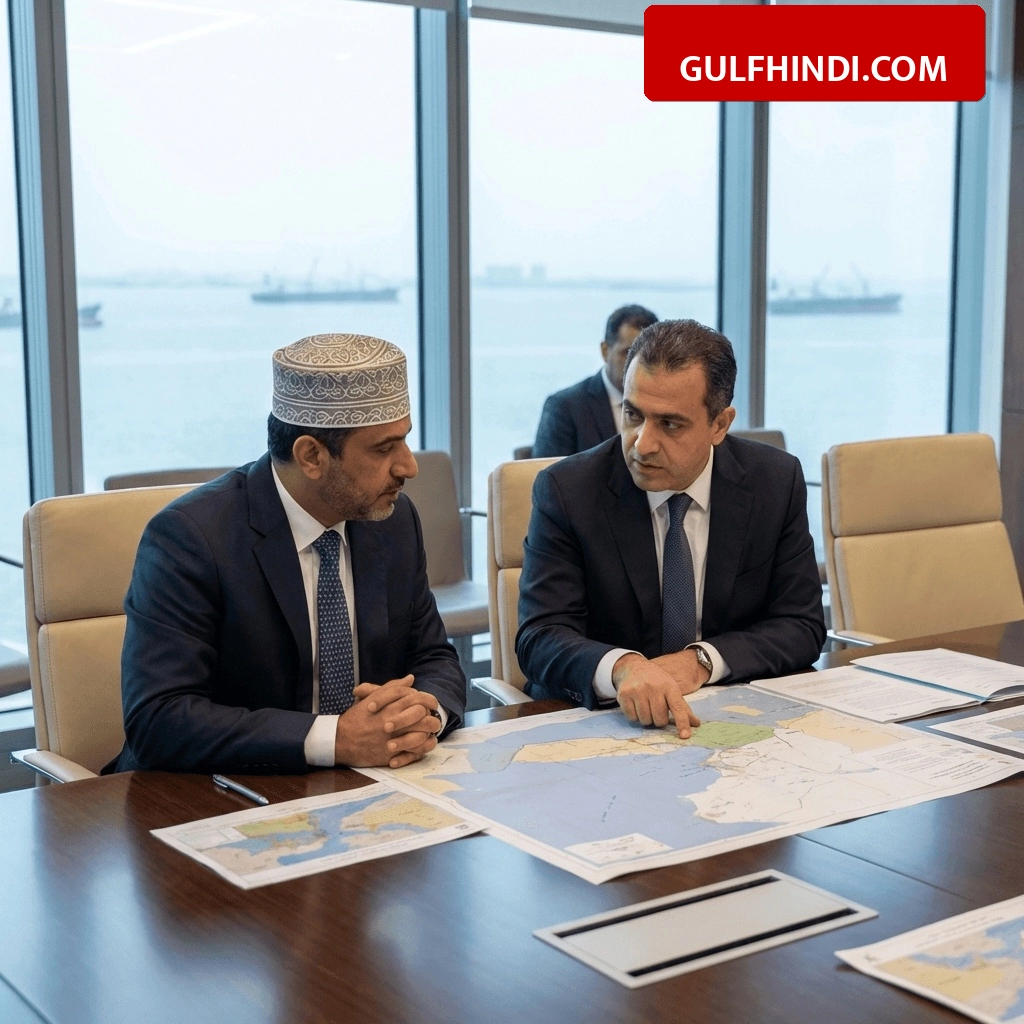
An important meeting has been held between Oman and Iran regarding the safe passage of sea vessels through the Strait of Hormuz. In this meeting held on 4 April 2026, the Deputy Foreign Ministers of both the countries discussed new options to make maritime traffic safe. The Foreign Ministry of Oman has given official information about this on Sunday, April 5. The main objective of this conversation is to create a better system for the ships passing through this route.
📰: Drone attack on Oil Ministry and KPC headquarters in Kuwait, Iran’s actions created panic in Gulf countries.
What will be the new rules for passing through the Strait of Hormuz?
Iranian Deputy Foreign Minister Kazem Gharibabadi has said that normal rules cannot be applied in war-like situations. Now all ships passing through this sea route will have to obtain necessary agreements, permits and licenses from Iran and Oman in advance. This new protocol is being prepared jointly by both the countries. Officials say that the purpose of these rules is not to stop the ships, but to provide them better services and security. Ships which are found involved in any kind of hostile action will not be permitted under this new framework.
Which countries will get relief and will there be any charge?
In the last few weeks, Iran has given safe passage to ships of many countries. This includes countries like India, China and Russia. However, ships belonging to America and Israel are being closely monitored. There have also been reports of some fees being charged from ships in the name of security and facilities.
Key Information Details
These countries got safe permission
India, China, Russia, Pakistan, Iraq and Bangladesh
Potential Toll
About $1 per barrel of oil (for foreign tankers)
means of payment
Yuan or Cryptocurrency
key terms
Advance permit and license mandatory
What is going on at the international level?
This meeting has taken place at a time when US President Donald Trump has given a strong warning to Iran on this matter. There was also to be a discussion in the United Nations Security Council (UNSC) regarding the use of force for the protection of maritime vessels, but due to the objections of France, Russia and China, it has been postponed for the time being. Oman and Iran are now preparing a joint draft for the management of this entire maritime area. This change will have a direct impact on the migrants and business living in those Gulf countries which depend on import-export via sea route.