The revolution of Nepal has told that the unheard of the youth, can be overshadowed by power, reducing the gap of communication gap is the solution
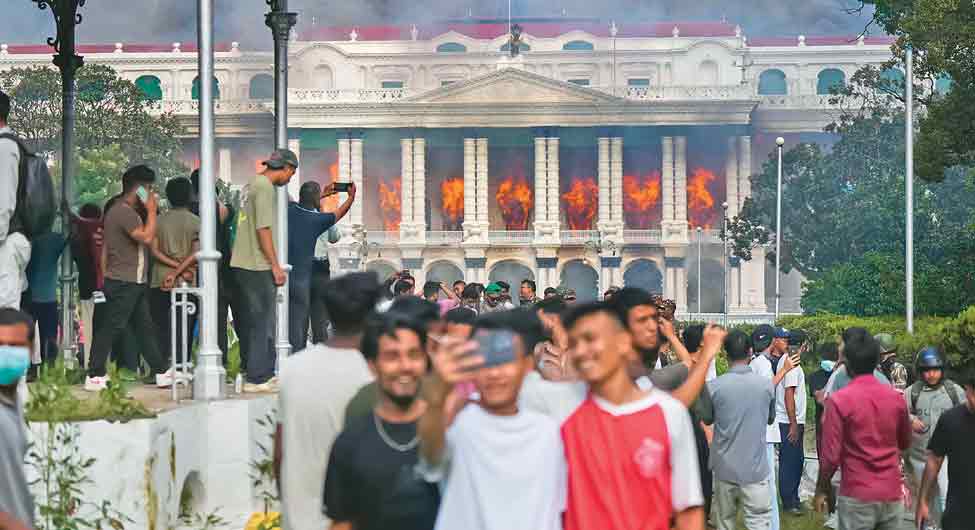
The historical protests in Nepal not only shook politics, but also started a new debate in the field of communication. Protests were organized through the Discard app, which proves that today’s youth is leaving the old methods and resorting to digital forums. I studied these events deeply. I believe that this is not just the failure of communication, but a big generation change. The gap of communication between leaders and youth has deepened.
Leaders, such as the Communist Party of Nepal (UML) KP Sharma Oli, Sher Bahadur Deuba and Pushp Kamal Dahal Prachanda, who were at the center of power, were completely dependent on news channels, newspapers, Facebook and X. They could not detect the discontent of the youth, as they were unaware of the forums such as discords. Discard was popular among the youth for at least two years. On which the revolutionary youth were selecting the new Prime Minister and fixing issues for talks with the President. At the same time, the ruling class was oblivious to this.
Communication means the exchange of information between the two sides, but when the mediums of communication are different, there are obstacles. Leaders did not consider the youth as their listeners. The country was struggling with corruption, inflation, unemployment and abroad migration of youth, but the leaders were entangled in the game of power. outcome? The anger of the youth erupted and digital forums gave a voice.
In the old media, news channels and newspapers were unilateral, there was less chance of responding. Most of Nepal’s people united on social media for the first time, so it was a symbol of the new communication revolution. Social media made information accessible and accessible to all. Now a person can speak his point, thousands of people can join a post, a video or a fun meme. This is a new form of democracy, as it saves time, hard work and resources.
In Nepal, the youth expressed their anger on social media, where more than 200 groups were formed six months ago. These groups were against corruption and ruling leaders. When the Prime Minister tried to stop these forums, it became like adding ghee to the fire.
The old protests, such as communication in the mass movement or the Madhes movement were slow. Then there was a dependence on news channels or mouth-and-a-face propaganda, which used to take weeks. This time, in 24 hours, the protest reached its peak as social media immediately gave information. When the government oppressed the youth, the news immediately spread and the number of protesters increased. Anger spread from Kathmandu to small towns. Adding a new approach, the protest is no longer limited to the streets, but it has become a ‘reels revolution’. Think, where slogans were written on the walls, now the hashtag and Mim have taken place.
A mim, which makes fun of corrupt leaders, goes viral and adds millions. This change is strong. This is not just opposition, but cultural rebellion. The youth are bringing changes in their language and style. In the reels, slogans and issues in the hashtag, this is the creativity of the new generation. It was impossible to reach small towns without digital assistance.
Jane Z is accused of the older generation that they are immersed in watching reels and scrolling on social media and are away from politics. But examples of Nepal, Bangladesh and India are opposite. The youth are active in political conversation, but in their own way. They connect with their words and their forums, not on the old pattern.
From a global perspective, India’s peasant movement, Black Lives Matter or recent immigration in the UK, are using technology-loving youth digital forums in all. They are skilled in youth research and specialize in saying their words. What will South Asian governments learn from this? If they want, they can learn. There are some trends in political communication, preparations can be done by analyzing the reasons. But learning does not mean strict control, but gives people a chance to speak peacefully. If anger is pressed, violence will increase. Governments will have to respond to the expectations of the new generation. These expectations are not old, but of the digital age. There will be no satisfaction from the words of the old pattern. If the leaders consider the youth as their listeners and land on their forums, then the failure of communication can be avoided. Otherwise, it will be more intensified by generation.
(The author is the chairman of the Department of Mass Communication at Kathmandu University. The views are private.)