In the last few elections, the process of distributing money has increased and a large section of beneficiaries has also been created. Still most people choose governments according to their conscience
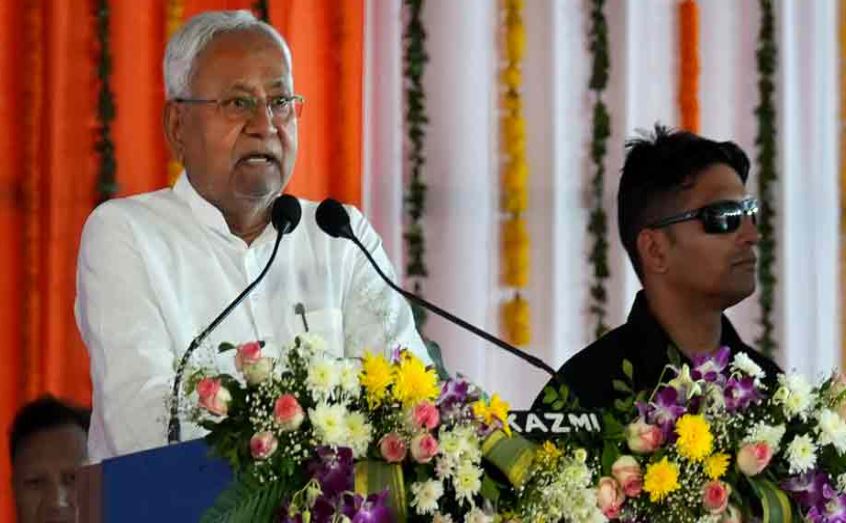
Bihar assembly elections have been announced. The Election Commission has decided to hold elections in the state in two phases on 6th and 11th November. After the declaration of results on November 14, it will be known which coalition or party will form the new government. With the announcement of election dates on October 6, the process of distributing rabris by the ruling coalition and making election promises by the opposition parties came to an end in the state. Just hours before the announcement, Chief Minister Nitish Kumar flagged off the Patna Metro and a day earlier inaugurated the international cricket stadium in Rajgir. Like every election, in this election too all the parties have made a series of populist promises. After the implementation of the code of conduct, gift packets have now been stopped. It will be interesting to see how seriously the people of Bihar take such promises and gifts this time.
In fact, for the last one month, the double engine government of the Center and the State had opened a box of gifts to woo the voters of Bihar. From the youth and the unemployed to the women and the elderly, coffers were opened in a way that had rarely been opened in any previous election. Dozens of new foundation stones were also laid. Obviously, the present government has announced these schemes with the hope that the public will give it another chance to remain in power for five years. However, how much money will be required to implement all the promises and intentions and whether that amount will be easily available to the new government is a big question. Nevertheless, parties contesting elections never shy away from announcing populist promises.
However, this has not happened only before Bihar elections. Wherever any party is in power, from Lok Sabha elections to assembly elections of different states, every government makes similar announcements, so that the elections can be won by wooing the public on its strength. The higher the credibility of a government based on its past performance, the more trust the public places on its promises. But, the party that won the last election is not satisfied only with the achievements made during its tenure. He also has to tell the voters what new gifts he has in his kitty for the coming term. As the time for implementation of the Model Code of Conduct approaches, the number of those gifts increases, as was seen in Bihar this time.
Such ‘charitable’ tendencies are not seen only in the ruling parties. The opposition parties challenging him also do not delay in beating the drum of promises. Some of his new announcements are said to be implemented in the first cabinet meeting after winning the elections, even if it may not be possible for him to do so. That is why they are called ‘election promises’. The public also understands that most of the promises made before the elections ultimately prove to be mere statements. A bundle of such true and false promises appears in the form of election manifestos of the parties, in which most of the things included remain mere declarations. In fact, after the formation of the government, the party that wins the elections realizes how impossible it is to fulfill its election promises. Therefore, most of the promises are quietly put on the back burner so that people forget them till the next election. For this reason, the public generally does not take any election manifesto seriously.
For the last few years, as part of an effort to make the electoral process transparent, it has been said that parties should not make such empty promises which they are not capable of fulfilling. For them, the promises made during the election season are meant to be broken, for which there is no tradition like Raghukul tradition in Indian democracy to fulfill. There is neither any moral responsibility nor public pressure to fulfill them. As long as the public continues to believe in his empty promises and vote for him, no kind of promise will be considered impractical. In the last few elections, the process of distributing money has definitely increased and a large class has been created that takes advantage of it and votes for the parties that take care of the ‘interest’. Election gifts are distributed by parties by identifying specific groups of voters. This is the beauty of democracy that people choose governments with their conscience and not on the basis of crowd.