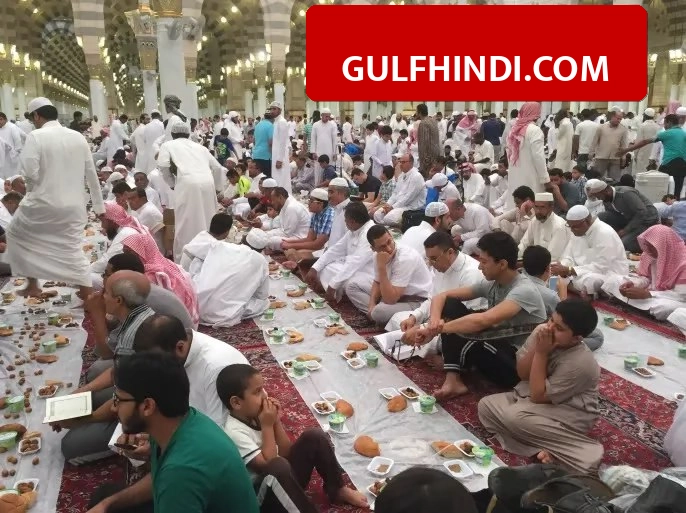
The first fast of Ramadan was observed in Saudi Arabia on Wednesday 18 February 2026. Lakhs of fasting people gathered on this occasion in the famous Masjid-e-Nabavi of Medina. At the time of Iftar in the evening, the interior of the mosque was filled to the extent of 93 percent while the outer courtyard was also filled with more than 80 percent crowd. The administration decorated Iftar tables on a large scale for the fasting people and made special arrangements so that the pilgrims coming there do not have to face any kind of problem.
Iftar arrangements and what else was distributed in the mosque
About 2 lakh 27 thousand Iftar meals are being distributed daily in Masjid-e-Nabavi. Every fasting person was given a packet of seven dates as per Sunnah. Apart from dates, the Iftar menu includes fresh bread, curd and water. The administration has taken special care of cleanliness and has given instructions to remove the Dastarkhan immediately after Iftar so that the space can be freed for Maghrib prayers.
Iftar time: Fast broken at 6:19 pm in Madinah
Distribution of dates: About 15 lakh dates are being distributed in the mosque every day.
food quality: Only approved catering companies are allowed to bring food
Strict rules and special facilities of mosque administration
The administration of Masjid-e-Nabavi has kept the rules very strict this time. There is a complete ban on any kind of advertisement or company logo during Iftar distribution. 8,300 electric and manual wheelchairs have been deployed for the convenience of the elderly and disabled. To manage the crowd, smart technology and real-time sensors are being used so that people can get information about vacant places.
Facility Name Description Wheelchair Service 8,300 units of transportation Shuttle Bus Service Extended Hours of Service Cleaning Protocol Cleaning 15 minutes after Iftar Complete Smart Technology Use of Interactive 3D Map
The administration has also run a free shuttle bus service for Indians and other expatriates living in Madinah. These buses bring pilgrims from different parts of the city to the mosque. The entire expense of Iftar is being borne with the help of charitable organizations and donors, due to which there is no financial burden on the common people.