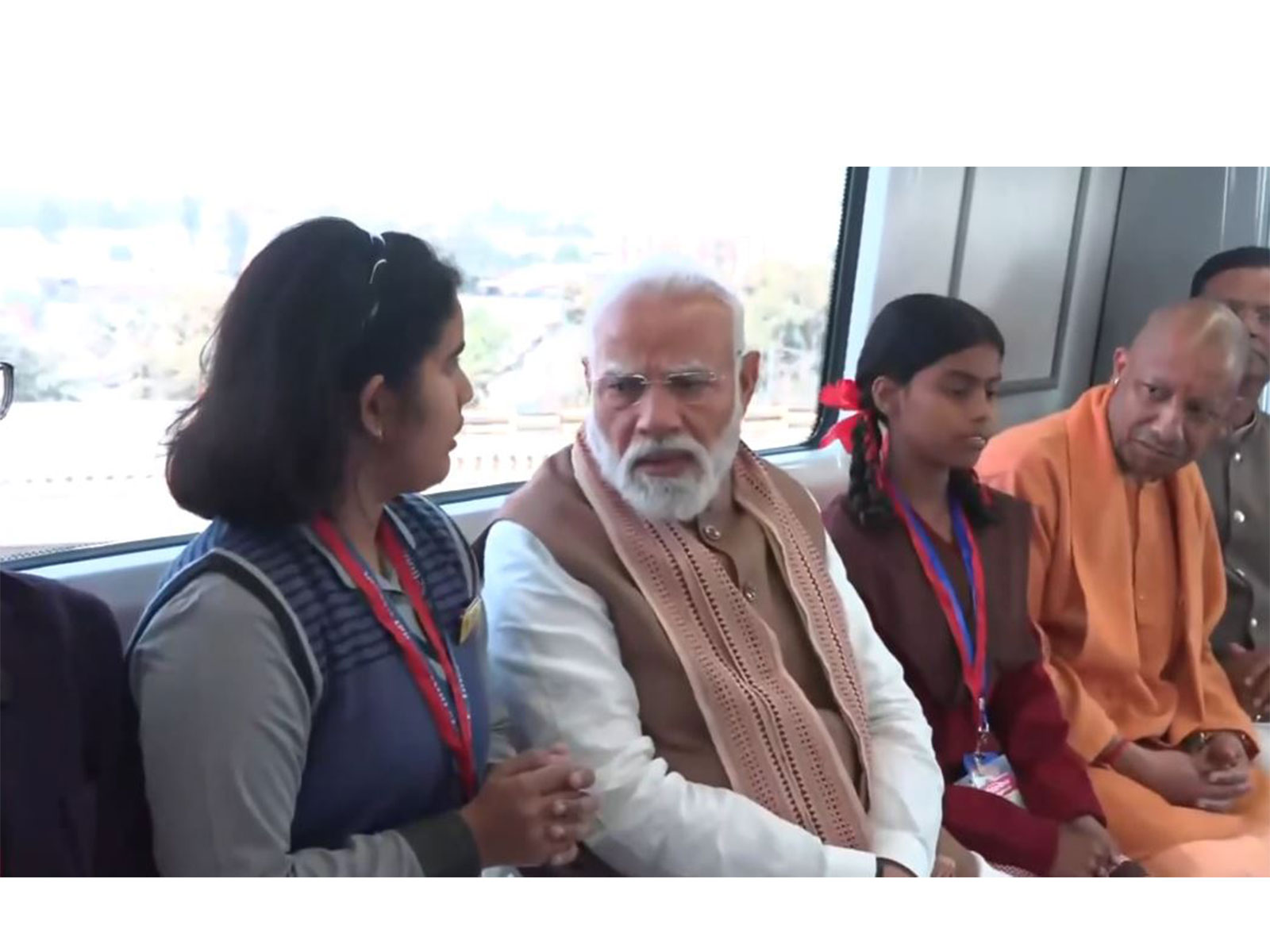
Prime Minister Narendra Modi flagged off Meerut Metro and Namo Bharat train at Shatabdi Nagar Namo Bharat station on Sunday. From there the Prime Minister traveled by metro to Meerut South station, where he interacted with the students.
Uttar Pradesh Chief Minister Yogi Adityanath, UP BJP President and Union Minister Pankaj Choudhary, along with officials, accompanied the Prime Minister.
Prime Minister Modi will inaugurate various development projects worth about Rs 12,930 crore in Meerut and dedicate them to the nation.
The Prime Minister inaugurated the entire 82 km long Delhi-Meerut Namo Bharat Corridor. He also inaugurated the remaining sections of India’s first Namo Bharat Regional Rapid Transit System (RRTS). These include a 5-km stretch between Sarai Kale Khan and New Ashok Nagar in Delhi and a 21-km stretch between Meerut South and Modipuram in Uttar Pradesh.
With a design speed of 180 kilometers per hour, NaMo India is India’s first regional rapid transit system. It will connect major urban centers like Sahibabad, Ghaziabad, Modinagar and Meerut to Delhi at high speed.
Sarai Kale Khan, the starting station of the corridor, is one of the four NaMo Bharat stations starting with this inauguration. It is strategically located as an important multi-modal hub, seamlessly connecting Hazrat Nizamuddin Railway Station, Pink Line of Delhi Metro, Veer Haqiqat Rai ISBT and Ring Road. The other three NaMo Bharat stations to be commissioned are located in Shatabdi Nagar, Begumpul and Modipuram Meerut.
Prime Minister Modi also inaugurated Meerut Metro services between Meerut South and Modipuram. This metro will operate on the same infrastructure as the Namo Bharat scheme and is the first initiative of its kind in the country. Meerut Metro will be India’s fastest metro system, with a maximum operating speed of about 120 km per hour. The metro will cover the entire distance in just 30 minutes, stopping at all scheduled stops.
This seamless integration of NaMo Bharat and Meerut Metro on a single infrastructure will ensure high-speed inter-urban travel and seamless intra-city mobility, setting a precedent for integrated urban and regional transportation in India. This will reduce road traffic congestion and result in a significant reduction in carbon dioxide emissions from vehicles.
These projects will further accelerate the Prime Minister’s vision of transforming urban mobility and ensuring smooth, efficient, modern and sustainable public transport systems that ease the lives of citizens.