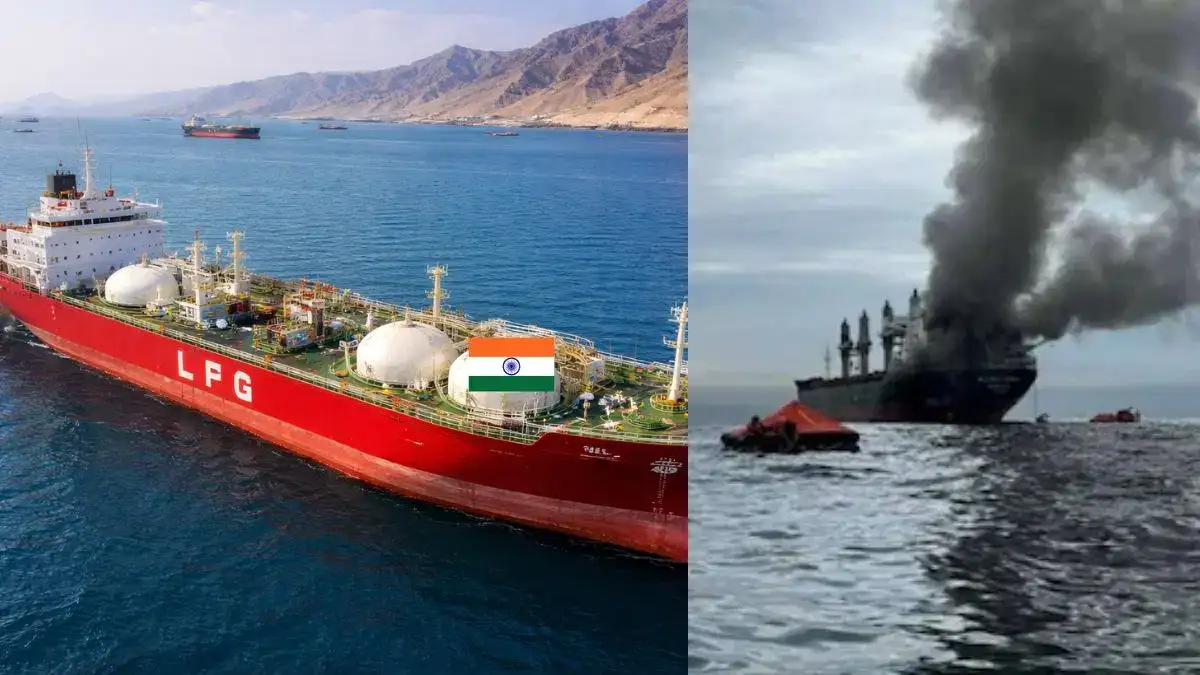
Amidst the ongoing fierce conflict in West Asia, the supply of cooking gas in India is under threat. While ships *Shivalik* and *Nanda Devi* have recently reached India with LPG, more than six Indian LPG tankers and LNG carriers are stranded in the Persian Gulf. Meanwhile, more than 24 additional tankers are still needed to meet the monthly needs of a country as large as India. This information has emerged from the analysis of ship-tracking data (AIS signals) conducted by India Today’s Open Source Intelligence (OSINT) team.
According to ship-tracking data, the ships named *JG Vasant*, *BW Elm*, *BW Loyalty*, *Pine Gas*, *Green Sanwari*, *JG Vikram*, and *Green Asha* are currently docked near the Strait of Hormuz. These ships together carry about 338,000 metric tons of LPG—about one-fifth of India’s monthly requirement. In the last two weeks, only two tankers—*Shivalik* and *Nanda Devi*—have been able to reach Indian ports. In view of this shortage, the government has increased domestic production by 40 percent and started giving priority to gas supply to households rather than commercial establishments like hotels.
shortage of essential items on ships
Analysis of ship-tracking data shows that five of these large ships have been without movement for the past three days. Tankers like *Jag Vasant* and *Pine Gas* are currently anchored just before the dangerous “U-bend” of the Strait of Hormuz. In contrast, some ships—such as the *BW Elm*—are heading west into the interior of the Persian Gulf. This crisis is not limited to fuel only; According to government figures, 611 sailors are also trapped in these circumstances. The supply of fuel and essential items on these ships is gradually decreasing, due to which there is increasing concern among the stranded crew members.
gas demand in india
Meanwhile, the cooking gas requirements in India are huge. Last year, the country consumed 33.15 million metric tonnes (MMT) of cooking gas. Of this, domestic production was only 12.8 MMT, while the remaining 18.5 MMT was met through imports. To meet this demand, an average of 400 to 450 vessels are required throughout the year, which means around 34 to 38 tankers will have to come to India every month. However, due to the ongoing conflict, only two tankers have arrived in the past 15 days—a quantity that can meet India’s supply needs for only a day or two.
increase in domestic production
Sujata Sharma, Joint Secretary (Marketing and Refinery) in the Ministry of Petroleum and Natural Gas, said during a briefing on Wednesday that domestic LPG production has been increased by 40 percent. However, he also said that concerns remain over supplies due to the closure of the Strait of Hormuz. Despite this increase in domestic production, India’s total production is estimated to reach only about 17.9 MMT. Despite this, the country will still face a gas shortfall of about 13.4 million tonnes, which will require importing at least 24 to 29 tankers every month to ensure continuous supply of fuel to homes across the country.
Ban on supply of commercial cylinders
According to Rajesh Kumar Sinha, Special Secretary in the Shipping Ministry, there are currently 300,000 metric tons of LPG, 200,000 metric tons of LNG, and 1.67 million metric tons of crude oil in the region in Indian-flagged tankers, all awaiting safe passage. Meanwhile, in response to these disruptions in the supply chain, the government has begun taking stringent measures. At present, the supply of commercial LPG—which is usually supplied to hotels and restaurants—has been stopped. Only domestic consumers (households) are being given priority to ensure that the general public does not face severe shortage.