US Vice President JD Vance has rejected claims of Lebanon’s involvement in the ongoing ceasefire talks between Washington and Tehran, as a two-week temporary ceasefire has come into effect.
Speaking to reporters before departing Hungary, when asked if Lebanon was included in the peace proposal, Vance said that the United States had never made any such promise. He stressed that the ceasefire was intended to focus attention on Iran and US allies – Israel and the Gulf Arab states.
“We made no such promise. We never indicated that would happen. We just said that the ceasefire would be focused on Iran and that the ceasefire would be focused on both America’s allies, Israel and the Gulf Arab states,” he said.
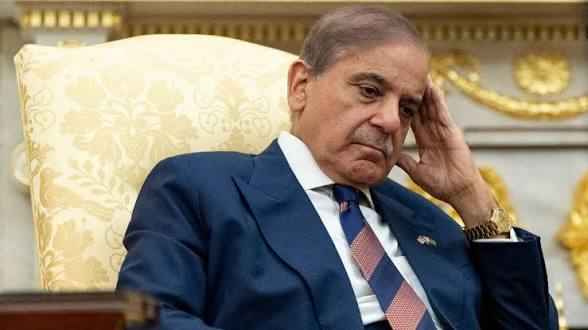
Vance’s comments landed Pakistan Prime Minister Shehbaz Sharif in hot water after he claimed that Lebanon was also part of the peace deal – a claim strongly rejected by both US President Donald Trump and Israeli Prime Minister Benjamin Netanyahu.
The failure of the self-styled mediator’s claims is part of the chaos that has engulfed Islamabad in the last few hours.
Pakistan has tried to portray itself as a peacemaker between the US and Iran, but new details from a report in the Financial Times suggest that it was actually the White House that forced it to broker a temporary ceasefire with Iran.
The report has raised serious questions over Pakistan’s independent diplomatic stance as it suggested that Islamabad was not a neutral mediator but a convenient vehicle for the US to push through a temporary ceasefire agreement.
The Financial Times, citing people familiar with the talks, reported that the US pressured Pakistan to present Washington’s proposal to Iran, leaving Pakistan merely a messenger rather than an active neutral participant between the two sides.
Pakistan Prime Minister Shehbaz Sharif, who first publicly suggested a two-week ceasefire, remained a spectator while Army Chief Asim Munir played a central role holding emergency discussions with US officials including Donald Trump, JD Vance and Ambassador Steve Witkoff.
The mistake of Pakistan Prime Minister Shehbaz Sharif rushing to take credit on a social media post also exposed his limited control over the deal.
Describing the agreement as Pakistan’s initiative, Sharif mistakenly added a subject line at the top of his post: “Message from the Prime Minister of Pakistan on the draft – X”.
Pakistan’s efforts to project itself as a neutral player also came under threat after the drone attack on Saudi Arabia’s petrochemical hub Jubail, according to a report in the Financial Times.
Islamabad signed a mutual defense agreement with Riyadh last year. Pakistan still remained neutral, allowing Riyadh to engage in diplomatic efforts.
Lebanon’s diplomatic double standards have put the US-Iran peace deal at risk.
As tensions rose in the country, Al Jazeera reported on Thursday that a wave of Israeli strikes killed at least 254 people and injured more than 1,165 in a single day on Wednesday, prompting the country to declare a day of mourning.
Earlier, Israeli Prime Minister Benjamin Netanyahu said Israeli forces would continue their offensive in southern Lebanon aimed at neutralizing the threat posed by Hezbollah, although he supported the US decision to suspend strikes against Iran as the two countries try to work on a lasting peace formula.
Meanwhile, Israel’s Ambassador to India Reuven Azar confirmed that Tel Aviv aims to achieve a situation in southern Lebanon free from “Hezbollah’s terrorist infrastructure” as Israel continues attacks on Lebanon even after the ceasefire with Iran.