Are there real differences of opinion between America and Israel in the matter of targeting Iran’s gas reserves or a strategy of deception? War changed due to Iran’s retaliatory attack in Gulf countries
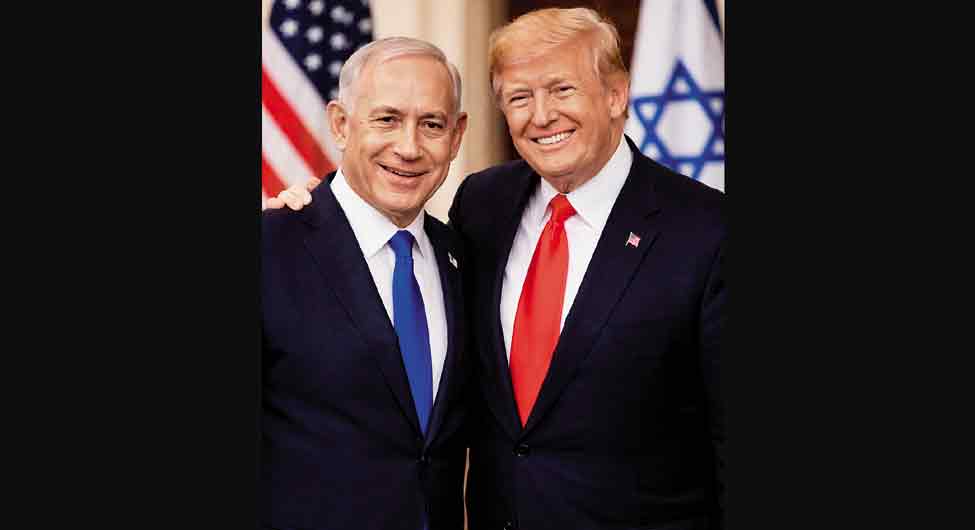
As the West Asia war reaches its fourth week, has a big rift emerged between America and Israel? Such speculations were sparked by a statement by US President Donald Trump. He said that he was unaware of the Israeli attack on Iran’s ‘South Pars’ gas reserves. Due to that attack the war reached a dangerous level. In response, Iran immediately attacked the oil and gas plants of Qatar, Bahrain and Saudi Arabia. Israeli newspaper Haaretz described it as “the latest public controversy”. This came just hours after Prime Minister Benjamin Netanyahu said that he and Trump are in agreement on the goals and methods of the war. The newspaper quoted him as saying, “There is not an iota of difference between me and Trump.”
But on the questions of journalists, the US President said, “I said, don’t do this. We get along very well, everything happens in coordination, but sometimes they do something that I don’t like.” The President further said and reiterated that he had no knowledge of this attack. He also wrote the same in a social media post on ‘Truth Social’. For the first time during the war, the American President completely distanced himself from Israeli action. Due to this, a heated discussion has started between the two leaders.
Earlier on one occasion, the Trump administration had adopted a evasive attitude on such an incident. Israel had carried out aerial bombardment of oil wells near Tehran, causing poisonous smoke and acid rain. US officials later said that Netanyahu wanted to create “an atmosphere of chaos” around Tehran to send a message to Iranians that his government had no control over the situation. “The Israeli military downplayed its impact, and top officials said the US displeasure was not communicated to him (Netanyahu),” Haaretz reported. Trump had said that he had asked Israel not to touch the oil infrastructure.
Prime Minister Netanyahu also appeared before reporters after a long time and said that Israel acted alone, and “President Trump has asked us not to carry out such attacks in the future. We respect that.”
But then the well-known American news website Axios reported that two American officials refuted the President’s statement and admitted that Trump was informed about the attack and he also approved it. After this news the direction of speculation changed.
Many people believe that this is a strategy of deception by America and Israel. America publicly appeals not to attack energy centers to avoid economic shocks. But critics say that this is just a show-off to the world, while the real objective is to block Iran’s resources. This posturing provides political security and diplomatic scope, but the goal of both is the same.
London-based Nigerian writer Chimajuru Nnadi-Ofaragu told Maktoob Media on the US-Israeli actions in Iran, “This old pattern. The same injustice and the same attitude allows the West to do whatever it wants.” Very few people in the developing countries of the Southern Hemisphere see any difference between America and Israel.
It seems absolutely impossible that Israel will do anything without getting the green signal from Washington. Netanyahu is so dependent on America that he cannot show the cleverness of bluffing Trump. Of course, Netanyahu has managed to drag the US into a war with Iran. Such an intention of his had not been accepted by any American President before. Therefore, Netanyahu cannot afford to lose this opportunity. They also know that Israel’s role in American politics is increasingly being questioned, and that its hold on the White House and politics may weaken in the future.
It is very clear that Iran is a very strong enemy. Despite repeated bombings, the elimination of almost the entire top political and military leadership, and the lack of air defense systems or modern weapons like those of the US and Israel, Iran has managed to continue its fight.
Without Trump’s strong military, economic and diplomatic support, it will be difficult for Israel to continue this war. The partial closure of the Strait of Hormuz, as well as Iran’s retaliatory attacks on oil and gas infrastructure in Gulf-Arab countries (from Qatar to Saudi Arabia, UAE, Bahrain and Kuwait), are causing turmoil in the world energy markets.
Perhaps Trump wanted to distance himself from attacks on oil infrastructure. Although America itself attacked Kharg Island of Iran. Both America and Israel are together in this matter, and the soft-hot strategy is in the benefit of both the countries.
Putin is in profit
The US and Israel’s attacks on Iran made the world concerned about the wider impact of the ongoing war in West Asia, while the long-running Ukraine-Russia war in Europe, which was once a major geopolitical crisis dominating Western diplomacy, has disappeared. The energy crisis arising from the West Asia war has created a stir in the global economy. The attention of European leaders has also shifted from Ukraine to Iran.
For Moscow, this shift has brought some unexpected benefits. The ban on Russian oil has been loosened in view of the turmoil in global energy markets and the threat to supplies from the Gulf countries. America has lifted some of its previous sanctions on Russia. India has been “allowed” to buy Russian oil, which it had significantly reduced. The Trump administration has lifted sanctions on India for 30 days in the hope of addressing the ongoing energy crisis and stabilizing oil prices.
But European leaders strongly protested against America’s relaxation. EU Council President Antonio Costa said it was “very worrying”. Germany’s Chancellor Friedrich Merz said the decision was “wrong”, while French President Emmanuel Macron said it had “no justification”. A spokesman for British Prime Minister Keir Starmer said, “The best way to deter Russia is to put pressure together and end the war in Ukraine.”
Ukrainian President Volodymyr Zelensky was as unhappy as his European supporters. After meeting with Emmanuel Macron in Paris, Zelensky said that with this one decision of America, Russia will get about 10 billion dollars for the war. But Europe’s unhappiness does not mean much to Trump. Instead, they are now demanding NATO allies send their forces to open the Strait of Hormuz. “We didn’t need to help them with Ukraine… but we helped them. Now we’ll see if they help us. If there’s no response, or a refusal, I think that will be very bad for the future of NATO,” Trump told London’s Financial Times.
But till now no European country has paid attention to Trump’s words. Australia has also refused. Trump is appealing not only to NATO but also to China, Japan and other countries to help normalize the movement of oil through the strait. But no positive response was received from any side.
Meanwhile, Volodymyr Zelensky is looking for new ways to continue Ukraine’s military campaign, and is offering battle-tested drone technology to the oil-rich Gulf states in the hope of getting them funds to continue the war. Ukrainian teams have gone to the Gulf countries to provide their expertise in dealing with Iranian drones. Russia is using drones in Ukraine and Kiev has learned to deal with such attacks. According to Western media reports, the third round of trilateral peace talks between Russia and Ukraine, led by US special envoy Steve Witkoff and Trump’s son-in-law Jared Kushner, will probably be postponed. At present the crisis in West Asia is being given more priority.
“Israel acted alone (in Iran’s South Pars). President Trump has asked us not to carry out such attacks in the future. We respect that. There is not an iota of difference between us.