Sundarkand’s manuscript exists
The manuscript of Sunderkand of Ramcharit Manas is safe in the family of Jageshwar Dayal Tiwari in Dulhi village. It is said that Tulsidas had gifted the manuscript to Atkohana resident Pandit Bhavani Prasad Tiwari. After his demise, he was succeeded by Uday Shankar Tiwari. After some time he left Atkohana and settled in Dulhi. This rare manuscript of Sunderkand has been in his family as a legacy for centuries. It is said that the manuscript is written in bold letters in black ink on Bhojpatra. There is a round seal written by Sita Ram on every page. The year Samvat 1672 is marked on the manuscript. It is said that Gorakhpur Geeta Press operator Hanuman Prasad Poddar had come to the district and confirmed that the manuscript was handwritten by Tulsidas. Referring to this manuscript in Kalyan’s Year 13, Issue Three Manasaank Volume Three, he described it as original and authentic.
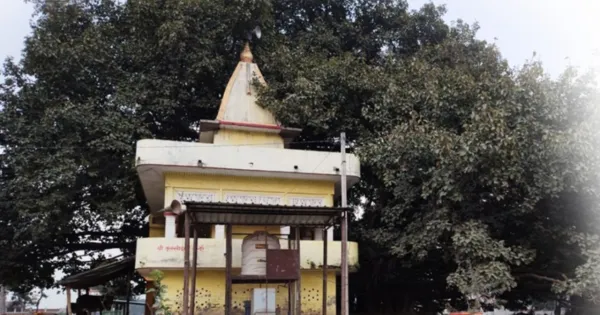
As soon as we reach Ramvatika, it seems as if time has stopped and the echo of centuries old penance is still heard in the shade of trees. According to local legends, about 470 years ago Saint Shiromani Goswami Tulsidas had spent Chaturmas at this place. During this time, he composed excerpts from Balkand, putting into words the divine pastimes of the child form of Lord Shri Ram. It is said that during those days of meditation, Tulsidas had buried his tooth in the ground here. Time passed and that tooth stands today in the form of a huge banyan tree. Its spreading branches and deep roots seem to be witness to bygone eras and narrate history even today. A wonderful confluence of folk belief and spirituality is visible in the air of Ramvatika. People also have deep faith in the ancient Hanuman temple and Shri Ram Darbar temple located here.
Ramvatika is not just a place of history or legends, but a place of emotions, where literature and devotion become one. Every person who comes here feels the echo of Tulsi’s footsteps in the silence of nature. The shade of the banyan tree, the bells of the temples and the memories of the Saryu region together create an atmosphere which easily fills the mind with spiritual peace. The fair organized here every year on the occasion of Holi still preserves the vibrant tradition of this place. Devotees and tourists reach here from far and wide. Some come to visit the holy place of Tulsi, while others want to stand under the banyan tree and feel the history which has traveled for centuries. In the rapidly changing times, heritage sites like Ramvatika not only hold religious importance, but they are invaluable treasures of Indian culture, folk belief and literary heritage. This is the place where devotion to Tulsi, silence of nature and faith of the people come together to create a chapter which will continue to inspire the coming generations to stay connected to their roots.
There is evidence of Tulsidas’ stay
An article of Jangra Raja Kharag Singh is found in the Vajibularj of Dhaurahara, in which it is written that Fakir Bairagi Tulsidas came to the forest while traveling on the banks of Sarju. He composed some excerpts from Ramcharit Manas here. Rambati, the place of creation of Tulsidas, still exists in the form of Thakurdwara in Dhaurahara. Statues of Ram, Lakshman and Sita established by Tulsidas are also present in a temple here.
When Jangra Raja Jot Singh of Dhaurahra princely state got the news of Tulsidas’s arrival, he reached Ramvatika to meet him. At that time Saint Tulsidas Saryu had gone to take bath. The king sat on his seat while waiting. When Tulsidas returned and saw the king sitting on his seat, he became displeased and cursed the king. Folktales say that at the same time he had planted his tooth in the ground, which today remains a center of reverence in the form of a huge banyan tree. Shriram Vatika has been the place of creation of Goswami Tulsidas. While staying here, Goswami ji had composed the child form of Lord Ram in the form of Balkand. This has been confirmed by the people of Geeta Press along with the manuscript kept in Dulhi village.