Lucknow, February 1 (). The concessions given in the custom duty and import duty related to solar, renewable energy and e-mobility in the Union Budget 2026 are being linked to the Pradhan Mantri Surya Ghar: Free Electricity Scheme implemented in Uttar Pradesh and the emerging e-mobility ecosystem of the state.
Policy experts believe that these decisions will move in a common direction rooftop solar expansion, solar panel manufacturing, grid-level energy balancing and electric mobility in the state.
Budget 2026 exempts basic custom duty on cobalt powder, battery scrap and other critical minerals, the raw material used in lithium-ion battery manufacturing. According to experts, its biggest benefits will be to grid-level battery storage and power system balancing. The day-night and seasonal fluctuations in solar-based power generation can be handled better through battery storage. This is likely to make Uttar Pradesh’s power supply more stable, reliable and cost-effective.
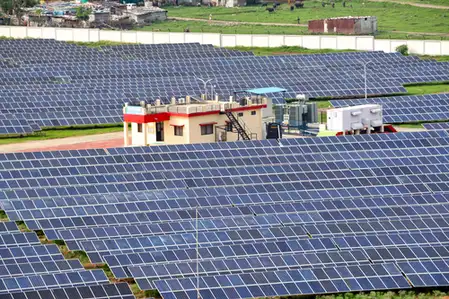
An important and clear provision has been made in the budget for the solar sector. Sodium antimonate, a raw material used in solar glass manufacturing, has been exempted from custom duty. It is a key component of solar glass, improving the quality, strength and performance of the glass. With the removal of duty, the cost of solar glass and through it solar modules and panels will reduce. This will directly benefit the PM Surya Ghar: Free Electricity Scheme in Uttar Pradesh, where due to cheaper rooftop solar systems, more houses will be able to connect to this scheme and consumers will get significant relief in electricity bills.
The industry believes that these concessions will also strengthen Domestic Content Requirement (DCR) based solar panel manufacturing. Making solar glass and other inputs cheaper will increase the competitiveness of domestic manufacturing and reduce dependence on imports. Its impact can be seen in the form of expansion of solar value chain in Uttar Pradesh.
After the budget provisions, investment opportunities related to new solar manufacturing units as well as EV components, battery pack assembly and charging infrastructure are expected to increase in the industrial areas of Noida, Lucknow, Kanpur and Purvanchal. This will also give impetus to employment generation and industrial activities.
From the point of view of e-mobility, the budget is considered very important for Uttar Pradesh. Exemption in custom duty on batteries and critical minerals will reduce the manufacturing cost of electric vehicles, making EV prices more affordable. Experts believe that its impact will be visible in the form of rapid adoption of e-buses, e-autos, electric two-wheelers and three-wheelers. This will reduce dependence on petrol and diesel and reduce urban pollution.
The custom duty and import duty concessions announced in the Budget, especially the exemption on sodium antimony for solar glass, appear to give a common strategic direction to solar panel manufacturing, grid-level energy balancing and e-mobility in Uttar Pradesh.
Policy experts say that with this coordinated approach, Uttar Pradesh will not only move rapidly towards affordable and clean electricity, but will also strengthen its identity as a leading state in the field of clean transportation, strong energy grid and green economy.
—
SK/ABM