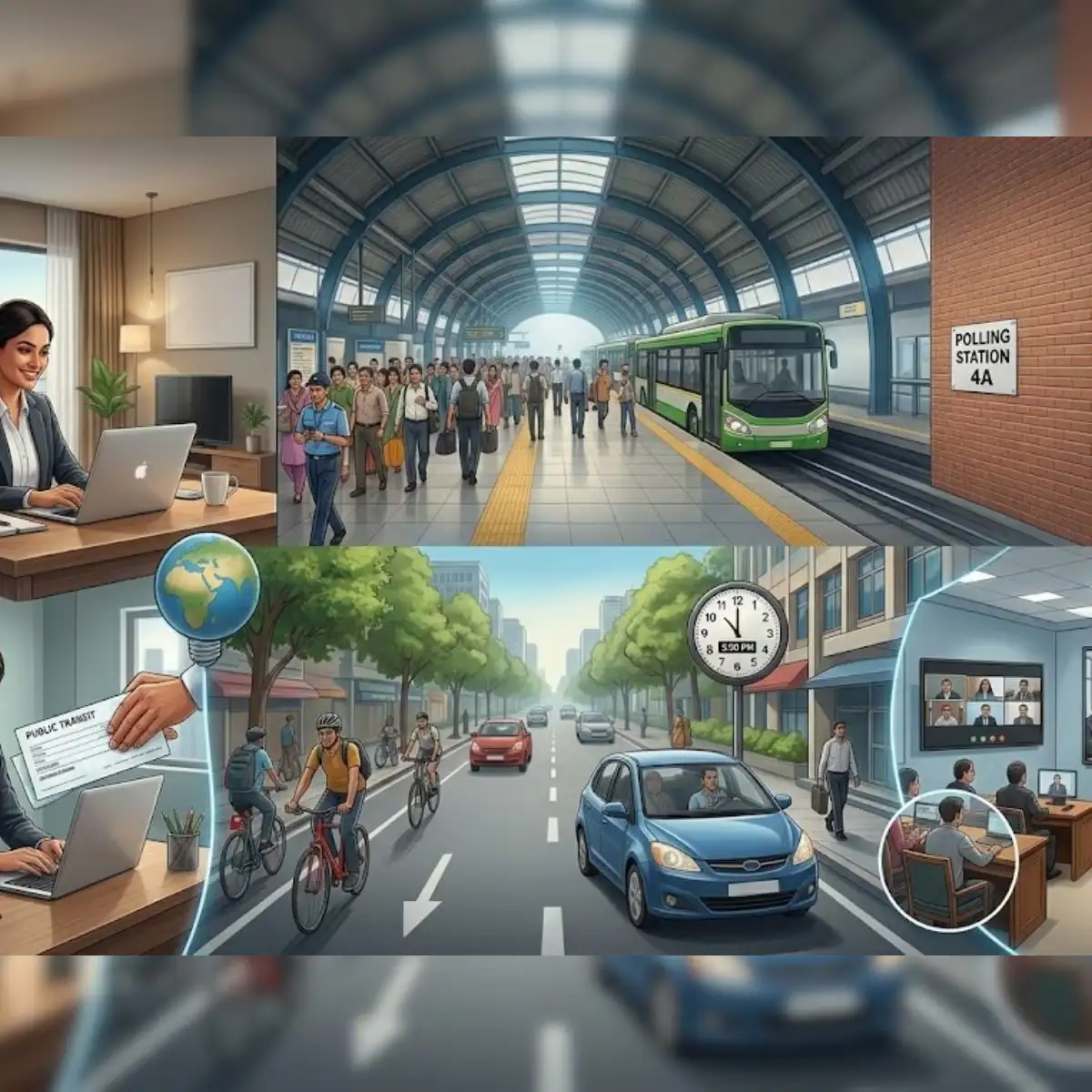
If you live in Delhi-NCR and regularly use petrol, diesel or CNG in your vehicle to commute to office, then this news is directly for you. Amidst the ongoing conflict in the Middle East and skyrocketing prices of crude oil, a massive campaign to save fuel has been launched across the country. Following Prime Minister Narendra Modi’s recent appeal to save fuel and reduce the use of private vehicles, the Delhi government and Delhi Metro (DMRC) have implemented several major and stringent changes in the capital. These changes come into effect today, Monday, May 18. These measures include steps ranging from advising private companies to adopt ‘Work from Home’ (WFH) system to increasing the frequency of metro services. Let us see what changes have actually taken place in Delhi.
Delhi government’s advice: ‘Work from home’ 2 days a week
In view of the increasing oil crisis and the recent increase in CNG prices by ₹3, the Labor Department of Delhi Government has issued an important advisory. All private companies, factories, shops and especially institutions in the IT and ITES sector in Delhi have been advised to provide ‘work from home’ facility to their employees at least two days a week. To prevent traffic jams and fuel wastage during rush hour, companies have also been requested to stagger working hours. Additionally, the government has appealed to employees to carpool or use public transportation instead of driving alone.
24 extra trips of metro every Monday
After the government’s appeal, hoping that people will use the metro instead of their personal vehicles, Delhi Metro is all set to meet this demand. Starting today, Delhi Metro is running six additional trains across its network. As a result, the Metro will run 24 additional trips every Monday from now on. If needed, the frequency of services will be increased on other days also. According to Anuj Dayal, Principal Executive Director (Corporate Communications), DMRC, the aim of this initiative is to control crowd, increase passenger convenience and help in fuel saving efforts in the country.
DTC will increase connectivity; Hydrogen buses in Central Vista
Special arrangements have also been made to ensure that passengers do not face any problem in reaching their offices after deboarding the metro. DTC will improve connectivity across 52 major metro stations in Delhi through a fleet of around 1,500 ‘DEVi’ buses. To save both environment and fuel, DMRC – in collaboration with Indian Oil (IOCL) – has also launched a state-of-the-art hydrogen-based bus service in the Central Vista area.
Why were these steps necessary?
In fact, petrol and diesel prices have increased by ₹3 per liter in Delhi-NCR in the last three days, while CNG prices have increased by a total of ₹3 per kg. Amid the growing global crude oil crisis, the government’s main focus is on finding ways to reduce domestic fuel consumption to save the country’s foreign exchange reserves.