The root of the decades-long tension between India and Pakistan is not only the border dispute but also the issue of terrorism. India has repeatedly reiterated that normal relations are impossible as long as Pakistan continues to harbor terrorist organizations on its soil. Operation Sindoor, launched by the Indian Army in May 2025, was an example of this policy. This action was taken in response to the terrorist attack on religious places in Pahalgam.
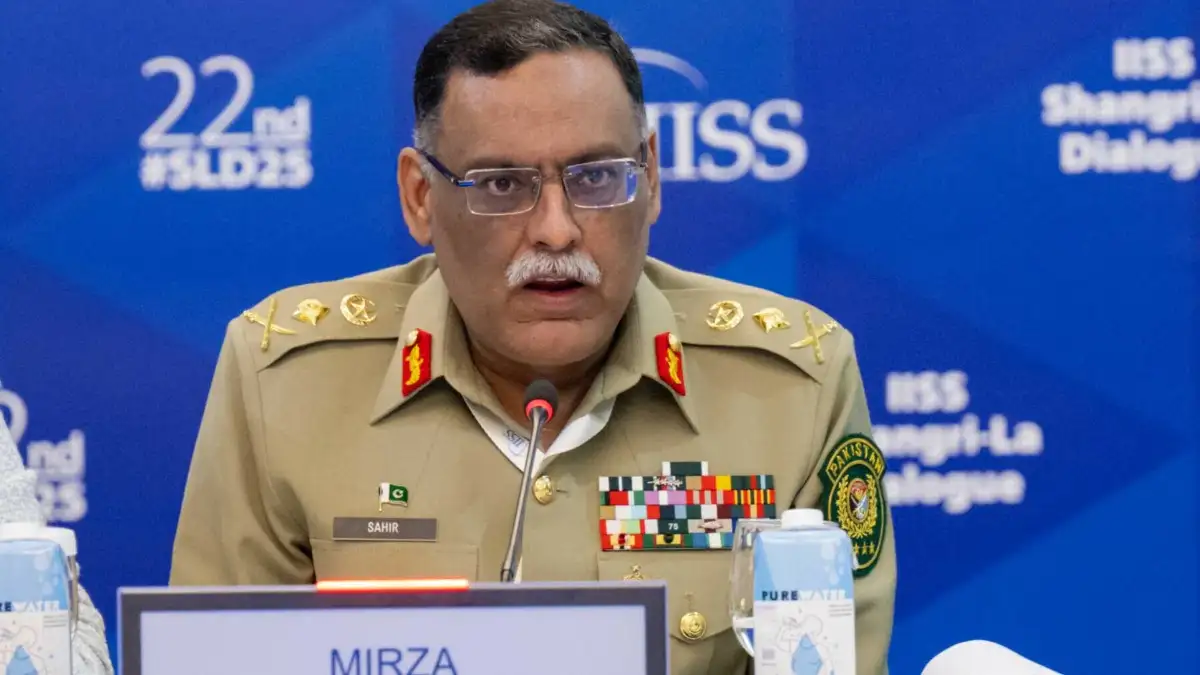
Pakistani General Sahir Shamshad Mirza:
Indian military is politicized and Indian polity is militarized, creating asymmetries stressing Pakistan’s strategic hand.
India, though an important global south country, cherishes hegemonism and expansionism, defies UN resolutions and… pic.twitter.com/aArUCwhjs4
— Clash Report (@clashreport) October 21, 2025
Through Operation Sindoor, India gave a clear message that its policy against terrorism is based on zero tolerance. As always, Pakistan tried to present this action as a political move, but at the same time, its leaders were seen attending the funeral of terrorists, which once again exposed its double standards.
Pakistan’s old strategy
Recently in an international conference held in Islamabad, Pakistani General Sahir Shamshad Mirza said that mediation by a third country or international organization is necessary to resolve the disputes between India and Pakistan. This statement reflects the old mentality of Pakistan, which shows the tendency to seek support from external powers on every issue. India clearly stated that all issues between India and Pakistan are bilateral and no third party has any role in it. This stance is based on the Shimla Agreement of 1972 and the Lahore Declaration of 1999, in which both countries pledged to resolve disputes through mutual dialogue.
Pakistan’s diplomatic confusion and contradiction
In his speech, General Mirza described India as an imperialist and hegemonic country, but also acknowledged that India is a major global power today. He alleged that India ignores UN resolutions and violates human rights. This statement shows Pakistan’s diplomatic frustration and inferiority complex. Pakistan, which calls India a Trojan horse, forgets that it has now established itself as a terrorism supporting country at the international level.
Politicization of India’s Army: Pakistan’s Self-Contradiction
In his speech, General Mirza accused the Indian Army of working under political influence. However, his statement makes a mockery of the real situation in Pakistan, as Pakistan is a country where the military controls both politics and governance. Democratic governments have repeatedly been overthrown in coups, and elected leaders like Imran Khan and Nawaz Sharif have been jailed for going against the will of the military.
India’s global position and Pakistan’s growing concern
Today, India is not only one of the largest economies in Asia, but also plays an active role in forums like G-20, BRICS and the United Nations. India is now seen as a global policy maker, representing the interests of the Global South. Pakistan’s concern is that India is no longer limited to South Asia only, but has become a country that connects with the world. This is the reason why Pakistan repeatedly tries to garner international sympathy by raising the issue of third parties.