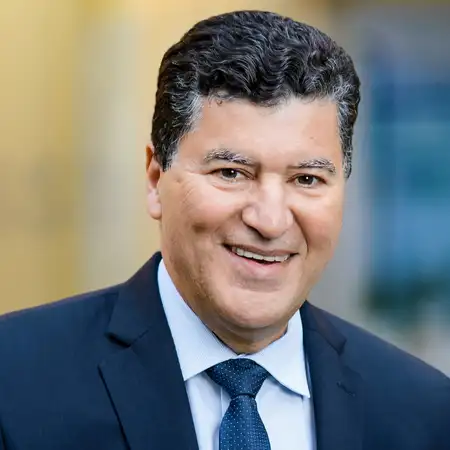
Boston, May 1 (IANS). India’s emergence as a global pharmaceutical hub is now entering a new phase, driven by innovation, vaccine leadership and growing clinical capabilities. This was said by Elias Zerhouni, former director of the ‘National Institutes of Health’ and vice president of OPKO Health.
Zerhouni said India-US health and biotechnology cooperation has grown steadily over the years, and is now transforming from just manufacturing to an innovation-based partnership.
“The presence of Indian companies is growing rapidly—Lupin Limited, Sun Pharmaceutical Industries and many others. The relationship is getting better now as India is seen not only as a manufacturing hub but also as an innovative country,” he told IANS.
He said that India has a very strong hold in the field of generic drugs and Active Pharmaceutical Ingredients (APIs) and it remains the backbone of global drug supply. He said, “India’s strength in the field of APIs is very big… These come from India or China only.”
However, Zerhouni stressed that India’s role has now gone beyond generic ones. He described India’s capacity in vaccine manufacturing as decisive at the global level and mentioned the Serum Institute of India. “Without India’s contribution, it would have been extremely difficult to carry out vaccination across the world,” he said.
He described the Indian approach of “Frugal Innovation” i.e. developing effective solutions at low cost as a major strength. He said, “Innovation that is not so expensive that it becomes out of reach of people – this is part of the culture of India.”
On the lessons learned from the COVID-19 pandemic, he said it exposed the vulnerabilities of the global supply chain and forced countries to rethink health security. “We found that we were completely unprepared for a global health emergency,” he said.
India and the US, both being large democracies, are relying more on the role of the private sector than on government schemes to address these challenges. “There is no grand master plan… cooperation is driven by goodwill and economic incentives,” he said.
Sharing his experiences, he said that bureaucratic processes still remain a challenge in both the countries. He recalled his discussion with former Prime Minister Manmohan Singh on the issue of delay in grant approval. “We are democratic, but bureaucracy also has its role,” he said.
On clinical trials, he said that India is still in the initial stage, but the situation is improving. “Clinical trials are extremely sensitive…it requires competent sites and a strong regulatory framework,” he said.
He also said that the trend of investment outside China is increasing globally, due to which India is benefiting. Cooperation with India in medical technology and biomedical research is increasing.
On the challenges of the health sector, he said that the high price of medicines is a big problem in America, whereas India’s focus is still on providing health services to as many people as possible.
On the role of Artificial Intelligence, he said that it has improved the speed and quality of research, but it has not yet proved decisive in making completely new discoveries.
Zerhouni described biotechnology as entering a “multipolar” era, where India, China and other countries are contributing to innovation. He said, “I don’t care where the cure comes from; my goal is for patients to get well.”
–IANS
kr/