New Delhi, 9 December (IANS). A total of Rs 4,322 crore has been distributed to 1.35 crore tuberculosis (TB) patients since 2018 under the Nikshay Poshan Yojana to strengthen nutrition support, the central government told Parliament on Tuesday.
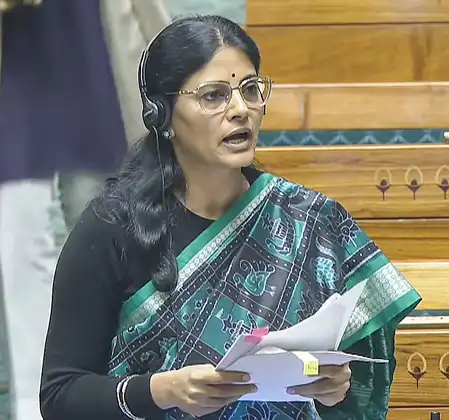
Union Minister of State for Health and Family Welfare Anupriya Patel, in a written reply in the Rajya Sabha, informed about the steps taken to strengthen the TB Mukt Bharat Abhiyan program (National TB Elimination Programme) implemented under the aegis of the National Health Mission (NHM) across the country.
Patel said Rs 4,322 crore has been distributed to 1.35 crore TB patients under the Nikshay Poshan Yojana since April 2018.
Nikshay Poshan Yojana, launched on April 1, 2018, aims to provide nutritional support to TB patients during treatment. Under this, patients will be given financial assistance of Rs 1,000 per month, which was earlier Rs 500. The scheme is for all notified TB patients and the funds are transferred directly into their bank accounts.
Additionally, under the Nikshay Mitra initiative, a total of 45.66 lakh food baskets have been distributed to 20.3 lakh TB patients since September 2022, Patel said.
The Nikshay Mitra initiative, launched under the Prime Minister of India’s TB Mukt Bharat Abhiyan, is a community-driven programme. Under this, individuals, NGOs and organizations (Nikshaya Mitra) adopt TB patients to provide them with vital additional support including nutrition (e.g. food/supplements), clinical and vocational support. This helps in the free treatment provided by the government. This helps patients complete their treatment, reduces out-of-pocket costs and ends TB in India by 2025.
The Minister said that a new approach is being implemented under the TB Free India campaign to reduce undiagnosed TB cases and TB related deaths. This will prevent new infections across the country.
This includes identification of vulnerable populations, screening with chest X-ray, nucleic acid amplification testing (NAAT) for all suspected TB cases, prompt and appropriate treatment initiation, differentiated TB care for the management of high-risk TB cases, nutrition support, and preventive treatment for household contacts and eligible vulnerable populations.
–IANS
ASH/DKP