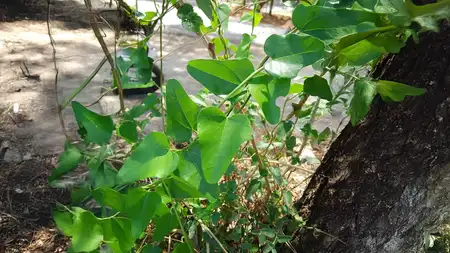
New Delhi, November 15 (IANS). Jaljamani (Patalgarudi) is a medicinal plant that spreads like a vine. It grows mostly in moist and shady places during the rainy season. It is found extensively in the hot and humid areas of India like the foothills of the Himalayas, Bihar, Bengal and Punjab. Its specialty is that when its leaves are mixed in water, the water starts freezing like jelly, that is why people call it Jaljamani.
In Ayurveda, both its leaves and roots are used in many diseases. It is a little bitter in taste, but the natural elements present in it help in balancing Kapha and Pitta in the body. Some elements found in its leaves and roots are considered useful in reducing stress, giving strength to the body and purifying the blood.
Watermelon has great importance in folk remedies and traditional Ayurvedic methods. Applying paste of its leaves or roots in case of headache is considered beneficial. The juice of the leaves is used in eye related problems like night blindness or inflammation. Applying paste of its leaves provides great relief from toothache.
In case of poor digestion, diarrhea or indigestion, taking light powder of its root is beneficial. A decoction of leaves has been used in white discharge and menstrual irregularities in women. In men, its juice is traditionally used for nocturnal emission or infections like gonorrhea.
A paste of its leaves is applied in arthritis, joint pain and swelling. Its juice is also used in skin diseases like itching, wounds or burning.
According to traditional belief, its root is also used in snake bites. However, in such cases it is most important to take modern medicine.
Watermelon is a natural herb, yet it is important to take care of its quantity. Taking excessive amounts can cause problems like vomiting. Pregnant women, children or people with serious diseases should not consume it without expert advice.
–IANS
PIM/DSC