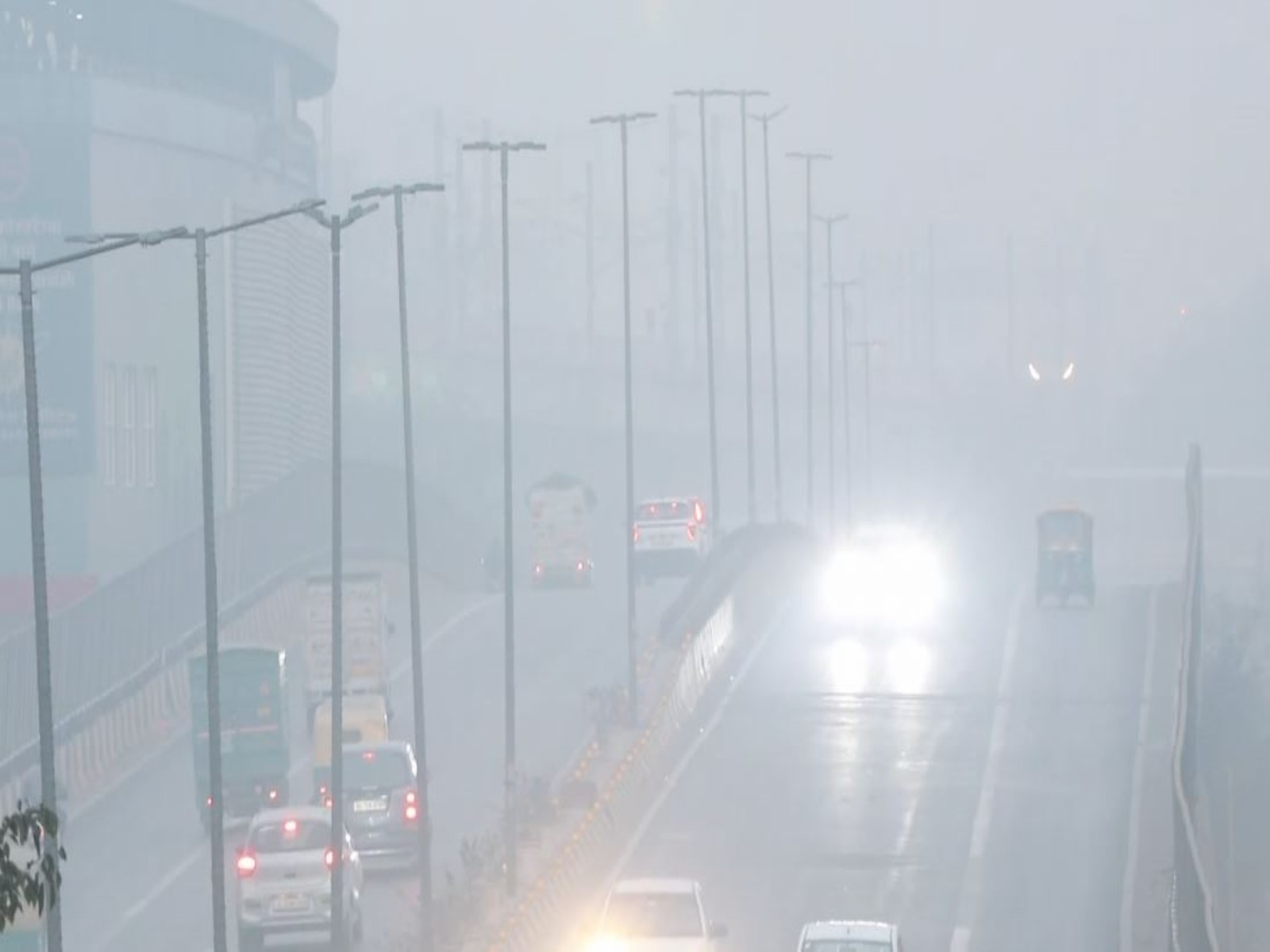
According to data released by the Central Pollution Control Board (CPCB), the air quality situation in Delhi remained ‘very poor’ on Wednesday morning and the air quality index (AQI) was recorded at 341 at around 7 am.
There has been a slight improvement in air quality compared to Tuesday morning, when the AQI was 397, but the overall situation remains worrying and the pollution level remains in the ‘very poor’ category. The continuous deterioration in air quality poses a serious health threat, especially to children, the elderly and persons suffering from respiratory diseases.
High ACI levels were recorded in many areas of the capital. AQI was recorded at 388 in Anand Vihar, 388 in Ashok Vihar and 386 in Wazirpur.
Other major areas of pollution include Punjabi Bagh (374), RK Puram (377), Bawana (383), ITO (369), Chandni Chowk (369) and Dwarka Sector 8 (376). All these places were in the ‘very poor’ category, indicating widespread pollution across the city.
According to the AQI classification, readings between 0 to 50 are considered ‘good’, 51 to 100 ‘satisfactory’, 101 to 200 ‘moderate’, 201 to 300 ‘poor’, 301 to 400 ‘very poor’ and 401 to 500 ‘severe’.
Meanwhile, the Indian Meteorological Department (IMD) reported moderate fog at many places in Delhi, while dense fog was observed at some places. The temperature in the national capital was recorded at around 9 degrees Celsius at 7 am, making the weather conditions even more challenging.
A day earlier, in view of the deteriorating air quality in the national capital, the Commission for Air Quality Management (CAQM) had imposed measures under the fourth phase of the Graded Response Action Plan (GRAP) in Delhi and the National Capital Region.
The Commission for Air Quality Management (CAQM) has said that it has canceled its earlier orders dated January 17, 2026 imposing Phase-IV action under the Graded Response Action Plan (GRAP) for the National Capital Region (NCR). Phase-IV measures are implemented when the air quality index (AQI) exceeds 450, which is placed in the ‘severe’ category.
All implementing agencies across NCR have been directed to maintain close monitoring and intensify measures under these phases to prevent the AQI level from deteriorating into the ‘severe’ category.
CAQM stressed that monitoring and review of air quality will continue across the region, and all agencies will ensure timely implementation of preventive measures under Phase-I, II and III.