Do you know Shahrukh Pathan? Shahrukh, who was seen pointing a pistol at a policeman and firing into the crowd during the 2020 Delhi riots, is serving his sentence in Tihar jail. He has asked for four raw eggs every day and a television for himself. The court has accepted his request, but Delhi Police has now appealed to reconsider the decision. Another such case is that of American citizen Matthew Aaron VanDyke lodged in Tihar Jail. Citing illness caused by eating oily and spicy Indian food, he has requested for chicken, pasta, soya milk and other things. This raises the question, what are the rights of prisoners in jail, and can a prisoner ask for his favorite food or luxury items from the jail administration? The cases of Mathew and Shahrukh are just examples. Whenever a high-profile criminal or VIP leader is sent to jail, there is a common debate among both the media and the public: What will they eat in jail? Will they be able to get home cooked food? Can we order our favorite items? Let us see what India’s prison manual and laws around the world say about this.
Matthew Aaron VanDyke
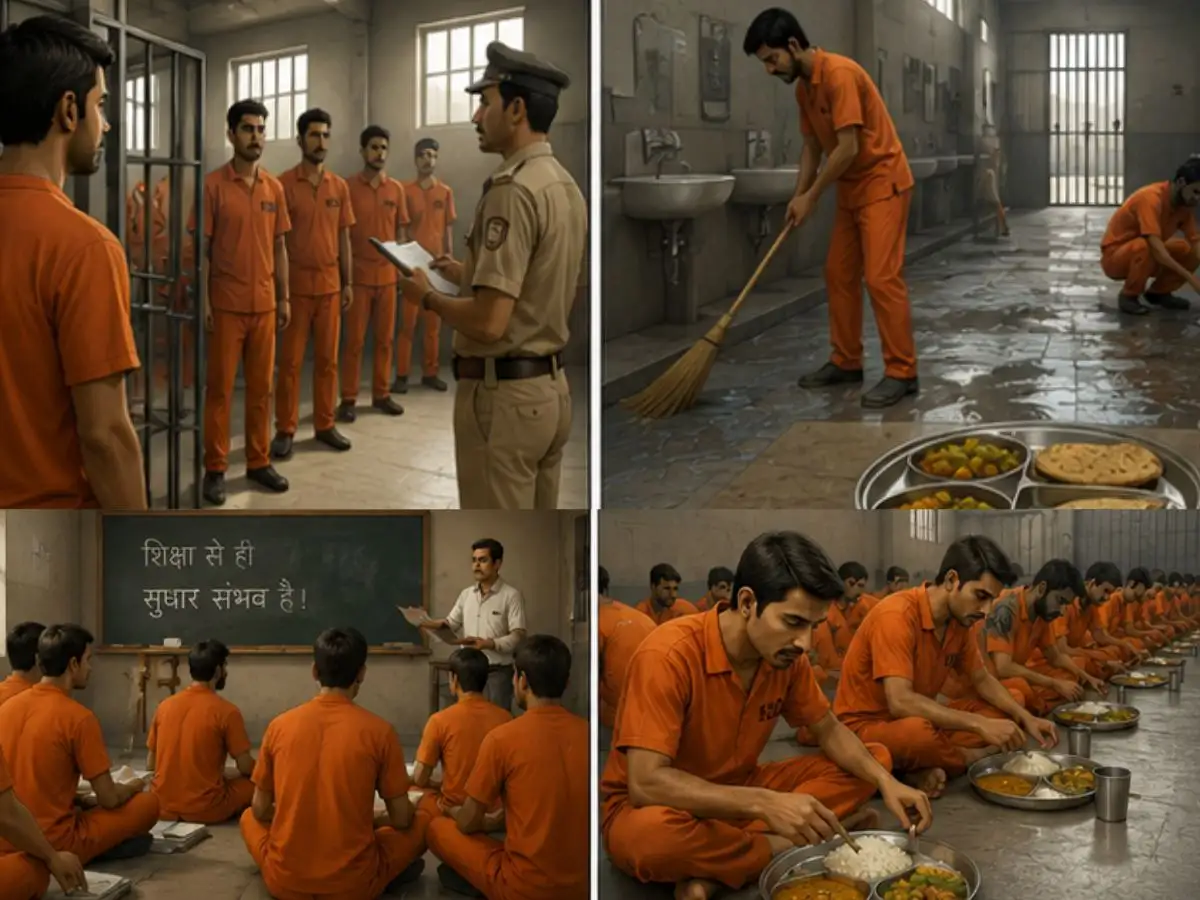
Prisons in India are not only places of punishment but also centers for reform and rehabilitation of prisoners. Prisons in India are state subjects, so every state has its own prison manual. However, the Union Home Ministry has prepared “Model Jail Manual 2016” to bring uniform rules in all the states. Under this, some basic facilities are provided to the prisoners. Let’s think about this.
Accommodation: Each prisoner is given a barrack or cell with adequate living space, air and sanitation.
Clothing and bedding: Prisoners are provided seasonal clothing, such as blankets, warm clothes, and a mat or cot for sleeping in the winter.
Medical Facilities: Every jail has a medical officer and a hospital. Health check-up is done when the prisoners reach the jail.
Contact with the outside world: Prisoners enjoy scheduled meetings and phone calls with their families and lawyers.
Prison food: Calorie counts and menus vary. Under prison guidelines, meals are decided based on nutrition science, not the inmate’s preferences. According to the guidelines, a prisoner who works hard is given about 2,300 to 2,800 calories of food every day. A prisoner who does not work hard is given about 2,000 to 2,200 calories every day.
Normal Menu: This includes morning tea, biscuits and chole, and lunch and dinner consisting of dal, seasonal vegetables, rice and roti. Special food like kheer or puri is also available on festivals or Sundays.