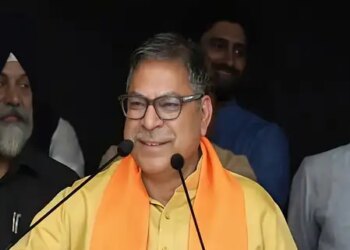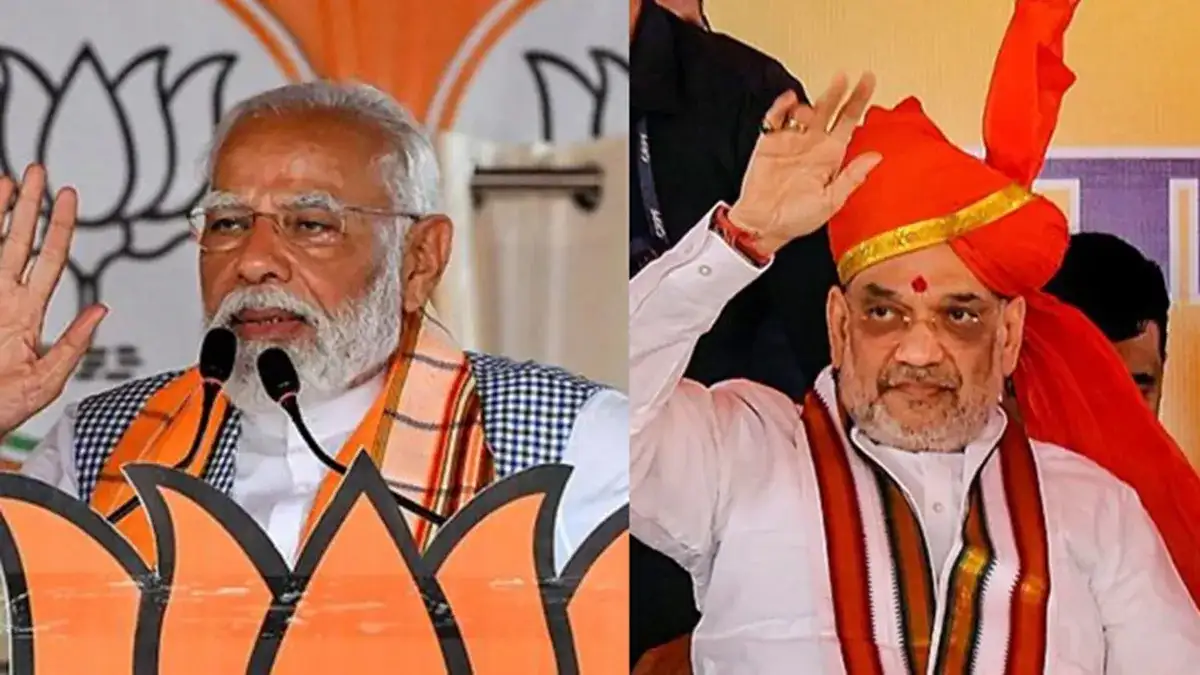
In the results of West Bengal Assembly elections, Bharatiya Janata Party has created history by removing Mamata Banerjee from the post of Chief Minister. This victory in Bengal is BJP’s biggest victory at the state level since 2014. Meanwhile, its third consecutive win in Assam has further strengthened its position. However, Bengal’s victory is also going to have an impact on the national political scenario.
With 42 Lok Sabha seats, Bengal gives the BJP a strong base in the east that is as strong as its traditional strongholds in the north and west. Together with Bihar and Odisha—where the party’s near-outright victory in 2024 took its national seat count to 240—this “Eastern Corridor” now acts as a bulwark against any possible future losses in its established strongholds. The only major gap remains in the South, where Karnataka remains the party’s only reliable stronghold.
BJP’s historic victory in Bengal
Victory in Bengal has also strengthened the ideological foundation of BJP. The combination of anti-infiltration campaigns, welfare promises and development-focused messages has proven to be a powerful combination—one that the party leadership will not hesitate to replicate elsewhere. Citing the election victory of the mother of the RG Kar Medical College rape and murder victim, Union Minister Dharmendra Pradhan said women’s safety remains a core pillar of the BJP’s political identity.
Uttar Pradesh: Most important for BJP
On BJP’s electoral map, Uttar Pradesh remains the most important state. Representing about 15 per cent of the total Lok Sabha seats—80 seats—the state had contributed 71 seats in 2014, helping the BJP gain a parliamentary majority for the first time. When the SP-led alliance reduced this number to 33 seats in 2024, the BJP lost its absolute majority and became dependent on its allies.
Will Akhilesh Yadav be able to strengthen the PDA alliance?
Akhilesh Yadav is expected to support his PDA alliance (*backward* [पिछड़ी जातियाँ]*Dalit*, and *Minority* [माइनॉरिटीज़])—an alliance that had given a huge blow to the BJP in the 2024 elections. The ruling party’s strategy will now focus on regaining the support of the *non-Yadav OBC* and *non-Jatav SC* sections—those which had drifted away from the party during the Lok Sabha elections. Although Chief Minister Yogi Adityanath performs well in law and order matters, he also faces some internal criticism; As a result, the party is expected to work towards presenting a united face ahead of the state elections next year. A senior party functionary remarked with his characteristic confidence that if the party faces any possible setback in UP, it will be entirely due to the party’s own mistakes.
BJP cannot ignore Punjab
From a purely statistical point of view, Punjab does not rank among the most electorally important states of India. However, under the leadership of Prime Minister Narendra Modi, it has continued to remain one of the top priorities of the party. The BJP is actively trying to garner support among both the Sikh majority population and the Dalit population. These efforts have intensified after the party’s separation from the Akali Dal. Six Rajya Sabha MPs of Aam Aadmi Party in the state leaving the party and joining BJP is a direct result of this strategic initiative. Although these people may not be huge political giants, their leaving the party has undoubtedly weakened Arvind Kejriwal’s organizational base ahead of the 2027 assembly elections.