Heated debate on women’s reservation and delimitation bills continued till late night in the country’s Parliament. Voting on the Women’s Reservation Bill is also to be held today at 4:00 pm. Meanwhile, the Women’s Reservation Act, 2023—which gives 33 percent reservation to women in Parliament—came into force on Thursday. The Union Law Ministry has issued a notification in this regard. However, it is still not clear why the notification regarding its implementation from April 16 was issued at the very time when amendments to the same law were being debated in Parliament. According to news agency PTI, an official attributed the move to “technical reasons” but did not elaborate further. Despite the implementation of the Act, women in the current Lok Sabha will not get its benefits immediately. According to the official, reservation for women will be implemented only when the delimitation process based on the next census is completed.
One-third seats reserved for women
The notification issued by the Union Law Ministry states that the provisions of the Constitution (106th Amendment) Act, 2023 will come into effect from April 16, 2026. In September 2023, Parliament passed the ‘Nari Shakti Vandan Act’ (Women Empowerment Act), commonly known as the Women’s Reservation Act. Under this law, there is a provision to reserve one-third seats for women in the Lok Sabha and state assemblies. It was clearly made clear that this reservation cannot be implemented until the delimitation process is completed after the 2027 census. The three bills currently under discussion in the Lok Sabha aim to implement this reservation from 2029.
The government is not trying to take credit.
Earlier, Union Parliamentary Affairs Minister Kiren Rijiju announced that the Women’s Reservation Bill will be voted on in the House at 4:00 pm on Friday. Speaking on the ongoing discussions in Parliament regarding women’s reservation and delimitation, Rijiju said Prime Minister Modi has appealed to everyone to support the initiative. Therefore, he said that there is no scope for any confusion on this matter.
Home Minister Amit Shah has also tried to allay the apprehensions spreading in South India by presenting relevant figures. Despite this, if anyone still opposes it, he is just doing politics on this issue. It is everyone’s responsibility to ensure 33 percent reservation for women in Parliament and state assemblies, and the government does not want to take the entire credit for it alone. Questioning the opposition’s claims, Rijiju said that the government has consulted leaders of all political parties. Letters were written to Congress president Kharge on three separate occasions, while leaders of TMC, DMK and SP were met personally to appeal for their support.
PM Modi said this about women’s reservation:
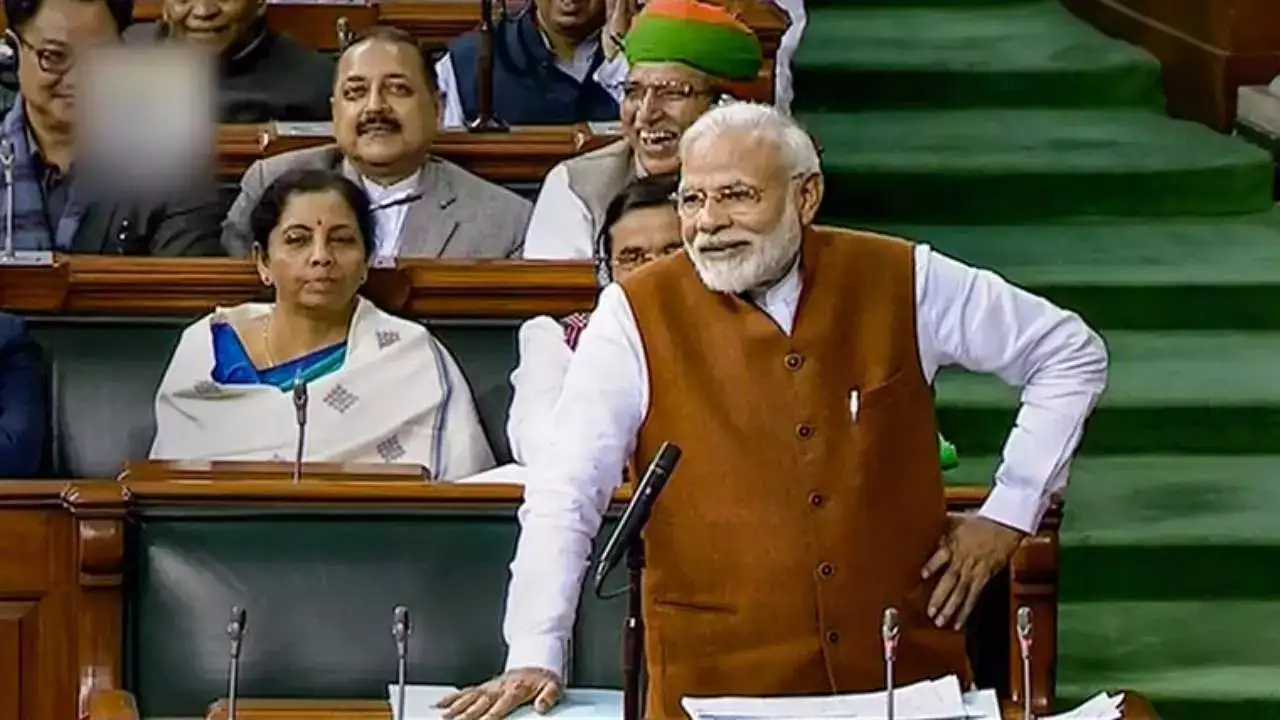
There was a vigorous debate in the Parliament regarding the Women’s Reservation and Delimitation Bill. In his speech, holding a mirror up to the opposition, PM Modi said, “History has shown that whoever has opposed the rights given to women in elections has met with a bad fate. I have come here to make an appeal: Do not weigh this issue on the scales of politics. Today is an opportunity—to sit together, think in the same direction, and wholeheartedly embrace the dream of making a ‘developed India’. The entire country—and especially our ‘Nari Shakti’ (The power of women) will definitely judge our decisions; but more importantly, they will judge our intentions. Therefore, the women of the country will never forgive any dishonesty or ulterior motive in our intentions.”
Priyanka Gandhi cornered the government:
Meanwhile, Congress MP Priyanka Gandhi hit out at the Central government, saying, “I have read the draft of this women’s reservation bill. First, it stipulates that reservation for women will be implemented by 2029—something we agree with. Second, it says the total number of seats will be increased to 850. To make this possible, a Delimitation Commission will be constituted, based on 2011 census data. Will do its job. However, if one digs deeper into the details, there are two specific provisions in the 2023 version which were clearly missing in the previous draft: A new census will be conducted.”