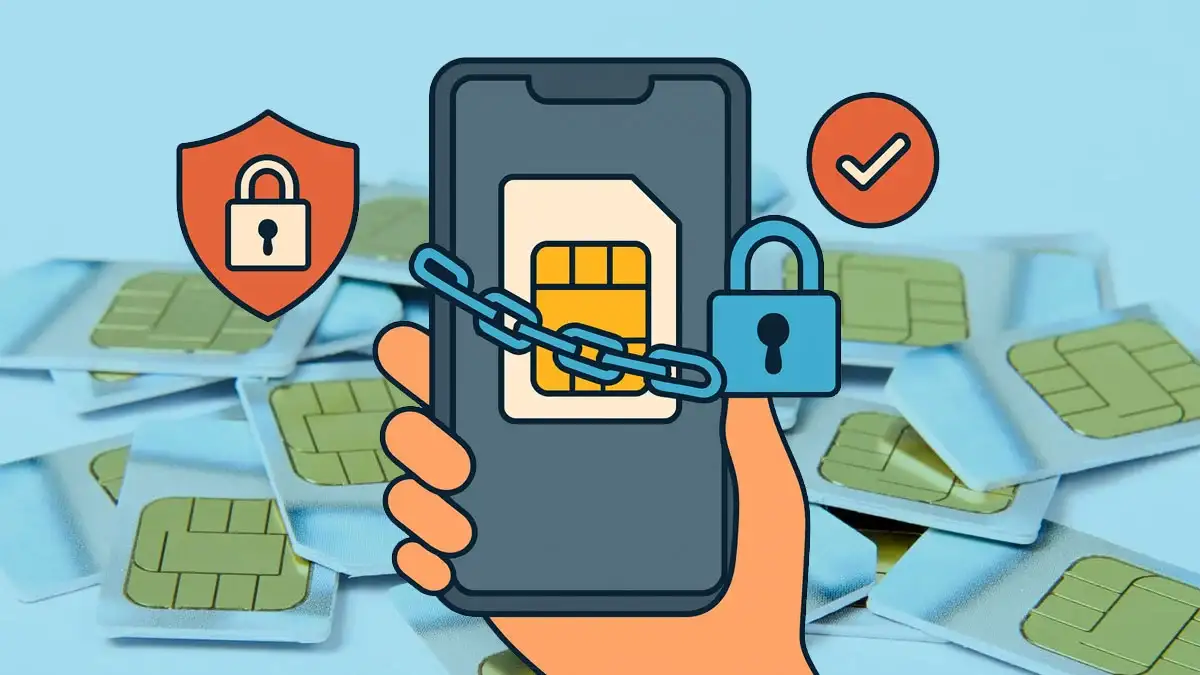
India is currently going through an era of digital fraud, where every phone call, every message and every link is suspect. Digital arrests, fake police calls, fraud by impersonating banks and phishing have transformed technology from a convenience to a source of fear. In such an environment, when the government talks about measures like SIM binding, at first glance it seems to be a tough but necessary decision. However, in the world of technology, the decisions that seem easiest are often the ones that cause the most harm. What is SIM binding, and why is it being discussed? While telecom companies seem to support SIM binding, users, experts and big companies have different opinions. Most experts believe that SIM binding has benefits, but it can cause problems for users in using daily apps and can also be expensive.
As a tech editor who has covered telecom policy, cyber fraud and OTT platforms closely for 10 years, it is important to say that SIM binding fraud is less of a solution and more of a misunderstanding of the system. The intention may be good, but the method is neither completely right nor safe for the future.
SIM binding and its limitations
The concept of SIM binding is straightforward. The SIM card used to register for WhatsApp, Telegram, or any other messaging app must remain in the phone. If the SIM card is removed, replaced, or deactivated, the app will stop working. Often, people travel outside India without purchasing a roaming plan and rely on hotel Wi-Fi. In such a case, if SIM binding is applied, they will not be able to use WhatsApp or any other apps linked to that phone number. To use WhatsApp, they have to buy an expensive roaming plan, which starts from ₹3000-4000. In theory, this sounds like a strong security layer. But in the real world, given the way fraud occurs, this theory quickly fails. Today’s cybercriminals don’t rely on one phone, one SIM, or one account. They work across the entire network. KYC, SIM card, bank account, and call center—everything is in the name of different people. In this case, linking the SIM card to the app will not stop criminals; They will simply change their ways.
Where are the roots of fraud, and what is the government paying attention to?
The biggest problem of digital fraud is not the SIM card. The real problem is fake or rented identities. Today in India, SIM card mule networks have become a major operation, where SIM cards are obtained using valid KYC documents and then handed over to the criminal network. These SIM cards are completely legal, the numbers are active, and it is possible to track. Despite this, fraud continues. SIM binding, rather than dismantling these networks, assumes that criminals are stuck at the basic layer of technology. The truth is that they understand the weaknesses of the system very deeply. In other words, the problem the government is trying to solve is not the root of the disease.
The technical truth that has been ignored in the policy
There is another important aspect which is rarely discussed. The kind of SIM binding being envisioned is not completely possible on the current mobile operating system. Both Android and iOS do not allow apps to persistently access SIM details or hardware identifiers. This is not a flaw, but a fundamental aspect of user privacy. This is the reason why till date no messaging app checks whether the SIM card is present all the time or not.
Banking apps use SIM binding
What banking apps call SIM binding is a limited and periodic verification, not permanent monitoring. The model the government wants to implement will either be incomplete or have a negative impact on the user experience. If you use a banking app, you might have noticed that the app does not work without a registered SIM card. The bank’s app works only on phones that have a SIM card linked to the account. If SIM binding is implemented, the same will happen with other messaging apps. Increasing digital hassle for common users
If SIM binding is strictly implemented, it will have a direct impact on the daily lives of common users. Today, people use a single account on their phones, laptops, and tablets. Multi-device experiences have become an essential part of modern digital life. SIM binding will remove this feature. Frequent logouts, re-verification, and apps crashing when SIM cards are changed will become a major hassle for people who depend on technology for work. International travellers, eSIM users and freelancers will be the first to suffer the brunt. If, in an attempt to prevent fraud, the system punishes only honest users, then the policy itself is bound to be questioned.
Big question of privacy and trust
SIM binding is not just a matter of convenience or technology; It is also a question of digital privacy and trust. By permanently linking each account to a SIM card and identity, anonymity is eliminated. This can be dangerous for journalists, whistleblowers and vulnerable groups. Not every user is a criminal, but SIM binding designs the system to treat every user as a suspect. This thinking can be dangerous for a democratic digital space.
Telecom companies and the balance of power
It is no coincidence that SIM binding is being supported by telecom companies. This strengthens number-centric control and increases pressure on OTT platforms. The question is whether this is an attempt to prevent fraud or an attempt to rebalance power in the digital ecosystem. When a policy reduces user convenience and increases industry control, it cannot be viewed only from a security perspective.
Telecom and tech companies face to face
There has been a clash between telecom companies and tech companies over the SIM binding rules of the Department of Telecommunications. Airtel, Jio and Vodafone-Idea have praised this step of the government. On the other hand, tech companies have called this rule problematic. COAI (Cellular Operators Association of India) is the telecom body in India, representing all Indian telecom companies. Similarly, BIF (Broadband India Forum) is a body that represents companies like Meta and Google. BIF says the government’s SIM binding rule is problematic. Mobile India Association has also claimed that SIM binding will not stop digital fraud.
What the world is doing, and what we can learn
In most countries of the world, there is no mandatory SIM binding for messaging apps. There is a focus on risk-based security, user behavior, device patterns, and smart fraud detection systems. No one believes that linking the SIM card to the app will eliminate crime. Because criminals are always one step ahead of the system.
right question, wrong answer
India’s question is right: how to stop digital fraud? But SIM binding is not the right answer. It’s a solution that looks strong on the outside, but is hollow on the inside. Digital security doesn’t come through shortcuts. It requires depth, technical understanding and a user-centric approach. If we rely only on easy-looking solutions, it will not be the criminals who will suffer, but the ordinary citizens. SIM binding can be a tool, but considering it a cure would be the biggest mistake.