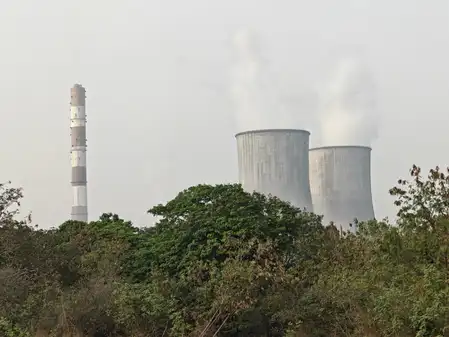
New Delhi, April 11 (IANS). India has set a big goal to strengthen its energy security and reduce dependence on fossil fuels. According to a new report, the country is planning to increase its nuclear power capacity to at least 100 gigawatts (GW) by 2047. This goal is also linked to the occasion of completion of 100 years of India’s independence.
According to a report in Khaleej Times, there are currently 24 nuclear reactors operating in India, with a total capacity of 8,780 megawatts electric (MWE). In addition, 8 more reactors with a capacity of 6,028 MWE are under construction.
According to government estimates, this capacity can reach about 22 GW by the early 2030s, after which it will be rapidly increased to the target of 100 GW.
The report said that to achieve this ambitious target of more than eleven times, India is working on a dual strategy, which includes large nuclear reactors such as indigenous 700 MWe Pressurized Heavy Water Reactor (PHWR) and imported large plants at greenfield sites. Also, work is being done on small modular reactors like 200 MWE Bharat Small Modular Reactor (BSMR) and 55 MW electric SMR-55 units.
An important milestone in this direction was achieved on 6 April 2026, when the 500 MW Prototype Fast Breeder Reactor (PFBR) located at Kalpakkam, Tamil Nadu achieved ‘First Criticality’. This means that the process of controlled nuclear fission has successfully started in it. This is considered a big step for India’s indigenous nuclear technology.
India’s nuclear program is based on a specific three-step strategy, which aims to make maximum use of limited uranium resources and take advantage of the country’s vast thorium reserves.
In the first step, plutonium is prepared from natural uranium. In the second stage, fast breeder reactors use this plutonium to produce more fuel. In the third phase, long-term energy production will be ensured by producing uranium-233 through thorium-based reactors.
According to the report, the PFBR uses uranium-plutonium mixed oxide (MOX) fuel and liquid sodium coolant, which allows it to produce more fuel than it consumes. This technology paves the way for future thorium-based energy production.
This reactor with 500 MW electric capacity is capable of supplying electricity to about 5 lakh houses. It is clear from this that in the coming times, nuclear energy is going to play an important role in meeting the electricity needs of India.
–IANS
DBP