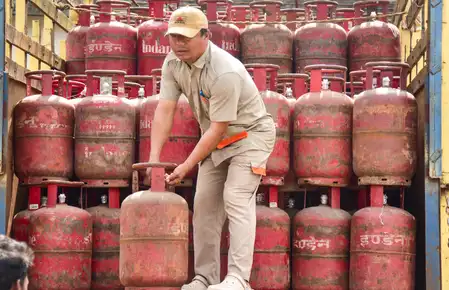
New Delhi, March 23 (IANS). After the implementation of Pradhan Mantri Ujjwala Yojana (PMUY), LPG has reached almost every household in the country. Till March 1, 2026, about 10.56 crore PMUY connections have been given across the country, including 52.60 lakh connections in Maharashtra and 43.92 lakh connections in Gujarat. This information was given in Parliament on Monday.
The government has also approved the release of 25 lakh additional LPG connections during the financial year 2025-26, to complete the pending applications and ensure complete access to LPG in the country.
Minister of State for Petroleum and Natural Gas Suresh Gopi said in a written reply in the Rajya Sabha that under this extension, till March 1, 2026, about 0.48 lakh new connections have been given in Maharashtra and about 0.87 lakh in Gujarat.
Before the launch of PMUY, LPG coverage in the country was around 62 percent, which has now increased significantly. Along with this, the use of LPG by the beneficiaries has also increased. While an average of 3.68 cylinders were used annually in 2021-22, this has increased to 4.80 cylinders in 2025-26.
Oil Marketing Companies (OMCs) have also greatly improved the supply system of domestic LPG.
Gopi said, “As of March 1, 2026, there are a total of 25,605 LPG distributors in the country, out of which 17,677 are in rural areas, for whose supply 214 LPG bottling plants are working.”
To increase the reach of LPG in rural and remote areas, 8,037 new distributors were started between April 2016 and February 2026, of which 93 percent i.e. 7,444 are in rural areas.
According to the minister, the government is also taking steps to make LPG cheaper for PMUY consumers. In the financial year 2025-26, the government is giving a subsidy of up to Rs 300 on a 14.2 kg cylinder (and proportionately for a 5 kg cylinder as well), which is applicable up to a maximum of 9 refills.
Additionally, through an initiative called ‘Saksham’, Oil Companies (PSUs) are creating awareness among the people to promote energy savings and sustainable development.
–IANS
DBP