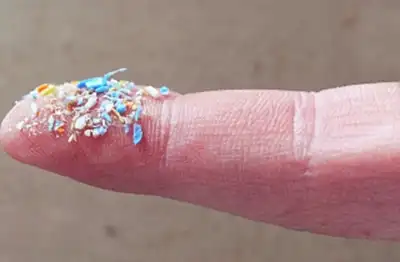
New Delhi, October 12 (IANS). Plastic is harmful to the environment and the less it is used, the better. We have been hearing this since childhood. Experts say that today this plastic has penetrated into various parts of our body through different mediums. Now, it can be easily guessed that what effect the one who has such an adverse effect on nature would have on our health.
It is difficult to believe at once but it is 100% true! The plastic that we see in packets, hold in bottles, has now reached our blood, lungs, even our brain. Scientists say that up to 5 grams of microplastic can accumulate in our brain, which can be equivalent to a teaspoon of plastic. So we can say that it is not only around us, but also within us.
Dr. Christian Pachter-Deutsch, a scientist at the University of Graz in Austria, exposed bacteria taken from the intestines (gut microbiome) of five healthy people to five different microplastics. The result was shocking.
The number and balance of bacteria that control our digestion and mental health started changing rapidly.
Some of the changes appear to be similar to patterns seen in depression and colon cancer. The question is, what do these particles do? Microplastics are so tiny that they not only dissolve in the bloodstream, but also cross the body’s most sensitive membranes, such as the placenta and brain barriers. Now the question arises, if they have reached inside, are they influencing our thoughts, feelings, even our mood?
Plastic is not just a solid substance, it is a ‘cocktail’ of toxic chemicals. These particles can reduce the production of our ‘good’ chemicals like serotonin and create more of the more ‘dangerous’ or inflammatory chemicals.
Scientists clearly indicate that microplastics can affect our immunity, intestines and mental health.
When we are surrounded by plastic from all sides, then how can we overcome it? For this, only small changes have to be made in life. For example, avoid heating food in plastic utensils, if you are cutting vegetables then take a wooden chopping board and not made of plastic, if you are drinking tea then take a cup or mug of stainless steel or ceramic and yes, do not drink tea with tea bags. In the traditional style, boil water and add tea leaves on top. Even when you reach the bedroom from the kitchen, make some changes in your habits. Like pillow, mattress and bedsheet are not made of plastic particles, natural fabric has been used.
Also pay attention to the labels of personal care products and cosmetics. Some cosmetic items such as face wash, lotion, lipstick and eyeshadow may contain nano or microplastics called polyethylene, polypropylene, polyurethane or acrylates, avoid them if possible. Also pay attention to hidden plastics in menstrual products, choose ones made from 100 percent cotton or silicone cups.
–IANS
kr/