New Delhi, December 26 (IANS). India’s electronics and semiconductor sector is no longer limited to just planning, but work is visible on the ground. In the year 2025, this sector has made many new records and now in 2026, even bigger achievements are expected due to ‘Make in India’ and Production Linked Incentive (PLI) schemes. With this, India is moving rapidly towards becoming a reliable electronics manufacturing country in the world.
According to government data, there has been a sharp increase in electronics production in the country, which has increased from Rs 1.9 lakh crore in the financial year 2014-15 to about Rs 11.3 lakh crore in 2024-25. Similarly, electronics exports have also increased from Rs 38,000 crore to more than Rs 3.27 lakh crore.
Big progress has also been seen in mobile phone manufacturing. In the year 2014-15, there were only 2 mobile phone manufacturing units in the country, which has now increased to about 300 units.
During this period, the production of mobile phones has increased from Rs 18,000 crore to Rs 5.45 lakh crore. Meanwhile, exports of mobile phones have also increased from Rs 1,500 crore to about Rs 2 lakh crore.
Apart from this, an investment of about Rs 1.46 lakh crore is expected from the Electronics Manufacturing Clusters (EMC 2.0) created in 10 states of the country, which is expected to provide employment to about 1.80 lakh people.
India’s manufacturing sector has grown significantly in the last 10 years, especially in the electronics and mobile phone sectors. Now India has become an exporting country instead of importing in many sectors.
Pankaj Mohindroo, Chairman of India Cellular and Electronics Association (ICEA) said that the year 2025 has been very important for Make in India. Because of the PLI scheme, India has now become a strong and reliable electronics manufacturing hub. Policy continuity, faster approvals and focus on manufacturing of components will be critical in 2026.
At the same time, Ashok Chandak, President of India Electronics and Semiconductor Association (IESA) and SEME, said that India’s electronics growth has no longer become temporary but permanent. Government, industry and other institutions are working together to build strong, sustainable and globally competitive value chains.
He said that in the coming times, new technology, research, skill development and greater use of indigenously made semiconductors will further strengthen India’s electronics industry.
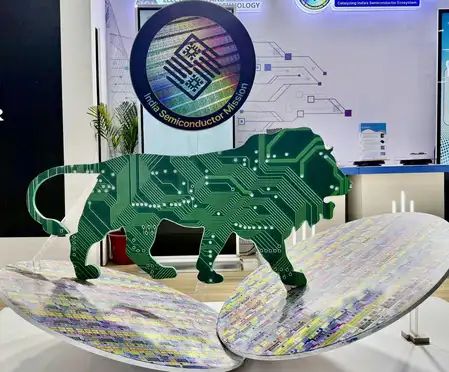
India’s semiconductor sector is also growing rapidly. Under the government’s Semicon India scheme, 10 projects have been approved so far, in which a total investment of Rs 1.6 lakh crore will be made. These include projects related to semiconductor fab, advanced packaging and memory chips.
The government has also launched a PLI scheme for the manufacturing of mobile phones and some of its components, which has brought in an investment of Rs 14,065 crore till October 2025. Additionally, the PLI scheme launched for manufacturing of IT hardware such as laptops, tablets and servers has brought in an investment of Rs 846 crore.
In this way, India is now moving forward rapidly in manufacturing electronics and semiconductors. With the help of Make in India and PLI schemes, the coming year 2026 can bring new records and new opportunities for India.
–IANS
DBP/ABM